The good news — you’ve got more options than ever before when it comes to choosing a new phone system. The bad news — choices are great, but too many can be confusing.
Cost is always important. But for most organizations, ROI over time will be the deciding factor, and that’s exactly where things can get tricky. So in this blog, I’ll outline the types of questions I ask my clients to help steer them toward the best system for their needs. But first, let’s explore your options.
Features and Types of Phone Systems for Small Businesses

Researching this topic online is often difficult because many systems have multiple names. Here’s how I’d explain what’s available in broad strokes.
On-Prem
Most businesses will be best served by adopting a cloud-based solution vs. a PBX (private bank exchange). But on-premise solutions still make sense if your internet connection isn’t the best or your telephone numbers aren’t portable to other phone companies. At Marco, our partnership with Mitel allows us to provide a great value and a smooth installation experience for our on-prem clients.
But there’s a drawback to these systems — someone has to manage and maintain them. If an on-premise system is the best fit, you can also choose to offload those responsibilities to a trusted partner. At Marco, we call this managed service Marco Managed Voice.
Cloud-Based
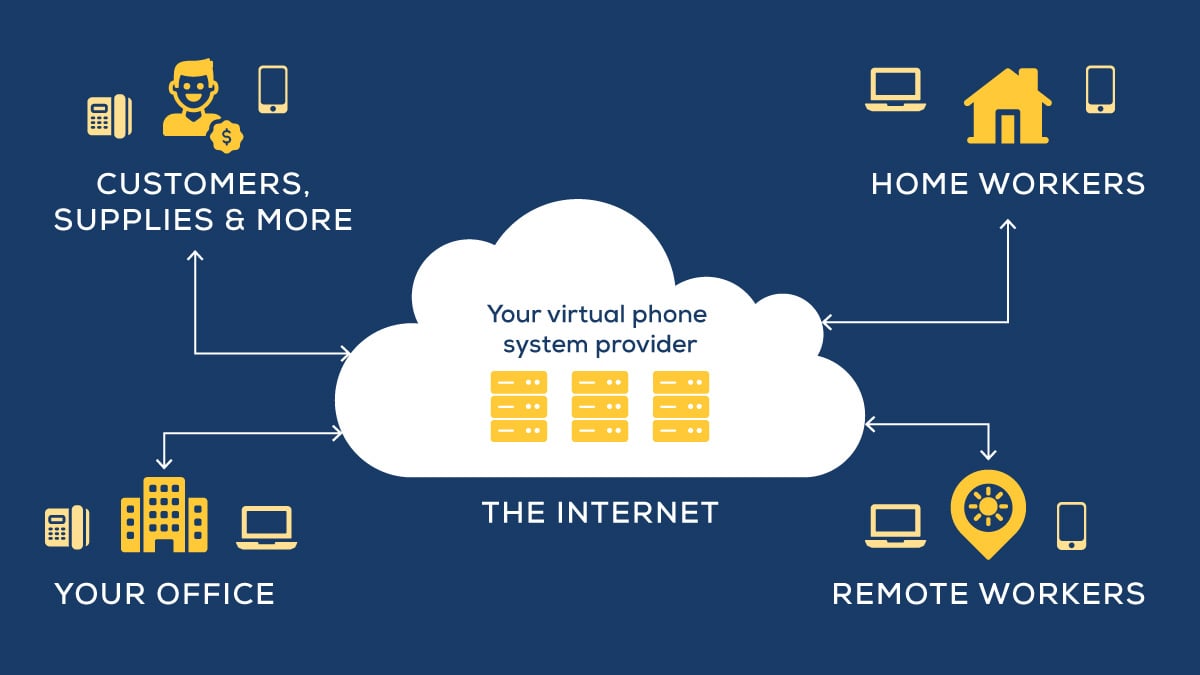
There are two main categories of cloud-based communication systems — cloud voice and unified communications. With either one, you can offer more flexibility for your staff to work from anywhere, plus helpful features that can improve the customer and employee experience. And with either one, you can choose to simply invest in a platform or have your solution managed by a provider.
At Marco, here would be your options:
- Using our free carrier services to find the best cloud voice provider but managing it yourself
- Having us manage your cloud voice solution
- Purchasing Microsoft Teams or Webex by Cisco and managing it yourself
- Using our Unified Communications as a Service (UCaaS) solution
Before 2020, I tended to recommend cloud voice over unified communications for smaller organizations that didn’t have specialized collaboration needs. But that’s changed!
Unified communications has gotten a chance to prove its worth out in the real world, and it’s got some real numbers around how it can improve productivity. So now, I will often recommend it for businesses that want to empower remote work, use a variety of different communication tools, like to collaborate in real-time, and want to reduce frustration and productivity drains organization-wide.
But that’s after I ask a few big questions.
Factors To Consider When Buying New Phones for Your Small Business

Every organization works differently, and I find that many businesses underestimate the impact that a new phone system can have or where a few “small” features can make a huge difference in an employee’s day. So here are the types of questions a solutions specialist will (and should) ask you.
How Many Users Do You Have, and How Will They Use Your System?
The number of users you have will affect the cost of the equipment and plan you need to purchase. You should also consider how you’d like your phone system to integrate with other systems, like CRM or ERP platforms.
Who Will Support It?
IT time is expensive, and this resource should be spent wisely! If your IT staff is minimal or you’d prefer that they spend more of their time helping you achieve your goals, a hosted small business phone solution (like cloud voice) could provide the most benefit.
How Much Are You Spending on Your Current Phone Plan?
Before investing in a new phone system, you should determine how much you are currently paying, including all equipment, maintenance, and service costs. This will help you efficiently compare your current phone costs with new options to find the one that best fits your needs and budget.
What Do You Wish Your Current Phone System Did That It Doesn't?

Go ahead! Make a list of all the functions you wish your current phone system did.
Think about why these functions are important to you and how they will make your business run more smoothly.
Here are just a few possibilities to start you off:
- Make it easier to share files and schedule meetings
- Show you who’s available to take a call so you’re not sending an important customer to voicemail
- Cutting down the time it takes to receive and respond to voicemails
- Making meetings more productive and collaboration less frustrating
What Are Your Plans for Growth?
Knowing your business's future growth plans is helpful when choosing a new phone system. You should discuss these with your vendor to ensure that your new system is tailored to your current business needs, as well as scalable for your future ones.
What Is Your Budget?
Setting a budget is very important. Your budget should be reasonable and it should be one that reflects all of the features you are looking to add to your new phone system. So let’s talk about what’s reasonable these days.
How Much Does a Small Business Phone System Cost?
The smallest cost system — we’re talking about finding a great cloud voice carrier and managing your users yourself — is going to cost between $15 and $40 per line each month, plus the cost of any advanced features and equipment. Installation can also add to cost, but some providers will waive these fees with a longer contract.
Unified communications subscriptions typically cost less than $50 per user per month. UC tends to cost more than cloud voice solutions, but businesses can often save more money by ditching any other communication tools they have been using. Considering that the average workplace uses 3.3 different chat apps alone, sometimes the “more expensive” solution actually offers the most savings.
A Word About Your Managed Voice Options
I’m pleased to be having more conversations with businesses about their communication needs now. Many are finally getting around to making much-needed updates since the pandemic forced them to dramatically rethink their entire technology budget. It’s also a better time to have these conversations now that the dust has settled a bit and organizations have a better sense of what they need and what they don’t.
But if I could pick just two things that every business owner would know about choosing a phone system, here they are:
1. Start planning early — ideally 6–12 months in advance.With a longer timeline, you get more options, fewer emergencies, and more time for proper change management. Changes to your phone system will impact some people more than others, and providing engaging, ongoing training can transform what could be a frustrating experience into an overwhelmingly positive one.
2. Just because your IT team is effectively managing your phone system now doesn’t mean they should be.As businesses rely more on technology to accomplish their goals, many of them are still using their IT teams to fix what’s broken instead of helping them become more competitive and protect their data. If your team has extra time on their hands, great. But if they’re struggling to keep on top of patches and security updates, offloading the responsibilities that come along with a phone system just makes sense.
I’ve given a preview of the types of managed voice solutions we offer earlier in the blog. You can find a more comprehensive guide through the link below!