Traditional phone systems weren’t built for the way manufacturing actually works. They were designed for people sitting at desks in offices. But manufacturing happens everywhere: on production floors, in warehouses, between facilities, and, increasingly, with remote team members managing operations from different locations.
So if you feel like your current phone system isn’t helping you save money, get more done, and increase customer satisfaction, it's time to look at an update. In this blog, I’ll explore what you could (and should) be getting from a phone system, and what I tend to recommend for Marco’s manufacturing clients.
Where Phone Systems for Manufacturing Often Fall Short

Before I talk to anyone about potential solutions, I ask them what isn’t working with what they already have. I can’t do that here, but I can tell you what I often hear from manufacturers. Any of this sound familiar?
Your Team Is Constantly Moving
Supervisors aren't at their desks — they're troubleshooting issues on the line. Warehouse managers are walking the floor. Maintenance techs are wherever the equipment needs them. Logistics coordinators are juggling multiple facilities. A phone system that only works when someone is sitting at a specific desk is fundamentally incompatible with how manufacturing operates.
Your Environment Is Tough on Equipment
Factory floors aren't quiet office spaces. There's noise, dust, vibration, temperature fluctuations, and constant activity. Standard office phones aren't built to handle those conditions, and when they fail, communication breaks down at the worst possible times.
Your Operations Run Beyond Business Hours
Manufacturing doesn't stop at 5 PM. You're running multiple shifts, managing after-hours maintenance, coordinating with suppliers in different time zones, and responding to urgent customer requests. A phone system that doesn't support 24/7 operations creates gaps in your ability to respond when it matters.
Your Customers Want Fast Answers
When a customer calls about an order, you need to know the status instantly. When a supplier has a question about specifications, your team needs to pull up the details without hunting through emails or calling around. Every delay in getting the right information costs time and credibility.
Your Reputation Is on the Line With Every Call
If calls get lost in voicemail, bounce between departments, or take too long to reach someone who can actually help, you're not just frustrating customers — you're damaging the reputation you've spent years building. In manufacturing, where relationships with distributors, suppliers, and long-term customers drive your business, that's a risk you can't afford.
Traditional business phone systems weren't designed to solve these problems. Modern cloud-based phone systems, from basic hosted voice to full unified communications platforms, are.
What Modern Business Phone Systems Can Do for Manufacturers

The shift from traditional PBX systems to cloud-based phone systems — especially to a feature-rich unified communications platform — isn't just about newer technology. It's about capabilities that actually match how manufacturing works.
Intelligent Call Routing That Eliminates Runaround
One of the most frustrating experiences for customers is getting transferred multiple times or waiting while someone hunts down the right person to help them. Modern business phone systems solve this with smart call management features.
Auto attendants can route callers based on their needs — parts inquiries go to one team, order status questions go to another, RMA coordination goes to yet another — without human intervention. Call queues hold callers in line when all team members are busy, giving them their position and estimated wait time instead of sending them to voicemail. Ring groups can simultaneously alert multiple team members, so calls get answered faster.
The result? Customers reach the right person quickly, your team spends less time playing phone tag internally, and you have visibility into how calls are being handled across your operation.
Mobility That Follows Your Team
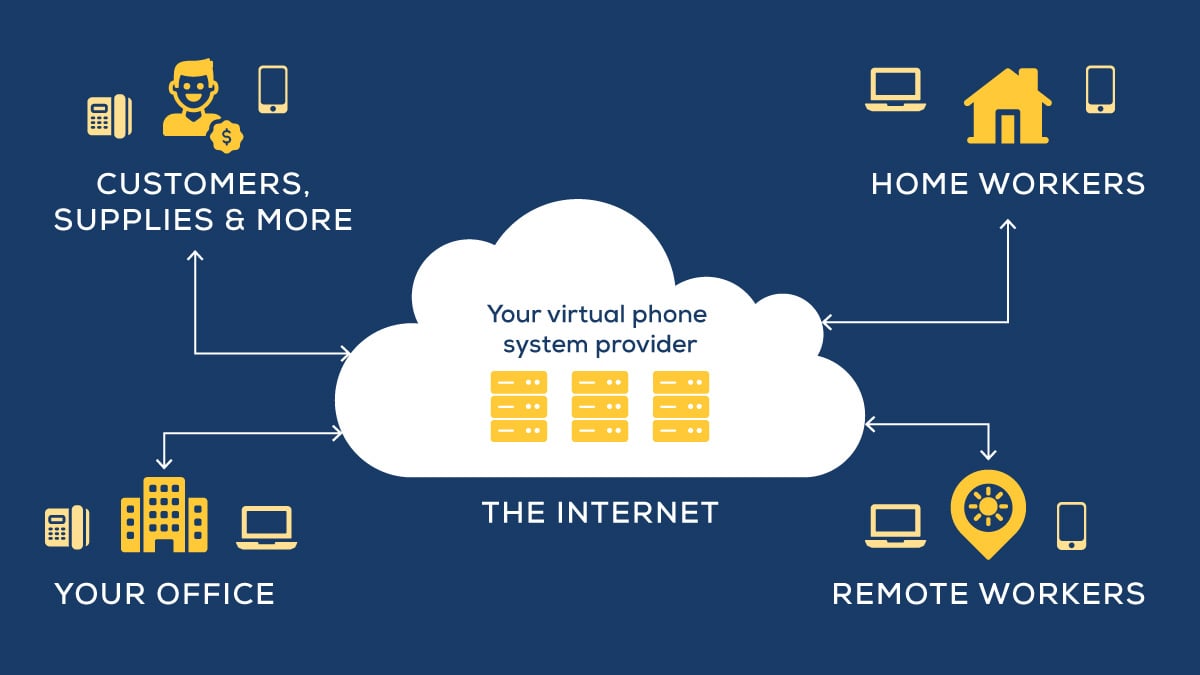
With cloud-based phone systems, your business phone number isn't tied to a specific piece of hardware on someone's desk. It's accessible from wherever your team members are working.
Your business phone moves with you. You can answer a call at your desk, then walk to the production floor without dropping it, because the call transfers automatically to your mobile device. No interruptions, no asking people to call back. Also, messages, voicemails, and call history follow you across every device.
That means quality managers can take calls while conducting floor inspections. Engineers can stay reachable while troubleshooting equipment issues. Customer service reps can access customer information whether they're at their desk or working from a different facility.
And don’t underestimate this perk: No one has to give out their personal cell phone number to stay connected to work communications.
Durability and Redundancy for Real Manufacturing Environments
Not all hardware is created equal. But manufacturing-grade solutions include ruggedized desk phones designed to deliver clear audio even in high-noise environments, and DECT cordless handsets built to withstand the physical demands of factory and warehouse use.
But durability isn't just about the physical equipment. Cloud-based systems are inherently more resilient than traditional on-premises PBX systems. If your internet connection goes down, LTE failover keeps calls running. If there's a power issue at your facility, cloud hosting means your phone system stays operational. You don't lose access to communications when the unexpected happens.
Integration That Makes Customer Interactions Smarter
It’s possible to integrate some cloud phone systems with a CRM. But unified communications (UC) takes it to another level. Every incoming call can automatically display the customer's order history, past interactions, and current status. Your team knows who's calling (and sometimes why) before they even answer. Click-to-dial functionality lets your sales team reach out to prospects or customers directly from the CRM without manually dialing. Call notes, recordings, and outcomes log automatically, so information doesn't get lost.
For manufacturing businesses managing complex customer relationships, distributor coordination, and supplier partnerships, having that context immediately available makes every conversation more productive. No more "let me look that up and call you back." No more transferring calls three times to find someone who knows the account.
Analytics That Reveal Inefficiencies and Improve Staffing
Most modern cloud-based phone systems offer some level of analytics, but keep in mind that the depth will vary by platform.
So, depending on the system you choose, you could see call volumes by time of day, identify bottlenecks in your phone routing, track response times and handle times, and measure how many calls are being abandoned before they're answered.
This kind of visibility helps you make better decisions about staffing customer service during peak periods, identify where additional training might help team members resolve issues faster, and optimize how calls are routed to the right people. It's not just about making and receiving calls — it's about understanding and improving how your business communicates.
When you can see that calls spike every morning at 8 AM or that a particular department consistently has the longest handle times, you can make informed adjustments instead of guessing where problems might be.
Security and Safety Features That Protect Your Operation
Manufacturing environments have unique security and safety requirements that modern business phone systems are designed to address.
For example, E-911 capabilities with dynamic location tracking ensure that if someone calls for emergency services, responders know exactly which facility, floor, or building the call is coming from, even if team members regularly move between locations. This matters when you're operating across multiple sites or when employees work from different areas of a large facility.
Encryption (TLS/SRTP) protects your voice communications from interception. Multi-factor authentication secures administrative access to your phone system settings. And because everything runs in the cloud with professional-grade security management, you're protected by enterprise-level defenses that would be difficult and expensive to maintain in-house.
Real-Time Coaching for Better Customer Service
Here's a capability that traditional phone systems rarely offered, and that you'll typically find in full unified communications platforms rather than basic hosted voice solutions. Your supervisors could potentially help team members handle difficult calls without putting customers on hold or asking them to wait for a callback.
With listen, whisper, and barge features, supervisors can monitor calls for quality and training purposes (listen), provide guidance that only the team member can hear while the call continues (whisper), or join the conversation directly when needed (barge). This is particularly valuable when training new customer service representatives, when handling unusual situations, or when you need to ensure important customers receive exceptional service.
Instead of coaching happening days later during a review session, it happens in real time when it can actually help resolve the customer's issue.
Hosted Phone Systems vs. Self-Managed: What Makes Sense for Manufacturing?
You'll see two approaches to cloud-based communication systems: hosted vs. self-managed (a.k.a as-a-service).
You can always purchase a platform directly, but your team will be responsible for implementation, configuration, management, updates, and ongoing maintenance. For organizations with strong internal IT teams and specific requirements for how things need to work, this level of control can be valuable. But although cloud-based communication systems are simpler to implement and manage than a PBX, don’t kid yourself. Proper implementation typically takes 60-90 days and requires specialized knowledge.
A hosted phone system, like hosted voice or unified communications as a service, includes the platform plus the expertise to implement it correctly, ongoing support, maintenance, updates, and security management. Your provider handles the technical complexity, and your team gets a fully managed solution that just works.
For most manufacturing businesses with IT teams that are already stretched thin, a hosted phone system will often make more sense.
What To Look for When Evaluating Cloud Phone Providers

Not all cloud phone solutions or components are equally suited for manufacturing environments. So if you’re hoping to partner with a provider, here’s what I’d look for:
Device Options That Match Your Environment
You need a mix of ruggedized desk phones for control areas, reliable cordless options for team members who move around, and seamless mobile integration for managers who work across multiple locations. Make sure your provider offers manufacturing-grade hardware, not just standard office equipment.
Proven Reliability and Backup Systems
Ask specifically about what happens when internet connectivity is interrupted or power is unstable. LTE failover, cloud redundancy, and disaster recovery capabilities aren't nice-to-haves for manufacturing. They're essential.
CRM Integration Capabilities
If you're using Salesforce, Microsoft Dynamics, HubSpot, or another CRM platform, your phone system should integrate directly with it. This capability transforms how effectively your team handles customer and supplier communications.
Legacy System Support
Many manufacturing facilities still have analog lines connected to elevators, fire alarms, fax machines, or security systems. As carriers retire copper infrastructure, you need a provider who can help you transition these critical connections to modern alternatives that maintain functionality and compliance. For these reasons (as well as a few others), it may be helpful to find a provider that also has in-house IT expertise, so you don’t get stuck in a blame game between two vendors.
Implementation Expertise in Manufacturing
Providers who understand manufacturing operations will ask better questions during setup, anticipate your specific needs, and configure the system to work the way your business actually operates, not just the way the platform defaults work.
Look for providers who schedule implementations outside of business hours to minimize disruption and who include hands-on training, so your team is confident using the new system from day one.
Clear Support and Maintenance Commitments
Know exactly what's included in your agreement:
- What hours is support available?
- What's covered and what costs extra?
- How are upgrades and updates handled?
- Who's responsible for user training?
- Do you have a single point of contact, or will you be shuffled between different teams?
Our Approach to Unified Communications as a Service
At Marco, we offer a hosted cloud voice solution, as well as three primary unified communications platforms: Microsoft Teams, Zoom, and Webex by Cisco. All are enterprise-grade solutions, and the right choice depends on your specific needs, existing Microsoft or Cisco investments, and how your teams prefer to work. We can also offer support for Teams and Webex platforms.
What sets Marco's UCaaS solutions apart is the partnership approach. We don't just hand you a platform and wish you luck. We work with you to understand how your manufacturing operation communicates, design a solution that fits those needs, implement it properly, and provide ongoing support so it keeps working.
That includes:
- Certified service technicians
- End-user training
- Special pricing
- Comprehensive support
- 24/7 monitoring
What a New Office Phone System Actually Did for One Manufacturing Client
Douglas Machine faced many of the challenges I described in this blog — an aging phone system that couldn't keep up with business needs, constant adds/moves/changes, and employees who needed to stay connected whether they were on-site or working remotely. Learn more about how they made the switch and what results they're seeing now!