Rural healthcare organizations — clinics, long-term care facilities, critical access hospitals — are disproportionately exposed to what's happening with POTS (Plain Old Telephone Service) infrastructure right now.
If your facility still depends on analog lines for faxing patient records, coordinating referrals, or connecting emergency systems, here's what you need to understand before the problem becomes urgent.
What's happening with POTS lines
POTS lines — the analog copper telephone lines that have been in the ground since the 1800s — are being retired. This isn't a distant possibility. It's already underway.
In 2019, the FCC deregulated copper infrastructure, giving carriers the authority to begin phasing out service. That process accelerated significantly: In March 2025, the FCC further relaxed the requirements carriers must meet before discontinuing copper-based service. AT&T announced in December 2024 that it intends to shut down virtually all POTS lines by 2029.
What that means for medical office phone systems
Carriers can now exit copper service with far less notice than before. If you haven't received a letter yet, that doesn't mean your lines are stable — it may just mean you haven't received the letter yet.
These changes also affect prices. As the subscriber base shrinks, carriers are passing maintenance costs on to the businesses that remain. Some organizations are now paying more than $1,000 per month for a single POTS line.
Why this hits rural healthcare hardest

Rural healthcare facilities have two compounding problems that urban health systems don't face to the same degree: infrastructure dependency and connectivity constraints.
In areas where broadband access is limited or inconsistent, analog lines have historically been the most reliable fallback. Rural facilities lean on POTS for workflows that haven't moved to digital exchange, including:
- Patient record transfers
- Prescription authorizations
- Specialist referrals
- Lab results coordination
That's partly a compliance reality. Faxing remains HIPAA-compliant, and for many rural facilities, it's still the only common denominator between organizations running different EHR systems. The Office of the National Coordinator for Health IT has reported that more than 70% of healthcare providers still use fax to exchange medical information.
At the same time, the infrastructure that those fax workflows depend on is disappearing. That's the bind.
There's also the safety system layer that often gets overlooked. Rural facilities rely on analog lines for more than faxing — the same copper infrastructure frequently supports:
- Fire alarm systems
- Elevator emergency phones
- Medical monitoring devices
Losing POTS service without a planned transition doesn't just affect communication. It can affect building safety compliance and life-safety systems.
POTS line replacement options to consider

The good news is that the technology exists to replicate — and in most cases, improve — what your analog lines have been doing. The challenge is knowing which replacement makes sense for your facility's situation.
Cloud-based voice and VoIP
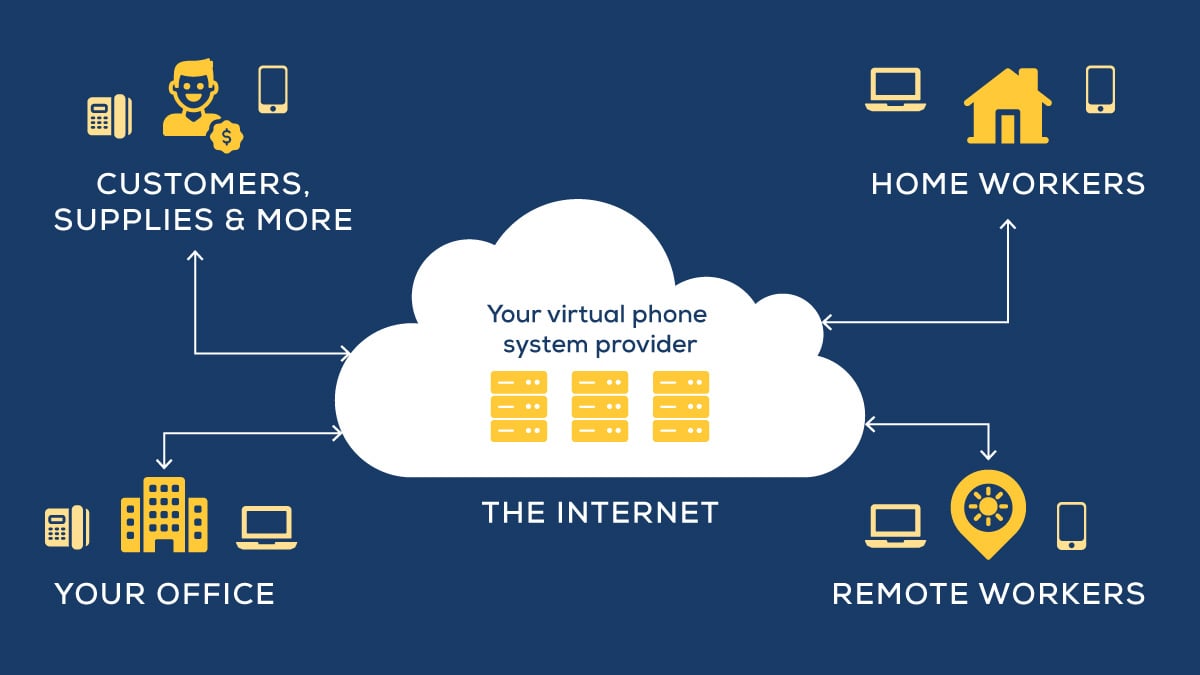
For voice communication and general phone service, cloud-based VoIP systems are the most established replacement path. Instead of routing calls over copper, they travel over your internet connection. They're flexible, scalable, and less expensive to maintain over time — organizations that make the switch typically save around 30% on phone costs.
For rural facilities with limited or inconsistent broadband, this option requires an honest assessment of your connectivity before committing. A partner who can evaluate both your phone system and your connectivity together — rather than treating them as separate decisions — saves you from replacing one problem with another.
HIPAA-compliant cloud faxing
The fax machine isn't going away from healthcare anytime soon, but the copper line underneath it needs to. Cloud fax services preserve the fax workflow your staff, referral partners, and payers already use — without the POTS dependency. HIPAA-compliant options include the audit trails and access controls your compliance program requires.
This is a good fit when:
- Your staff and external partners are accustomed to fax-based workflows
- You need a HIPAA-compliant paper trail for patient record transfers
- You're coordinating with outside organizations that aren't on your EHR platform
Analog telephone adapters (ATAs) for legacy devices
For fax machines or other analog devices you can't immediately replace, ATAs provide a bridge — converting analog signals to work over a VoIP or SIP connection. These aren't a long-term strategy, but they're a reasonable interim step if you're working through a phased transition. ATAs make the most sense when:
- You have specialty analog devices that can't be easily replaced
- You're managing a phased transition and need to buy time on certain lines
- Budget constraints require prioritizing which systems move first
Carrier evaluation
One piece of the POTS replacement puzzle that often gets overlooked is carrier selection. The carrier delivering your new voice and data services matters just as much as the phone system itself. In my experience working with healthcare clients, this is where I see the most avoidable problems — organizations choose a phone system without carefully evaluating whether their connectivity can support it, or they pick a carrier based on price and discover reliability issues down the road.
Marco works with hundreds of carriers across the U.S. and has a graded evaluation process that helps healthcare facilities find the right fit for their operational requirements — not just the lowest monthly rate.
Finding the best phone systems for the healthcare industry
If I'm talking to a healthcare administrator about this, the first question I ask is: What in your facility still runs on analog lines? Most organizations don't have a complete inventory. They know about the fax machines, but they may not know about the alarm systems, the elevator phones, or the patient monitoring devices until something stops working.
This is why I often say it’s almost impossible to overthink a phone system.
Before you can replace POTS lines, you need to know exactly what depends on them. That inventory is the starting point for any honest transition plan.
From there, the right path depends on your specific situation:
- What connectivity options are available at your location
- What your compliance requirements look like
- What your budget and timeline allow
- Which systems are most critical to address first
There's no single phone system and support plan that’s the right fit for everyone, but there is a clear process for finding yours. I or someone on my team would be happy to help you find the best fit. You can also click the link below to get a sense of the systems and support options available.