The meeting is scheduled. Everyone shows up on time – some even early. The agenda is set. You check off all the calendar and meeting etiquette steps, we’ve talked about in recent blogs. Then you all look at the screen and wait for the technology to load.
Technology is supposed to help us connect and collaborate faster. But not all the tools make it as easy and quick as others. We really need good tools to make the time we dedicate to meetings more productive.
The world is moving faster than ever before and the secret to thriving as an organization is teamwork. Three in four employees rated it as “very important” in a Queen’s University survey. Yet, surveys show that many employees believe that people in their organizations do not collaborate enough.
Collaboration, as good as it is, can be too time consuming to get everyone together. Two new tools are removing the barriers to make it easier and ignite teamwork in the workplace:
- Meeting Hub
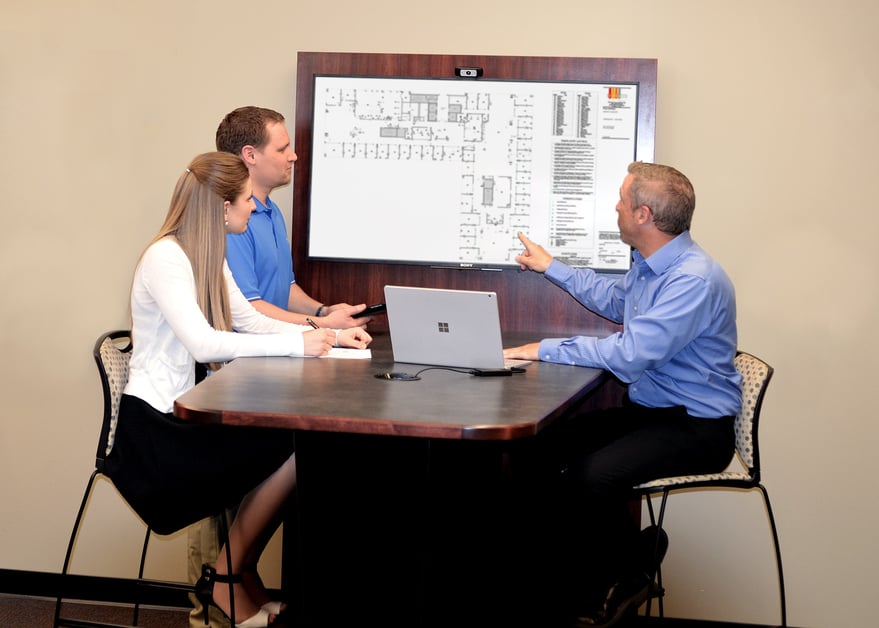
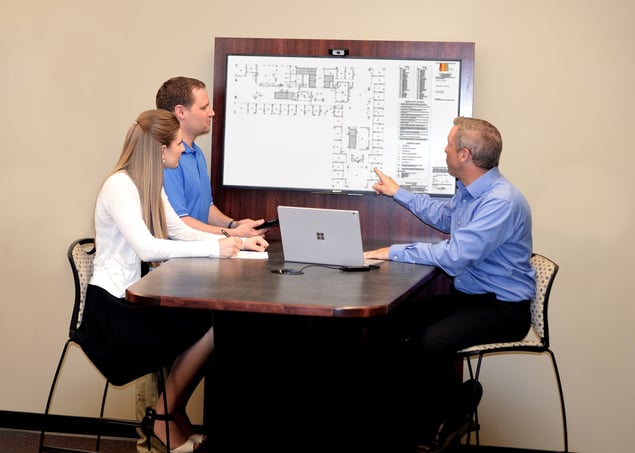
This piece of audio-visual technology automatically detects individuals and turns on a 49-inch 4K display – and turns it off when they leave. With no buttons to click or controls to find, the Marco Meeting Hub makes it easy for small groups to view PowerPoints, spreadsheets and other visual plans. Groups can also access meeting apps such as WebEx, Skype or GoToMeeting with the built-in webcam.
The hub is more than a monitor. It is a full meeting station with a table, monitor and end points for audio and visual. You can even add a whiteboard. The Meeting Hub makes small, even impromptu meetings efficient and effective – just as they should be.
It designed for small spaces and for the most common meetings we have – with 2-4 people. It enables organizations to create meeting space without all the square footage or even dedicated rooms.
This tool aims to engage more people throughout the organization and broaden the statistics now showing that in most cases, 20-35 percent of valuable collaboration comes from 3-5 percent of an organization’s team.
- Spark Board
This all-in-one device from Cisco allows you to wirelessly present, make a video or voice call and access a whiteboard. It is designed to intelligently anticipate your needs. It “wakes up” when you enter the room, detects your device through the Spark app and promptly suggests an activity that you can initiate with a touch of the finger.
Team members can be viewing a presentation, then start a video conference call and flip to the whiteboard screen. Participants can see the drawing on the whiteboard being created just as though they are in the room and even edit it from their device in real-time.
Then, everything can be saved to the cloud and associated virtual room. That allows teams to pick up wherever they left off in a physical room – at their desk, on their smartphone or when they reconvene next.
The Spark board allows you to connect multiple devices at once – in the office or at another site. The board comes with a 4K camera to share high-resolution, wide-angled images of the room and your choice of a 55-inch or 70-inch LED display. With 12-microphones built in, it makes it easier for everyone’s voice to be heard.
These two tools help meetings become more productive by enabling participants to do critical work while they are together and continue the task as they leave – instead of leaving it all for later.
A lack of effective collaboration can harm – and even destroy – an organization. A Salesforce survey of more than 1,400 corporate executives, employees and educators found that 86 percent of the participants believed that lack of collaboration was responsible for workplace failures.
Let’s continue to exercise calendar etiquette, host more effective meetings and unleash collaboration as it’s intended.