
IT Support for Manufacturing: A Complete Guide
What Are Managed IT Services for Manufacturing?
Managed IT services means partnering with a third-party provider to handle some or all of your technology needs — from cybersecurity and help desk support to compliance management and IT strategy.
Unlike a reactive break/fix model, modern managed IT is proactive. Your provider monitors your systems around the clock, catching problems before they interrupt production.
Modern vs. Break/Fix IT Support
Many manufacturers are still operating with infrastructure and approaches that made sense a decade ago — before ransomware was targeting the industrial sector, before compliance requirements became contractual obligations, and before every piece of equipment on the factory floor became a potential entry point.
Now, you have OT systems — PLCs, SCADA, HMIs — running alongside IT systems, often with no clear security boundary between them. You have shift workers who don't sit at desks, facilities that may span multiple locations, and production schedules that make maintenance windows nearly impossible to find.
A modern managed IT provider brings proactive monitoring, predictive problem resolution, and strategic guidance that keeps your technology aligned with your production goals. The older, reactive model — where IT only shows up when something breaks — simply isn't equipped for today's threat landscape or today's operational demands.
What Managed IT Isn't
Managed IT isn't just a help desk, and it isn't an instant fix for every problem. A good partner takes time to understand your environment, your equipment, your compliance requirements, and your goals before making recommendations. That patience upfront pays off in a partnership that actually serves your operations rather than disrupting them.

IT Challenges in the Manufacturing Industry

Manufacturing has some of the most demanding IT requirements of any industry.
Here's what our dedicated manufacturing IT team works with clients to solve.
Downtime You Can't Afford
Every hour of unplanned downtime has a cost — and it's rarely small.
When IT issues cause production to stop, it's not just an IT problem. It's a revenue problem, a client relationship problem, and sometimes a compliance problem.
Most manufacturers don't have a real incident response plan. They have a phone number they call when things break.
An IT Team That's Always Reactive
Most manufacturing IT teams are stretched well past what's sustainable. The people who are there spend most of their time on break-fix support, end-user tickets, printer issues, and password resets — leaving little time for the strategic work that actually protects and advances the business.
Patch management falls behind. Security monitoring doesn't happen. Projects get delayed indefinitely because the day-to-day never stops.
OT and IT Are Converging
Operational technology — the systems that run your equipment — was once completely isolated from your IT network. It isn't anymore.
That convergence creates attack surfaces that not all IT teams are trained to manage. A ransomware attack that gets into your IT environment can now cross into your OT environment. When that happens, it's not your data at risk — it's your production line.
Cybersecurity That Hasn't Kept Pace
Threats have evolved and escalated dramatically over the past few years, and most manufacturers haven't kept up.
Today's threats require endpoint detection and response, 24/7 monitoring, identity and access management, and a tested incident response plan. The manufacturing sector represented 27.7% of all cyberattacks in 2025 — the highest percentage of any industry.
Threat actors know that manufacturers have a low tolerance for downtime and are more likely to pay ransoms fast.
Multi-Site Complexity With No Central Visibility
If you operate across multiple facilities, your IT environment is almost certainly more fragmented than it should be. Different systems, different configurations, and no single view of what's happening across all of them.
That fragmentation isn't just an operational headache — it's a security risk.
Compliance Requirements That Are Outpacing Internal Capability
Defense contractors and their suppliers face CMMC requirements that are no longer optional. Manufacturers in regulated industries increasingly face audits tied to NIST SP 800-171, ITAR, and EAR.
And as cyber insurance underwriters harden their requirements, what was sufficient years ago is no longer enough.
For many mid-market manufacturers, meeting those requirements with an internal team that's already stretched isn't realistic. The work is highly specialized, documentation-intensive, and changes frequently.
The consequences of getting it wrong aren't just a failed audit — they're lost contracts, uninsurable risk, and in some cases, federal penalties.
This is exactly the type of work a qualified Managed IT partner could, and should, be carrying for you.
IT and Cybersecurity Talent Shortages
The IT talent shortage hits manufacturing especially hard. Attracting and retaining skilled IT professionals is genuinely harder for manufacturers than for most industries — and cybersecurity is increasingly a specialty that generalist IT staff aren't equipped to cover alone.
One thing that makes a real difference: working with a partner who already understands your environment before the first conversation. Marco has a dedicated manufacturing team that works exclusively with industrial clients — so you're not spending your time explaining what a PLC is or why a two-hour maintenance window isn't always possible.
Watch the video below to see our Service Delivery Manager, Joe Richardson, talk about how this team starts manufacturing partnerships differently.
The Main Cyber Threats to the Manufacturing Industry
Ransomware Attacks
In a ransomware attack, attackers encrypt your systems, shut down your production lines, and demand payment to restore access. Some ransomware attacks will also threaten extortion. Recently, ransomware attacks jumped by 45% in just twelve months. Unfortunately, small to mid-sized manufacturers in the US were the hardest hit.
Supply Chain Attacks
Cybercriminals don't always attack you directly. They compromise a smaller, less-protected supplier and use that access as a backdoor into larger targets. One example on the print side: compatible toner cartridges can be hacked. If one is installed in a networked printer, it could be used to launch a cyberattack against your business.
IoT Security Issues
Every sensor, smart device, and connected piece of equipment on your factory floor is a potential entry point. Many IoT devices were designed with functionality — not security — in mind. Too often, they're running with default passwords, outdated firmware, and minimal security protocols.
Insider Threats
Even if you trust your people completely, insider threats aren't always deliberate. In fact, 62% of insider incidents are due to human error — an employee clicking a risky email attachment, plugging in an unfamiliar USB drive, or connecting a personal device to the production network.
Intellectual Property Risk
Your proprietary designs, manufacturing processes, and R&D data are valuable. Without proper cybersecurity controls in place, they can be stolen without your knowledge — until a competitor releases a suspiciously similar product.

10 Signs Your Manufacturing Business Could Benefit From Managed IT
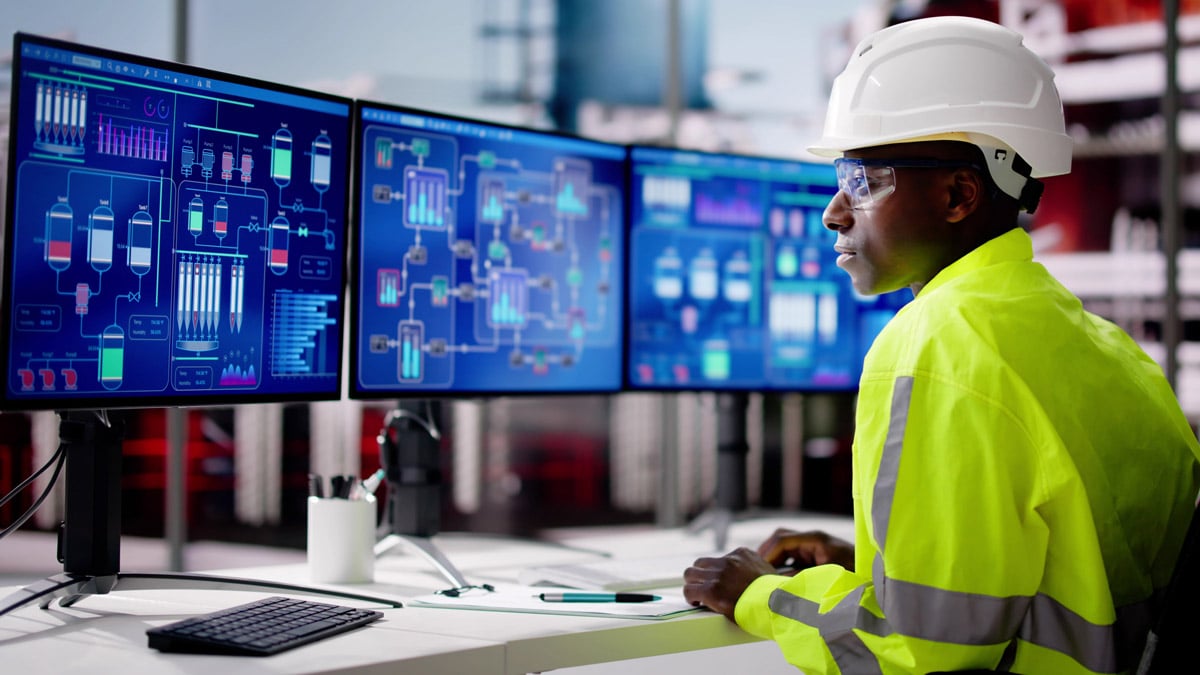
Managed IT isn't the right fit for every business, even within the manufacturing sector.
However, when we hear these types of issues come up, they're signs that our IT services could actually help pay for themselves.
1. Unplanned Downtime Is Costing You
Every minute a production line is down has a dollar figure attached to it. If IT issues — network outages, software failures, hardware problems — are contributing to unplanned downtime, a Managed IT partner's proactive monitoring can dramatically reduce those incidents.
2. You're Struggling To Retain IT Talent
Manufacturing companies consistently struggle to compete for IT and cybersecurity talent. Outsourcing gives you access to a full bench of specialized experts without the recruiting headaches or retention risk.
3. Cybersecurity Feels Like a Moving Target
The threat landscape changes constantly, and cybercriminals target manufacturers in specific ways. If your cybersecurity posture feels like it's always one step behind, it probably is.
4. Compliance Is Consuming Internal Resources
Whether it's CMMC for defense contracts, ISO 27001 for international clients, or cybersecurity insurance renewals, compliance demands are growing. A Managed IT partner with manufacturing expertise already understands the regulatory landscape — and knows what works.5. Your IT and OT Systems Don't Communicate
Disconnected systems mean decisions made on incomplete information, manual processes filling in the gaps, and security blind spots that attackers can exploit. An IT partner can help you integrate and secure these environments.6. You'd Like To Reduce Costs — and Actually Predict Them
The financial benefits of Managed IT alone are worth examining. You can start accessing productivity gains and infrastructure savings with a low upfront investment.
Large partners with strategic partnerships can also access volume discounts on software and equipment and pass those savings to their clients.
7. Vendor Risk Keeps You Up at Night
Your security is only as strong as your weakest vendor. If a supplier has access to your systems and their security is lax, that's your problem too. Roughly 60% of all data breaches happen through third-party vendors.
Vendor due diligence is becoming a competitive differentiator — and increasingly a contractual requirement.
8. You're Planning To Grow, Acquire, or Add Locations
If you work with a Managed IT partner that operates nationwide, that service scales with you. Whether you're adding a facility, going through an acquisition, or onboarding a new production line, a Managed IT partner can provide seamless technology support through the transition.
9. Your Customers Are Asking About Your Cybersecurity
Vendor due diligence goes both ways. Increasingly, manufacturers are being asked by their own customers to demonstrate that they're safe to work with. Managed IT makes it easier to answer those questions — and win those contracts.
10. You Want 24/7 Support Without 24/7 Payroll
Manufacturing doesn't stop at 5 p.m., and neither do cyber threats. A Managed IT partner delivers around-the-clock monitoring and support without the cost of a fully staffed internal IT department working in shifts.

Key Elements in Cybersecurity for Manufacturing

Cyber resilience isn't just about buying the right firewall. It's about creating a culture and infrastructure that can prevent, withstand, and recover from attacks quickly. Cybersecurity strategies for manufacturers should include:
Network Segmentation
Separate IT and OT environments so a breach in one area doesn't compromise everything else.
Zero Trust Architecture
Instead of focusing on perimeter security, zero trust architecture verifies every user, every device, every time, regardless of location or prior access.
Multifactor Authentication
Multifactor authentication (MFA) gets a bad rap, but it takes just about as long as locking your front door and can prevent 99.9% of cyberattacks. ⚠️ Original source needs verification before publish. We recommend enabling MFA across every system, not just the obvious ones.
Security Awareness Training
Security isn't just "IT's problem." Every employee needs to understand their role in your company's overall cybersecurity posture. Engaging security awareness training isn't just sending out a memo from time to time — it's about transforming your employees from your biggest liability to your strongest cybersecurity asset.
Incident Response Planning
An excellent Incident Response Plan (IRP) can mean the difference between a bad day and a catastrophe. But it's often a missing piece when we first work with manufacturing clients.

What Should Managed IT Support Services Include for Manufacturers?

What Should Managed IT Support Services Include for Manufacturers?
Not all Managed IT providers offer the same things the same way, so it can be very hard to compare apples to apples. Your provider should spell out everything they're offering in a service level agreement (SLA), and these are usually negotiable.
At minimum, a comprehensive Managed IT engagement for manufacturers should include:
IT Services:
-
End-user support (including shop floor and remote workers)
-
On-site escalation support
-
Remote network monitoring and management
-
Software patches, firmware updates, and equipment lifecycle management
-
Data backup and disaster recovery planning built for manufacturing environments
-
Business continuity planning
-
Security operations center (SOC)
-
Network operations center (NOC)
IT Tools:
- Threat detection and response
- IT and OT network management and monitoring
- 24/7 remote systems management
- Security awareness training, including phishing simulations
- Email and web security
- Security information and event management (SIEM)
- Endpoint detection and response (EDR)
Not every provider delivers all of this — and how they deliver it matters as much as what's on the list. Later in this guide, we'll cover exactly what separates a qualified manufacturing IT partner from one that just checks the boxes.
Our Tips on ISO 27001, Cyber Insurance, and CMMC Compliance Requirements
Compliance isn't just about avoiding fines. For manufacturers, it's increasingly about winning and keeping contracts. Working with a specialist who understands how to translate vague regulatory language into concrete action steps can be transformative.
CMMC (Cybersecurity Maturity Model Certification)
If you're working with the Department of Defense or are part of the DoD supply chain, CMMC compliance is becoming a contractual requirement — not optional. This framework has multiple levels based on the sensitivity of the information you handle, ranging from basic cyber hygiene to advanced security practices. The protections CMMC requires are completely in line with what we would recommend anyway.
ISO 27001
ISO 27001 is an internationally recognized standard for information security management systems. Many manufacturers pursue ISO 27001 certification to meet customer requirements or gain a competitive advantage, particularly when working with international clients. Achieving this certification often helps organizations identify and address security gaps they didn't know existed.
Cybersecurity Insurance
The bar for qualifying for cyber liability insurance has risen significantly. Insurers want to see that you're taking reasonable precautions before they'll cover you. The work you do to meet compliance requirements also helps you qualify for better coverage at better rates. And with the average cost of a data breach in the industrial sector hitting $5.56 million, the math on cyber insurance isn't difficult.

Becoming a Smart Factory: AI, IoT, and Industry 4.0 Solutions
For competitive manufacturers, Industry 4.0 is already here — and the manufacturers who learn to leverage smart factory technologies while managing the associated risks are the ones who will pull ahead.
What Is a Smart Factory?
A smart factory uses interconnected technologies — IoT sensors, AI-driven analytics, automated systems, and cloud platforms — to create a manufacturing environment where machines, processes, and people share data in real time. The result is faster decision-making, better quality control, reduced waste, and more predictive operations.
IoT in Manufacturing: Practical Applications
IoT is a broad term. Here are a few specific examples of what's currently possible:
-
Connected equipment that monitors its own performance and flags maintenance needs before a failure occurs
-
Environmental sensors that optimize energy usage based on actual real-time conditions
-
Inventory systems that automatically track raw materials and finished goods, eliminating manual counting
-
Quality control tools that identify defects faster and more accurately than manual inspection
The ROI case for IoT in manufacturing is compelling, but only when the infrastructure supporting these devices is properly configured, secured, and integrated with your broader systems.
AI and Predictive Maintenance
AI-powered predictive maintenance analyzes equipment sensor data to forecast failures before they happen — reducing unplanned downtime and extending the lifecycle of expensive equipment.
AI systems are now also capable of:
-
Detecting microscopic product defects with speed and accuracy that exceed manual inspection
-
Anticipating and mitigating supply chain disruptions before they impact production
-
Simulating process changes to identify optimization opportunities without risking live production
-
Analyzing operational data to surface trends that humans simply can't see at scale
Helping manufacturers access these advanced technologies is one way that Managed IT services are transforming the industry.
Is Your Infrastructure Ready To Move Forward?
More connected devices means more complexity — and more risk. Before adding IoT tools, AI systems, or automated equipment, you need to know whether your current infrastructure can support them securely.
One of the fastest ways to get a clear plan on how to move forward is through a Technology Assessment. Some providers will just offer a quick scan and provide raw data. Ours is designed to give tech and non-tech people alike a clear picture of where you stand today and a realistic roadmap for where you need to go.

Identifying the Best Managed IT Services for Manufacturing Firms
Not all Managed IT providers are the same, and that gap becomes especially wide in manufacturing. A generalist IT provider can keep your email running.
A manufacturing-experienced provider should understand production environments, OT systems, compliance frameworks, and the operational stakes behind every technology decision.
20 Green Flags
Here's our list of provider non-negotiables:
- They take time to understand your production environment before recommending anything
- They have direct experience serving manufacturers — and can point to real client outcomes
- They understand the difference between IT and OT networks and how to secure both
- They've achieved a SOC 2 Type 2 report, verifying they consistently follow best practices
- Their recommendations align with NIST, CIS, or similar cybersecurity frameworks
- You have a dedicated account manager — you're not re-explaining yourself every call
- They give you real-time visibility into what they're doing on your behalf
- They speak in business outcomes — reduced downtime, compliance readiness, cost savings — not just technical specs
- Everything included and excluded from your agreement is in writing
- Their pricing model doesn't create incentives to let problems fester
- They have strategic relationships with manufacturers and software vendors that benefit your bottom line
- Their help desk response times and availability are compatible with your production schedule
- They're familiar with CMMC, ISO 27001, and cybersecurity insurance requirements
- They can support you through growth, acquisitions, and multi-site expansion
- They check in proactively — not just when something is wrong
- They start with a structured assessment — not a sales pitch
- Their help desk answers live, not with a ticket queue — Marco answers 95% of calls live and resolves 95% of issues remotely
- They offer 24/7 MDR with active response, not just alerting
- They have demonstrated experience bridging OT and IT environments
- They can give you real-time visibility into your entire environment through a platform like the Insights Cloud Portal
10 Red Flags
If a provider behaves like this, they're not a good fit:
- They haven't updated their cybersecurity tools and services in years
- They've never asked about your production environment or business goals
- They don't perform a full technology and security assessment at the start of the relationship
- They resolve tickets without addressing underlying root causes
- They focus on how cheap their services are, not how much ROI they provide
- You can't exit early, even if they haven't met their commitments
- You're always explaining your systems to whoever picks up the phone
- They don't have a clear answer for how they handle IT/OT security
- They're unfamiliar with the compliance frameworks that matter to your customers
- They're not incentivized to prevent problems
Questions To Ask a Managed IT Partner Before You Sign
Use these in your conversations with prospective partners:
Experience
-
How many manufacturing clients do you currently support?
-
Have you worked in environments with OT systems — PLCs, SCADA?
-
Can you share a case study from a manufacturer similar to us in size and complexity?
Security
-
What does your MDR offering include, and who provides it?
-
What's your average response time from threat detection to containment?
-
Have you completed a SOC 2 Type 2 examination?
-
Do you have experience helping manufacturers meet compliance requirements?
Support
-
What's your live call answer rate?
-
What's your remote resolution rate?
-
What are your SLA commitments for critical vs. standard issues?
Fit
- How do you handle sites in different geographies?
- What does your onboarding process look like, and how long does it take?
What Does Their Pricing Model Tell You?
Pricing models can tell you a surprising amount about a partner — what they value and what they'll be like to work with. A per-user pricing model — like the one we use — means your partner grows when you grow and is incentivized to prevent problems rather than profit from fixing them. It also makes your costs predictable, which matters when you're trying to run a lean operation.
What a Great Manufacturing IT Partnership Looks Like
The best Managed IT relationships in manufacturing don't feel like vendor relationships.
They feel like having a strategic technology partner who understands your operations, tracks your goals, and proactively brings ideas — rather than waiting to be called when something breaks.
Here's how we create that relationship:
-
A dedicated manufacturing IT team that speaks your language and understands what you need
-
Regular Client Business Reviews where we get everyone in leadership aligned
-
Customizable IT support packages to fit every business need
-
Our proprietary Insights Cloud Portal — which makes it easier for you to see what we're seeing across your infrastructure
-
A focus on the business outcomes that matter most to you
-
Honest conversations about what to prioritize given your budget and risk tolerance
-
Quick communication when a compliance requirement changes, a new threat emerges, or one of your tools is reaching its end of life
Managed IT for manufacturers isn't about outsourcing your IT department.
It's about building a technology foundation that doesn't fail when you need it most — and giving your team the support and visibility to operate at a higher level.
The manufacturers who get this right aren't necessarily the ones with the biggest IT budgets. They're the ones with the right partner.
