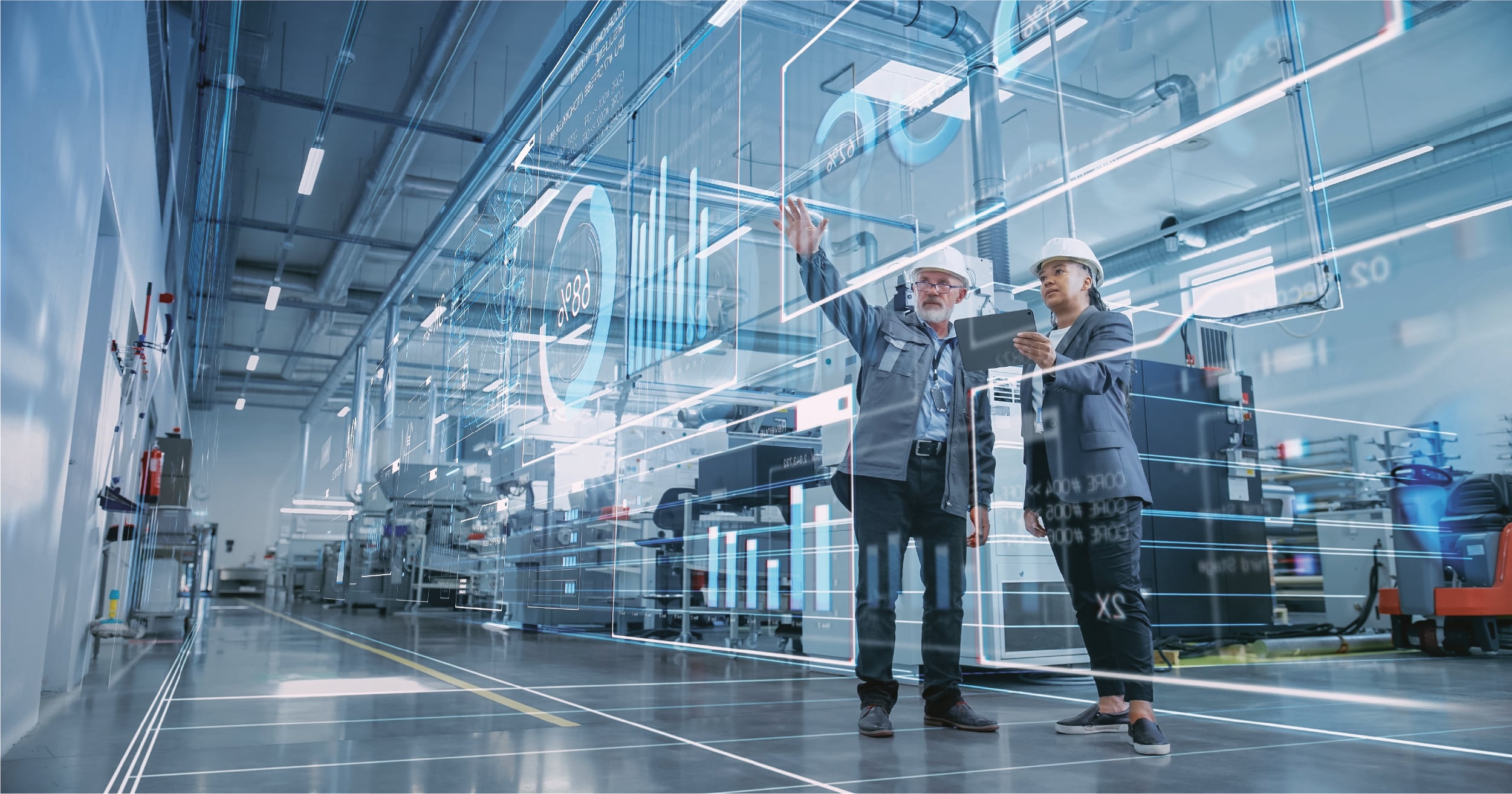
Some of the most celebrated innovation stories in American history come from the manufacturing industry. From the first assembly line to interchangeable parts, American manufacturing was the epicenter of the Second Industrial Revolution.
Now, however, manufacturers often face complex challenges in adopting more Internet of Things (IoT) technology. As we move towards Industry 4.0, manufacturers are under tremendous pressure to invest in emerging technologies that can work together to remain competitive. That’s no easy feat in an era also marked by skilled labor shortages, rising production costs, and supply-chain disruptions. But manufacturers that haven’t before seen a need for managed IT services should give it another look. In this blog, I’ll outline why.
Why More Manufacturing Companies Need Managed IT in 2026 (and Beyond)

If reducing costs, disruptions, unpleasant surprises, skill gaps, inefficiencies, and manual processes are on your to-do list, partnering with a managed services provider can be the quickest way to start tackling all of them.
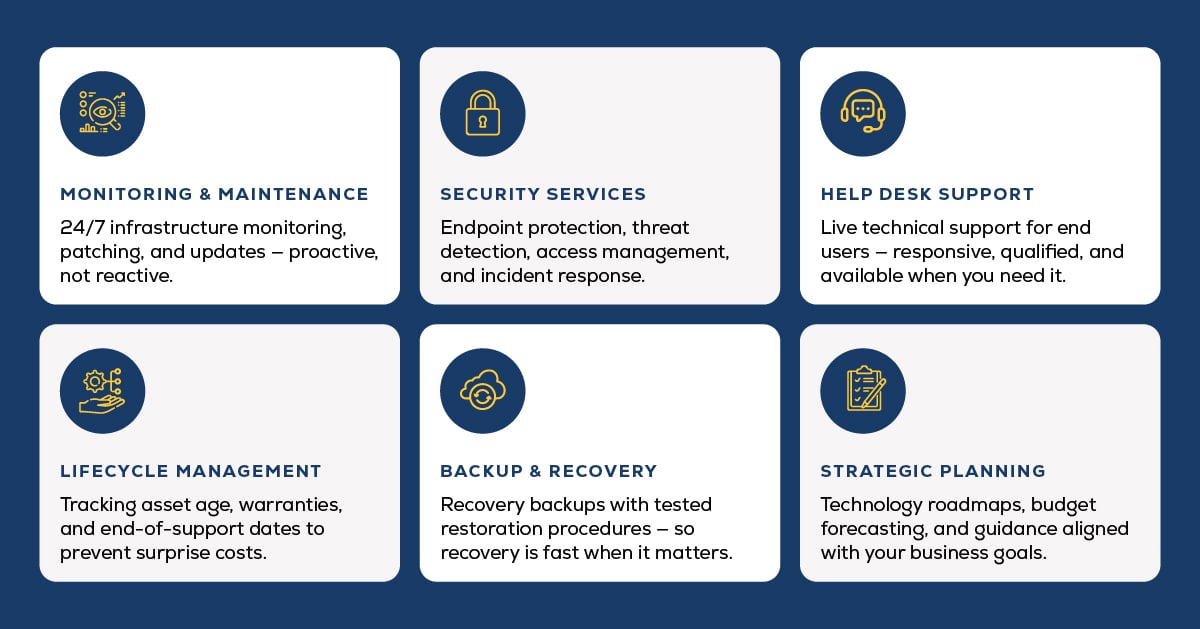
Here’s what a managed IT provider — well, one with expertise serving manufacturing clients — can bring to the table.
Bringing Machines to Life With IoT
Imagine your equipment learning to speak your language! IoT technology connects your machines to the internet, letting them share valuable information. Your technology partner can help set up sensors that track production data in real-time, so you always know how things are running. This means catching issues before they become problems and making smarter decisions based on actual performance.
Adding Smart Automation — Not To Replace Humans
One common misconception about modern process automation is that it's all about replacing human labor. And while that's an understandable concern, the manufacturing industry has the opposite problem — a talent shortage that's approaching a crisis in many states.
When we talk with our clients about adding automation, it's about working smarter — eliminating busywork, reducing errors, and freeing people up for the work that actually requires human judgment.
That conversation has evolved fast. AI tools in manufacturing have moved well beyond predictive maintenance. Today, manufacturers are putting them to work for:
- Quality inspection that catches defects faster and more consistently than manual review
- Production planning that adjusts in real time based on demand signals and supply chain inputs
- Documentation and reporting that used to consume hours of skilled workers' time each week
This matters especially in the context of the talent shortage. AI-assisted tools aren't filling headcount — they're making the people you have more effective. A quality engineer spending less time on repetitive inspection has more capacity for process improvement. A production planner freed from manual data reconciliation can focus on the decisions that actually move the needle.
An IT partner with manufacturing experience can help you identify which tools fit your operation, integrate them with your existing systems, and deploy them securely. That last part is where a lot of manufacturers are still catching up — because the more AI touches your production environment, the more important it is that those systems are properly configured, monitored, and protected.
Watch the video below to see our Service Delivery Manager, Joe Richardson, discuss how Marco's dedicated manufacturing IT team works with clients differently.
Turning Data Into Insights You Can Use
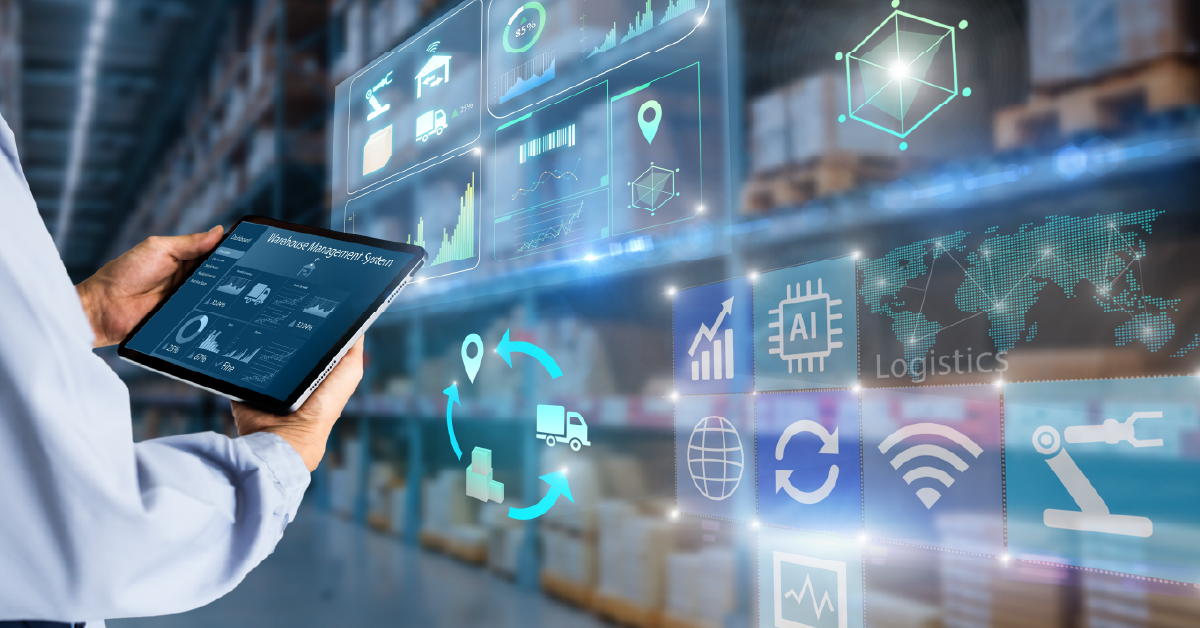
Here’s the good news — manufacturing generates mountains of data!
The bad news — it’s difficult to unlock that data without sophisticated tools.
The right technology partner can help you transform your data into a competitive advantage by helping you implement powerful analytics tools.
The right analytics tools can help you spot trends, optimize your production flows, and make improvements based on real evidence rather than guesswork. In turn, those insights can help you boost quality, streamline operations, and make your supply chain more responsive.
Streamlining Your Business Systems
Have you grown through a series of acquisitions? Then this might sound especially familiar …
You’ve got multiple systems that individually work just fine. But they don't talk to each other at all. And so you’ve got highly skilled talent who are spending a significant amount of time connecting the dots between one system and another.
Your IT partner can help you modernize and connect your enterprise systems (i.e., enterprise resource planning (ERP), supply chain, lifecycle management) by moving them to the cloud. This move can create a single source of truth across your business and give everyone the information they need to make quick, smart decisions.
Staying Compliant Without the Headaches
Meeting industry regulations doesn't have to be painful. Okay, those are some big claims, but hear me out.
As regulations continue to evolve, a lot of manufacturing organizations are individually trying to constantly reinvent the wheel. A tech partner that has manufacturing expertise will already understand your regulatory constraints and will bring their knowledge of what solutions have worked well at companies like yours.
Protecting What You've Built
When cloud tools were newer, more people were highly skeptical about the safety of their data.
Now the pendulum has swung too far in the other direction, where too many organizations underestimate the need for implementing cybersecurity best practices.
However, once again, there’s no need to reinvent the wheel. Any IT provider that’s worth their salt will understand the tools and policies you’ll need to be in line with best practices.
How To Eliminate Cybersecurity and IT Guesswork
It can be very difficult to compare IT providers, as no two will provide the same list of tools and services in the same way. The other complication? Managed IT should provide more ROI than it costs. But while you can always get a quote, it can be harder to understand how much you’ll actually save.
But let’s tackle the first problem first. If you’ve never shopped for an IT provider before, here are some telltale signs that you can trust them to protect your systems and data:
- They’ve updated their tools over the past five years
- They can have a frank talk with you about your risk tolerance and what upgrades should be prioritized vs. what can wait if necessary
- They have a SOC 2 Type 2 report that verifies they’re following best practices
To get an idea of the real value we can bring to a manufacturer, you can check out this case study. You can also request a quick quote through the link below. And if you’d like a human to crunch some numbers about how we’d offset that investment, feel free to reach out!