According to IBM's 2024 Cost of a Data Breach report, the average cost of a data breach in the industrial sector hit $5.56 million — an 18% jump from the previous year. And here's the kicker: it takes manufacturers an average of 199 days just to identify a breach, then another 73 days to contain it. For an industry where every minute of downtime can cost thousands of dollars, that's not just inconvenient. It's devastating.
The good news? You don't have to figure this out alone. There are excellent resources available from some national organizations that I think are very well put together, and I wanted to compile my favorites for you here. But in order to understand some of these recommendations, I think it’s helpful to think — at least a little bit — like a cybercriminal.
Why Manufacturers Are Prime Targets

Cybercriminals love targeting manufacturers. It's simple economics on their end. Between intellectual property theft, ransomware opportunities, and supply chain vulnerabilities, manufacturing offers multiple ways for bad actors to profit.
When you consider that many manufacturers have connected their operational technology to the internet — opening up industrial control systems, IoT devices, and production equipment to potential attacks — the attack surface has expanded dramatically.
When cybercriminals find an industry where budgets are tight, priorities are elsewhere, and vulnerabilities are plentiful, every organization within that industry is going to have a giant target on its back. But that doesn’t mean you should just throw up your hands and wait to be attacked either.
Resources for Manufacturing Cybersecurity

The National Institute of Standards and Technology (NIST) has done manufacturers a huge favor by creating free, practical resources tailored to the industry. Here's where to start:
The Basics for Small Manufacturing Businesses
NIST has compiled guidance on responding to incidents, planning guides, case studies, and training resources specifically designed for small to medium-sized manufacturing businesses. Their comprehensive guide isn’t filled with jargon. It's practical advice you can actually use. You can download the guide for free.
If you’ve been reading other Marco blogs on this topic, you probably won’t be surprised at what you find there. That’s because our recommendations for manufacturers are in line with recommendations from NIST and CIS (Center for Internet Security). But no matter how transparent we cybersecurity people try to be, I get it — sometimes it’s more helpful to hear the same advice from a neutral party.
Cybersecurity for Industrial Control Systems
If you're running industrial control systems, NIST’s Guide to Operational Technology (OT) Security is essential reading. It addresses the unique performance, reliability, and safety requirements of OT environments while providing clear guidance on securing them.
IoT Device Security
Got connected devices on your manufacturing floor? NISTIR 8259 describes foundational cybersecurity activities that should be considered before IoT devices are deployed. This is preventive medicine — much easier than treating an infection after it spreads.
Network Segmentation Guidance
NIST also provides a white paper on security segmentation in small manufacturing environments. Their six-step approach helps you separate IT and OT networks, limiting how far an attacker can move if they breach one system.
Other Free Tools and Resources
The Cybersecurity and Infrastructure Security Agency (CISA) also offers free resources that I believe are particularly valuable:
- The Cyber Security Evaluation Tool (CSET) — desktop software that guides you through a step-by-step process to evaluate your industrial control system and IT network security
- Cybersecurity alerts and advisories — a variety of reports on current vulnerabilities, indicators of compromise, tactics, and techniques that you can filter by industry
- Tabletop Exercise Packages — security tabletop exercise resources that you can use to test your response and recovery capabilities
Compliance Frameworks That Can Help You Win More Business
While the resources above are essential for building your security foundation, you may also need to consider formal certifications depending on your customers and contracts.
ISO 27001
ISO 27001 is an internationally recognized standard for information security management systems. It provides a systematic approach to managing sensitive information and demonstrates to customers and partners that you take security seriously. Many manufacturers pursue ISO 27001 certification to meet customer requirements or gain a competitive advantage, particularly when working with international clients.
Cybersecurity Maturity Model Certification
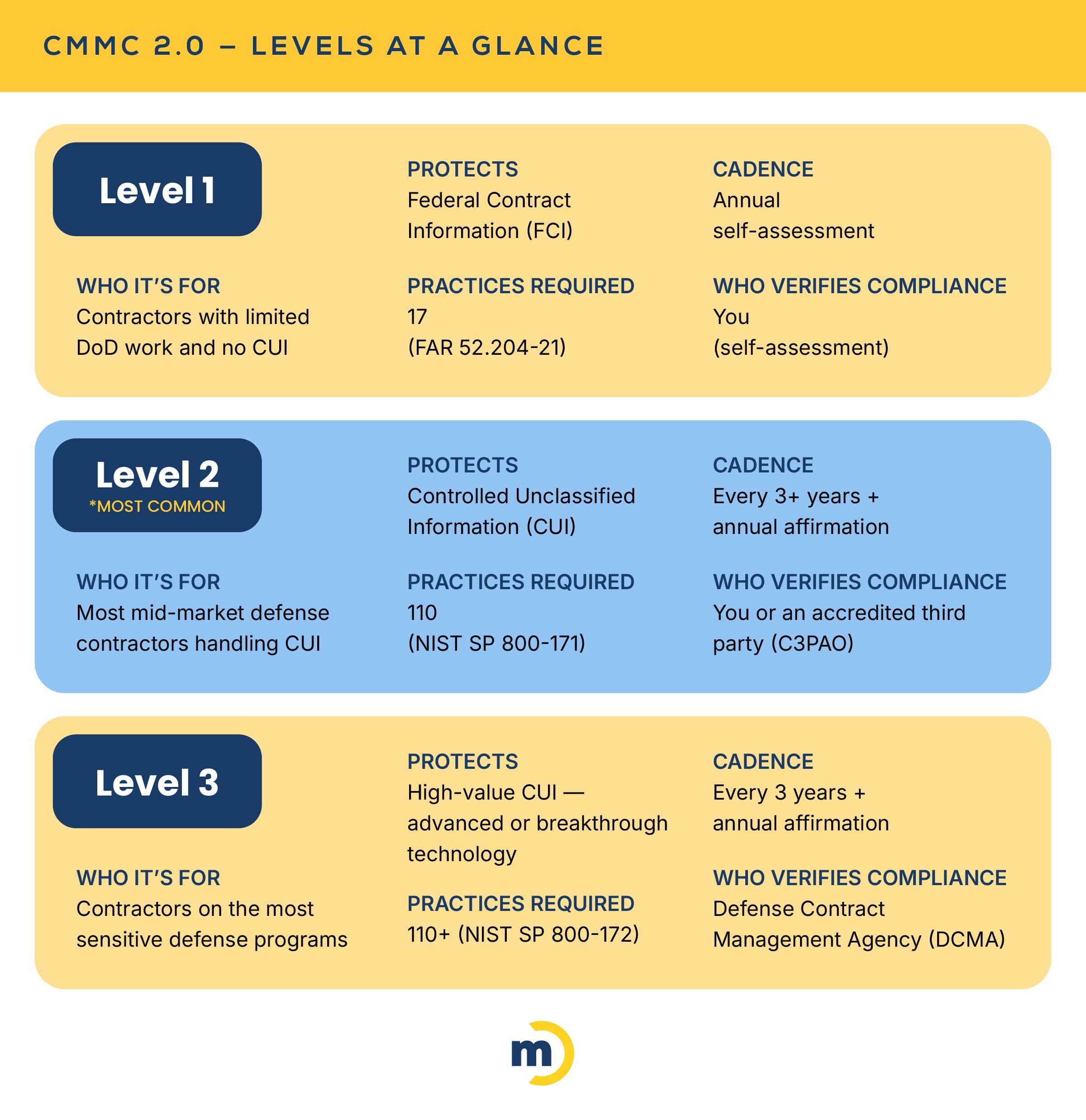
CMMC (Cybersecurity Maturity Model Certification) is specifically designed for manufacturers and other businesses in the Defense Industrial Base. If you're doing work with the Department of Defense or are part of the DoD supply chain, CMMC is becoming a contractual requirement. The framework has different levels based on the sensitivity of the information you handle, ranging from basic cyber hygiene to advanced security practices.
While these certifications require investment and ongoing maintenance, they can open doors to new business opportunities and demonstrate your commitment to security. More importantly, the process of achieving certification often helps organizations identify and address security gaps they didn't know existed.
Your Cybersecurity in Manufacturing Cheat Sheet
Every business is different, which is one of the reasons that CIS offers different recommendations based on your risk, your size, and what you need to protect.
But if I were to boil down the advice these organizations are offering into a simple list, here’s what I’d recommend prioritizing (if you haven’t already):
1. Segment Your Networks
One of the most effective defenses is creating barriers between your IT and OT systems. If an attacker compromises your email server, you don't want them to have an easy path to your production equipment. In highly sensitive environments, consider air-gapping critical systems entirely — physically isolating them from external networks.
2. Update Everything Regularly
IoT devices and industrial equipment often ship without robust security features. Regular firmware updates and proper configuration are essential. Make this part of your routine maintenance schedule.
3. Train Your People
Many breaches start with human error, like clicking a phishing link, using a weak password, or mishandling sensitive data. Continuous security awareness training for your team is one of the best investments you can make.
And if you don’t have an incident response plan — or it isn’t updated and tested regularly — it’s time to start conducting regular security tabletop exercises.
4. Implement Strong Access Controls
Not everyone needs access to everything. Establish clear policies about who can access what systems, and enforce them consistently. Regular security audits help ensure those policies are being followed.
5. Deploy Real-Time Monitoring
You can't defend against threats you can't see. Security Information and Event Management (SIEM) systems provide visibility into what's happening across your network.
6. Backup, Backup, Backup
Secure, off-site backups are your insurance policy against ransomware. If attackers encrypt your systems, you can restore from backup rather than paying a ransom. Just make sure those backups are encrypted and stored where attackers can't tamper with them.
Filling in the Gaps
When I work with new manufacturing clients, I often find that a lot of them have stepped up their cybersecurity posture admirably, especially considering the past few years.
There are a few items on the list I outlined, however, that don’t always make the cut. One of the big ones is that incident response piece. Too many organizations don’t have an incident response plan at all, or if they do, it hasn’t been looked at in years. If you just need to update that piece of the puzzle, you can get our help with just that piece. And if you’re not sure what to prioritize on a tight budget, the Marco cybersecurity team has one more resource for you below.