An Incident Response Plan (IRP) should contain everything your organization will do in the event of a security incident. An IRP is just one component of an overall Business Continuity Plan (BCP), which should also contain a Disaster Response Plan (DRP).
An excellent IRP can mean the difference between a bad day and a catastrophe. But when I first partner with a business, their IRP is usually so out of date that it wouldn’t be helpful, or it’s completely nonexistent.
What’s the Difference Between an IRP, a DRP, and a BCP?
An IRP helps your organization respond to a security incident quickly in order to avoid disruption. If normal operations have already been disrupted, that’s when a BCP will dictate your next course of action to keep your organization running. A DRP will direct your IT team to quickly restore normal operations of critical systems, tools, and other infrastructure.
Why Do You Need a More Robust Cyber Incident Response Plan?
While physical security is still vitally important, cybersecurity is many organizations’ chief concern and perhaps their greatest vulnerability. In 2025, small businesses experienced a 46% cyberattack rate.
If you don’t think your organization has faced this problem so far, you might be wrong and just do not know it yet. Data from IBM suggests that it can take organizations an average of 280 days to identify and contain a cyberattack.
What Should Your IRP Contain?

Although no two organizations will have the same IRP, plans should include common components as outlined by guidance from trusted organizations such as the National Institute of Standards and Technology (NIST) or the SANS Institute.
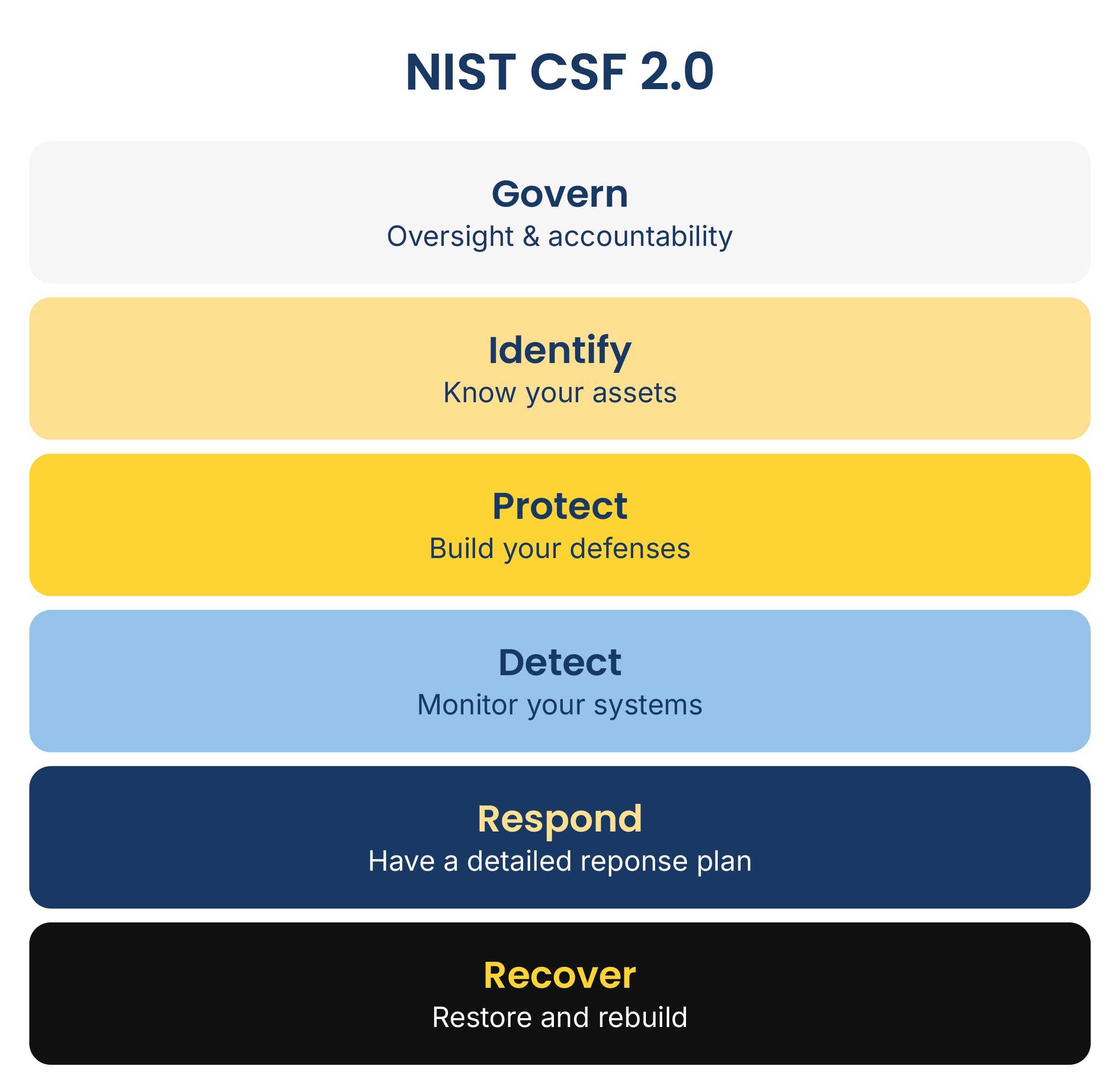
I’ll explore some of this in more detail a bit later. But generally speaking, plans should detail strategies to help your organization prepare, identify, contain, and remediate an incident while eliminating the risk of further damage. Your plan should also identify who’s responsible for notifying anyone affected by the incident, potentially including end-users, customers, third-party providers, and law enforcement. Finally, your plan should mandate a post-incident review.
Key Metrics
In addition to the nuts and bolts of how you’d like your team to resolve and remediate an incident, your IRP should also establish clear performance metrics to measure its effectiveness.
Key metrics include how fast your team can:
- Detect threats
- Acknowledge incidents
- Contain breaches
- Recover your systems
These measurements help you track your response capabilities and identify areas for improvement over time.
How To Create and Update Your Incident Response Plan
The reason most organizations struggle to create and maintain up-to-date IRPs? When done correctly, these are robust documents, and that means they take time!
1. Identify and Train Your IR Team
Decide who will be on your incident response team, including IT personnel, security personnel, leadership, and potentially lawyers and communication experts. Clearly state each position’s role and responsibilities in the event of a security incident.
For organizations where it makes sense, I would recommend having a two-tier structure: a core team that handles day-to-day cybersecurity matters from security operations, security management, legal, and privacy departments; and an extension team that can be activated as needed, including representatives from human resources, marketing, physical security, and law enforcement liaisons. Designate a clear incident response lead who will coordinate all activities and communications.
2. Assess Common Threats and Initial Responses
No single plan can anticipate anything and everything, so you should identify those assets that are most vital to your business, what incidents would require a high-level response, and what assets and incidents you’d like your plan to focus on. You should also know how your team will detect and escalate incidents, including when and how to involve additional parties.
How do you do that?
My advice would be to start by mapping your critical network components and determining which systems and data are most essential to your operations. These priority assets should be replicated and stored in secure, remote locations. Next, identify any single points of failure in your network — including hardware, software, and even key personnel roles — and create redundancies or failover capabilities to address them. If a designated team member is unavailable during an incident, ensure there's always a backup person who can step in.
Develop a risk classification system that categorizes incidents by severity and urgency. This matrix should specify which types of incidents trigger immediate activation of your full IRP, such as ransomware attacks, widespread malware infections, denial-of-service attacks, customer data breaches, and critical insider threats.
Additionally, consider AI-related threats, including AI-powered social engineering attacks (like deepfake phishing), vulnerabilities in AI systems your organization uses, and potential misuse of generative AI tools that could expose sensitive data or bypass security controls.
3. Define Containment Strategies
Containment and investigation strategies, including evidence preservation, should be clearly mapped out in your plan. Any additional tools and resources needed for these steps should be identified and acquired.
4. Plan a Quick Recovery
Outline how you will eradicate the threat from your system once it’s contained and how you’ll be able to recover quickly.
Consider creating a workforce continuity plan as part of your recovery strategy. During a security breach or natural disaster, certain locations or processes may become inaccessible. Enable employees to work remotely by implementing technologies like virtual private networks and secure web gateways. This approach prioritizes employee safety while minimizing business downtime.
5. Establish a Communications Plan
Your IRP should include a detailed communications plan that specifies how your team will coordinate during an incident and which communication tools you’ll use.
Where it makes sense, I’d also recommend specifying who is responsible for each type of communication and who should receive them.
6. Test and Regularly Review Your Plan
While your physical security risks may not change often, cybersecurity risks are evolving rapidly.
Your IRP should be formally reviewed, updated, and approved at least once per year, with immediate revisions triggered by significant changes to your IT infrastructure, business operations, or regulatory requirements. You should conduct an in-depth review following any significant security incident to identify areas of improvement. Conduct regular tabletop exercises or full simulations to stress-test your plan's effectiveness and ensure everyone knows their role. Any lessons learned from incidents, whether real or simulated, should be incorporated into your plan moving forward.
Also, be sure to train personnel on the IRP annually. While IT staff need to fully understand the technical aspects of your plan, it's crucial that all employees throughout your organization at least understand the importance of incident response and basic security concepts. Full employee cooperation can significantly reduce the length of disruptions and limit the chances of a serious breach occurring in the first place.
Finding Incident Response Examples
You’d think you’d be able to find an IRP template that you could simply download and fill in with a few specifics. Unfortunately, it’s not that easy. That’s because every organization has different risks, uses unique tools, and works in its own way. The way a regional health center should respond to a ransomware attack that shuts down its emergency room differs from the way a manufacturing organization needs to respond to a data breach.
However, it can be helpful to look at examples of IRPs just to see how thorough they need to be and how other organizations have solved the problem.
Here are two that demonstrate the level of detail you’re looking for:
Getting Additional Help With Incident Response Management

A lot of organizations don’t have the time or the resources to create and maintain a robust, up-to-date IRP. That’s why far too many are operating without one, or one that’s so out of date it’s not actually helpful. It’s a very important project, but one with no real deadline. So it tends to fall by the wayside when other, more urgent IT tasks take priority week to week.
Some good news? Comprehensive incident response — including a plan, tabletop exercises, and the resources you’d need to identify and contain a threat quickly — is something you can affordably outsource. And if the alternative is continuing to operate without a plan you can trust, outsourcing it is the much better option.
Click the link below to explore our ACE Cybersecurity Jumpstart plan, which was designed to fill that IRP gap for organizations that have other cybersecurity and IT basics covered.