You call a client back about a quote. Their phone rings, and the screen reads "Spam Likely." They let it go to voicemail. Or they ignore it completely.
You never find out the call was flagged. You just notice that fewer people pick up. For any business that depends on reaching people on their cell phones, that’s a real problem, and it’s more common than most teams realize.
Why business calls get labeled as spam
Calls to mobile phones pass through carrier analytics engines before they ring. According to Bandwidth, those engines look at call patterns, including volume, frequency, and geographic distribution, and flag activity that looks unusual.
Those labels are controlled by the underlying mobile carriers, not by your phone provider. AT&T, T-Mobile, and Verizon, along with the analytics partners they work with, decide how an incoming call displays on their subscribers' phones.
The trouble is that normal business activity can look a lot like spam. A clinic sending a morning's worth of appointment reminders, a service company confirming tomorrow’s routes, or a sales team working through callbacks all create spikes from a single number. To an algorithm, a spike is a warning sign.
Authentication isn’t the same as reputation
Carriers also verify caller ID through STIR/SHAKEN. Under this FCC framework, the originating carrier "signs" a call as legitimate and the receiving carrier validates it, so the recipient’s carrier can confirm a call is really from the number shown.
That helps stop spoofing. It doesn’t control how analytics engines score your calling behavior. A properly authenticated number can still end up with a spam label.
Labels tend to stick
Once a number is flagged, people stop answering. Your team calls again, which adds volume. That extra volume reinforces the label, and the cycle repeats.
What a spam label costs your business
Most people already screen their calls. Hiya reports that 80% of calls from numbers people don’t recognize go unanswered. A spam warning on the screen gives people one more reason to let that unknown call ring.
The business impact adds up. In the same Hiya release, one in three workers said their company has lost money because they couldn’t connect by phone. Bandwidth’s Enterprise Communications Landscape report found that 53% of IT and CX leaders say improper spam labels have caused a lower contact rate, and 17% weren’t sure whether their numbers were mislabeled at all.
That last number is the one to pay attention to. The label shows up on the other person’s phone, not yours, so you can’t fix what you can’t see. The calls most likely to be affected are often the ones that matter most:
- Appointment reminders and patient follow-ups
- Service scheduling and delivery windows
- Billing, account, and fraud alerts
- Callbacks on quotes and sales inquiries
-
Notifications to parents and families
How to keep your calls from getting flagged
Some of this is in your control. A few habits lower the odds of a label and help you catch one sooner.
Keep caller ID consistent
Use numbers people expect to see from you, and keep the same numbers tied to the same purpose. A familiar local number for scheduling calls builds recognition over time.
Pace your outbound volume
If a campaign or reminder run means hundreds of calls, spread them out instead of sending them in a single burst. Sudden spikes are one of the patterns analytics engines watch for.
Watch your answer rates
A sudden drop in answered calls is often the first sign of a label. Track answer rates by number so a change stands out quickly.
Register and monitor your numbers
Habits only go so far. Registering your numbers within the call labeling ecosystem and testing how they display on mobile carriers gives you visibility you can’t get on your own. That’s where a managed service makes the difference.
How Number Reputation Management works
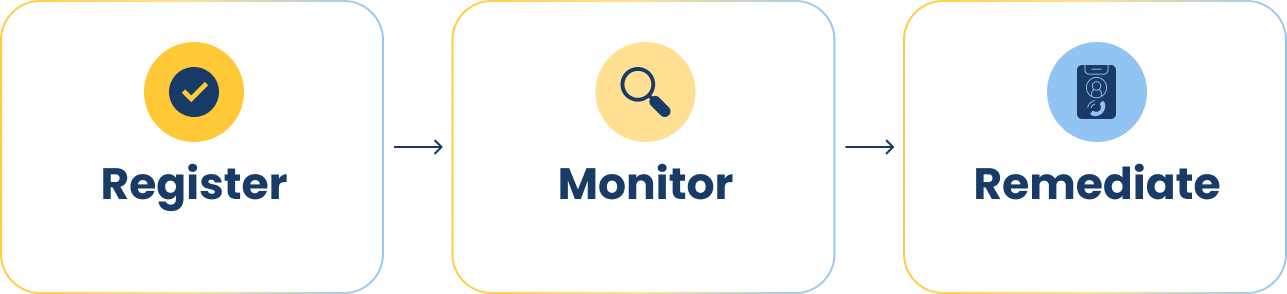
Through our strategic partnership with Bandwidth, we now offer Number Reputation Management as an add-on to any managed voice platform. It works with the numbers you already have and covers three jobs:
-
Registration: We register your numbers within the call labeling ecosystem to reduce improper labels before they happen.
-
Monitoring: Frequent test calls check how your numbers display across the three major US mobile carriers: AT&T, T-Mobile, and Verizon. Answer-rate tracking and threshold alerts flag a drop early.
-
Remediation: When a "spam" or "scam likely" label appears, we and our partners proactively contact the responsible parties and request its removal.
Because we already manage your phone system, your Marco team coordinates the process. Your staff keeps making calls, and we keep an eye on how those calls are received. Still on an older phone system? We can still help you with these services, and we can assist in the evaluation of alternative phone systems as well.
Frequently asked questions
Here are direct answers to the questions businesses ask most about spam labels on outbound calls.
What does "Spam Likely" mean on a phone call?
"Spam Likely" is a label a mobile carrier or its analytics partner adds to an incoming call when the calling number’s behavior resembles known spam patterns. It doesn’t mean the call is spam. Legitimate business numbers can receive the label because of normal activity like high call volume.
Can a business phone number be removed from spam labeling?
Yes. Improper labels can be removed by requesting remediation from the parties responsible for the label. Through its strategic partnership with Bandwidth, Marco’s Number Reputation Management handles those removal requests and monitors numbers so new labels are caught early.
Does STIR/SHAKEN stop my calls from being labeled as spam?
No. STIR/SHAKEN verifies that a call comes from the number shown on caller ID, which helps prevent spoofing. Spam labels come from separate analytics that score calling behavior, so an authenticated call can still be labeled.
How do I know if my business number is flagged as spam?
The label appears on the recipient’s phone, so it’s hard to see from your end. Common signs include a sudden drop in answer rates or clients mentioning a warning on their screen. Number Reputation Management uses frequent test calls on AT&T, T-Mobile, and Verizon to check for labels.
Make every call count
Your team puts time into every outbound call. A false spam label shouldn’t decide whether that call gets answered.
We can add Number Reputation Management to your Managed Voice service and show you how your numbers are being seen today.