Too many businesses assume their backups are fine — only to get a terrible surprise if a server crashes, someone deletes the wrong folder, or ransomware locks everything down overnight.
A solid data backup strategy isn't necessarily about buying the most expensive option. It's about matching the right backup type and storage location to how your business operates. In this blog, we’ll explore how to think through it.
What features should you expect from an effective data backup solution?
Not every backup solution offers the same level of protection.
Here's what separates the ones that actually deliver from the ones that only look complete on paper:
- Automated scheduling: Backups run on a set schedule
- Granular recovery: The ability to restore a single file, email, or database record
- Encryption and access controls: Data protected both while it's moving and while it's stored, with limits on who can reach it
- Long-term retention: Clear policies for how long backup data is kept
- Cross-platform compatibility: Support for the mix of systems your business runs
- Monitoring and reporting: Visibility into whether backups were actually completed
What are the main types of data backup?
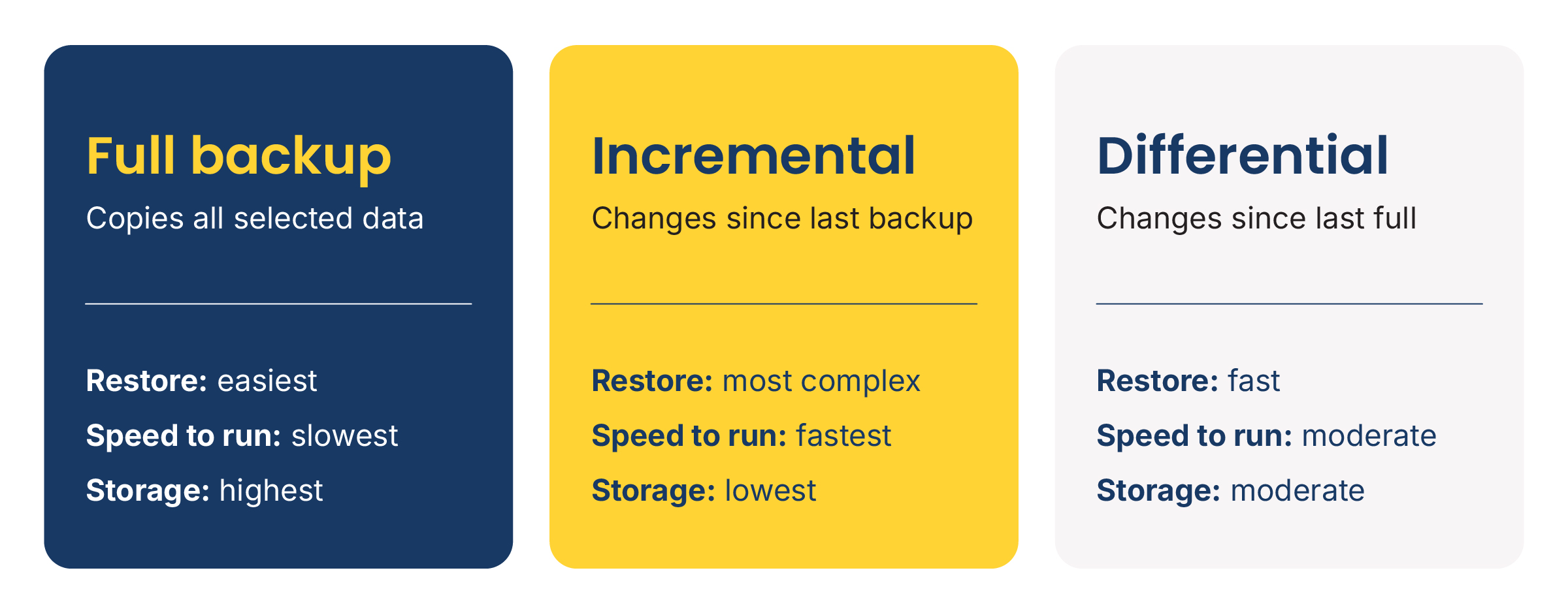
Most backup strategies — whether run through data backup software you manage yourself or a fully managed platform — combine a few different methods, each with its own trade-off between speed and completeness.
Full backup
Full backups copy all selected data in one pass. It's the most complete and the easiest to restore from, but it takes the most storage and time to run.
Incremental backup
These copy only the data that's changed since the last backup of any kind. It runs quickly, but restoring means piecing together the last full backup and every incremental after it.
Differential backup
Differential backups copy everything that's changed since the last full backup. It takes more storage than an incremental but restores faster, since you only need the last full backup and the latest differential.
Cloud vs. on-premises vs. hybrid: Which data backup storage is best?
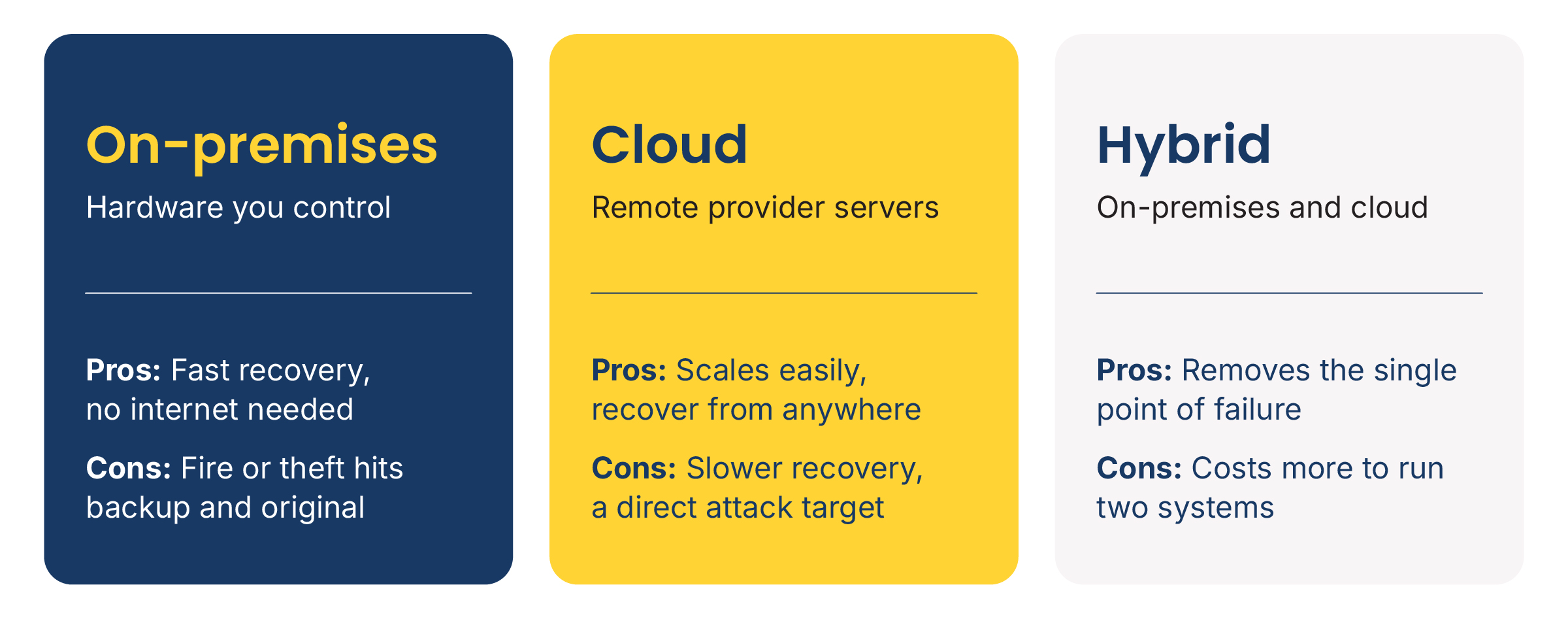
Where you store your backups matters as much as how often you run them.
Most businesses choose from three approaches, and the right one usually depends on how fast you need your data back and how much control you want over where it lives.
On-premises backups
On-prem backup keeps your data on physical hardware you control, like local servers, network-attached storage, or tape.
Pros: Recovery is fast because everything sits on your own network, and you're not depending on an internet connection to get your data back.
Cons: A fire, flood, or theft at your location can take out the backup along with the original.
Cloud backup solutions
Cloud backup solutions store your data on remote servers managed by a third-party provider, so it stays protected even if something happens to your physical location.
Pros: Cloud backup scales easily as your data grows, and you can recover from anywhere with an internet connection.
Cons: Recovery can take longer than on-premises backup, and cybercriminals increasingly target cloud backups directly, so encryption and access controls matter here more than ever.
Hybrid backup solutions
Hybrid backup uses both: recent or critical data stays on-premises for fast recovery, while a second copy moves to the cloud in case your location is compromised.
Pros: It removes the single point of failure that comes with relying on just one solution.
Cons: It costs more to maintain two systems.
For many mid-market businesses, a hybrid backup solution ends up being the most practical way to balance speed, cost, and protection.
How do you choose the right data backup solution for your business?
Once you know what features to expect, the harder part is weighing them against your specific business.
These 4 factors tend to matter most:
1. Recovery speed and objectives
How fast you need your data back — and how much data you can afford to lose between backups — should drive your decision more than any single feature.
A business running a constantly updating database has different needs than one backing up static files once a week — and downtime typically costs more than businesses expect either way.
2. Security and encryption
Look for encryption both in transit, while data moves to your backup destination, and at rest, while it's sitting in storage.
Immutability, which prevents a backup from being altered or deleted once it's written, matters because ransomware attackers now target backup repositories in 89% of attacks, and modify or delete about a third of what they reach.
3. Implementation and support
A backup solution that takes weeks to deploy or requires specialized in-house expertise adds cost and risk before it's even protecting your data.
We’d advise any business to consider how well it fits your existing systems, what support is available if something goes wrong, and whether it can adjust as your business changes.
4. Disaster recovery capabilities
A strong backup solution supports more than routine restores.
Look for:
- Scheduled recovery testing that doesn't disrupt your live environment
- Automated failover if a system goes down
-
Geographic redundancy so a single location issue doesn't put every copy of your data at risk
Pairing this with a documented disaster recovery plan makes sure your team knows exactly what to do, and in what order, when something goes wrong.
What are the benefits of a strong data backup strategy?
Beyond simply having a copy of your data, a well-built backup strategy delivers:
Business continuity
A workable backup gets you back to normal operations faster after a hardware failure, cyberattack, or human error.
The cost of losing data can be extensive, so limiting downtime protects more than what's on the drive.
Regulatory compliance
Reliable, well-documented backups help meet requirements from frameworks that govern financial, healthcare, and other regulated data.
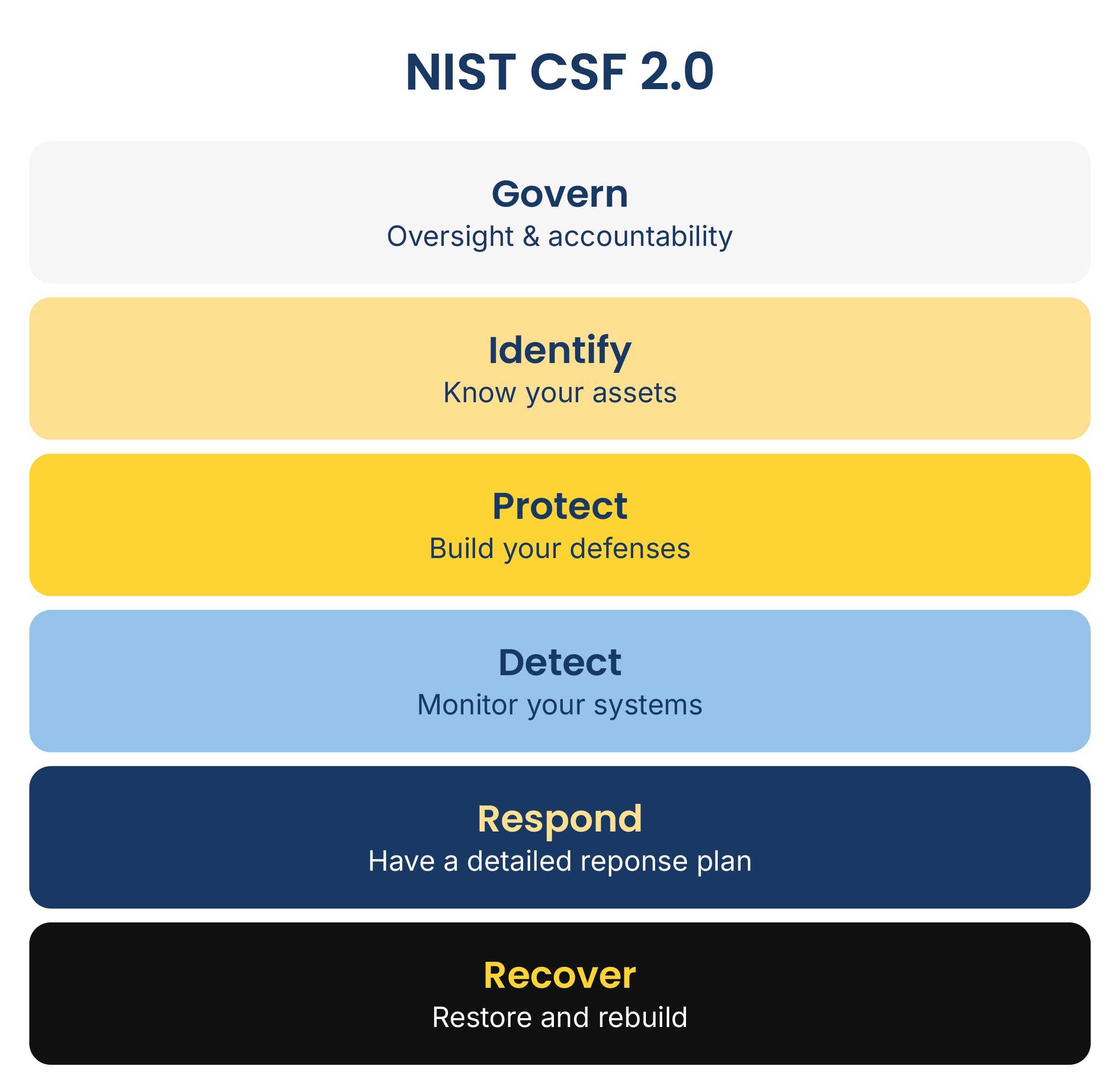
NIST's cybersecurity guidelines are a good place to see where backups fit into your broader security posture.
Reduced cyberattack impact
A tested backup gives you a way to recover without paying a ransom, which is exactly what attackers are counting on you not to have.
Cost efficiency
Deduplication can remove duplicate copies of the same data before it's stored, so you're not paying to back up the same file over and over.
Pair that with storage that scales up or down with how much data you actually have, and you only have to pay for the protection you're using.
What should you look for in a backup provider?
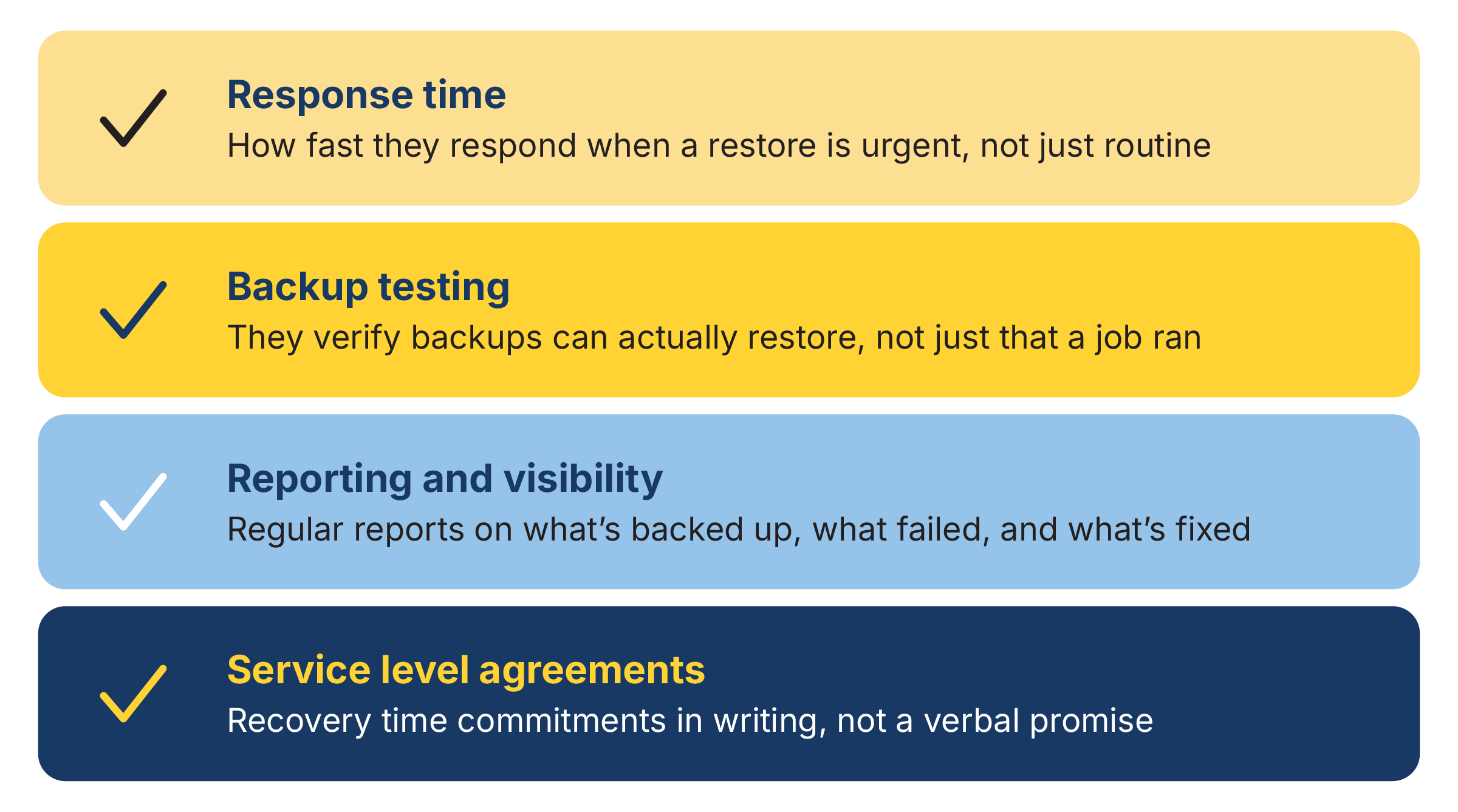
If you're not planning to manage backups in-house, the provider matters as much as the technology.
A few things separate one who treats backup as a real service from one who treats it as a line item:
-
Response time: How fast they respond when a restore is urgent, not just when a routine question comes in
-
Backup testing: Whether they verify your backups can actually restore on a regular schedule, or only confirm that a backup job ran
-
Reporting and visibility: Regular reporting on what's backed up, what failed, and what's been fixed, instead of a dashboard you have to check yourself
-
Service level agreements: Recovery time commitments in writing, not a verbal promise to get to it quickly
Other frequently asked questions about data backup solutions
Here are a few things that come up — especially once you start comparing options.
How often should you back up business data?
Most businesses should run a full backup at least once a week, with incremental backups in between for data that changes daily. Systems that update constantly, like an active database, may need more frequent backups than that.
What's the difference between cloud storage and cloud backup?
Cloud storage keeps a single copy of your files accessible from anywhere, but it isn't built for recovery. Cloud backup solutions create multiple point-in-time copies specifically so you can restore an earlier version if something goes wrong.
Can ransomware reach your backups?
Yes — attackers increasingly target backup systems directly instead of just live data, and some will threaten to leak what they've stolen even after a ransom is paid, a tactic that's becoming more common.
That's why immutability and encrypted access controls matter as much as the backup itself.
Is cloud or on-premises backup better for compliance?
It depends on the regulation. Some industries require data to stay within specific locations or under direct organizational control, which favors on-premises or hybrid backup. Others focus on encryption and access controls, which cloud providers typically handle well.
How are data backup solutions typically priced?
Most charge a base fee for the backup software or platform, often billed per user, per device, or per terabyte, plus a separate cost for the storage used to hold your backed-up data. Providers that use deduplication can lower your effective storage costs over time.
Is a data backup solution the same as a disaster recovery plan?
No. A backup solution protects the data itself. A disaster recovery plan defines how your team responds to restore operations, in what order, and who's responsible for each step. You need both.
Getting started with stronger data backup and recovery
At Marco, we start with an on-site assessment to understand how your business actually runs, then work through what you'd need in the event of a disaster — from who's responsible for what to which applications and data you'd need back first.
Backups are just one part of that plan. Testing them is another, which is why we build in regular reporting on backup status and system health instead of leaving you to hope the last job ran.
We partner with Barracuda for cloud backup and disaster recovery, which gives our clients fast recovery, encryption in transit and at rest, and multifactor authentication without having to manage the underlying infrastructure themselves.
See what a stronger backup and cloud strategy could look like for your business.