
Google Wallet and Apple Pay brought the term Near Field Communication (NFC) and the related “tap-and-go” services to the forefront, but Disney and other businesses are showing the power it can provide. 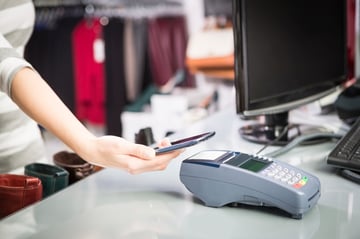 NFC allows wireless data transfer between at least two devices without an Internet connection when they are in close proximity.
It’s the technology that powers the “magic” of Disney’s MagicBand. These wristbands serve as ID tags for each guest, providing access to theme parks and FastPasses to move to the front of the line at rides and payment for food and other goods.
Many mobile devices have the technology built in. In 2013, the NFC industry reached $1.6 billion. In the next four years, it’s expected to nearly double.
Here’s a look at some of the applications for business:
- Access
Access is what initially fueled Disney’s rollout of its wristband. Organizations can use the same technology to provide employees access to buildings or certain spaces within a work environment. It already opens gates and parking barriers and can be used for attendance. Everything from library cards to loyalty cards could be next. - Print
I first saw this capability in 2013 during my trip to Samsung’s research and development complex in Seoul, Japan. This allows users to print without any wires or even a wireless connection. After downloading the specific printer app, they simply put their mobile device near the printer they would like to print to and click print. Most of the major manufacturers have rolled out NFC apps in recent years to make it easier for users to print on the go. - Share Information
NFC technology operates at a very low frequency and can transfer data 10 times faster than wireless. This allows a user to quickly share contacts, photos, directions and other data from his device to another person’s device. Android users can activate the built-in “Android Beam” by placing devices back to back with the content to be shared on the screen and authorizing the beam. This easily could become the more common way we share business cards for ourselves and others in the near future. - Payment
The ability to pay for items is what is expected to take NFC technology to the mainstream in the coming years. Disney added the ability to pay to its MagicBand a couple years ago. Google Wallet, Apple Pay, and the new Samsung Pay (available Sept. 28) also use the technology and see it as the future way to pay, replacing every card in your wallet. It’s being called the “easy way to pay” online and in stores. While they have been slow to take off, Android Pay is expected to gain some traction. - Direct Marketing
Marketers already have embedded the technology in posters and informational kiosks to allow users to automatically download and launch apps. This also may revive direct mail by making it more interactive and measurable. Marketers can mail a piece and upon arrival share content with their target audience, through a small NFC chip and the users’ mobile devices.
The applications continue to expand with everything from cars and washing machines to printing and video games. NFC is what popular video games like Skylanders and Disney’s Infinity use to turn character figurines into interactive gaming players.
NFC evolved from radio frequency identification technology and operates today on both auxiliary and non-auxiliary formats. Auxiliary uses SIM and SD cards, while non-auxiliary functions through tags, chips and readers.
Security
Because of its use of SIM, auxiliary tends to have better security. Although the idea of data sharing can conjure up concerns about breaches and misuse, security has been less of an issue. That’s mainly because it operates within a really short range – usually about 5 centimeters – or with touch.
Users also can turn off the functionality on their personal devices. Mobile Device Management software, like we talked about in a recent blog, enables administrators to turn off NFC functionality for all devices or a group within an organization.
NFC technology may seem like it’s flying under the radar today or is just talk. But it’s rapidly growing globally and in the coming years, it will power many of our business functions.





.jpg)