How often do you replace your cell phone? Nowadays, most people get a new cell phone every one or two years and don’t bat an eye about it. Fortunately, the lifecycle of an office desk phone isn’t quite as short as a cell phone — it’s actually five to eight years.
However, many businesses use these systems far beyond that and then wonder why their customer service ratings are poor, their productivity lags, and their staff is frustrated. The way people communicate has come a long way. And if you haven’t updated your phone system since Brexit, you’re probably missing out on quite a bit.
Phone System Technology Evolution
Cell phone technology has evolved at what feels like lightning speed, not only in appearance but also in capabilities. Today’s cell phones are much more than phones. They run applications, sync with other technologies, support video chats, share documents, and transcribe voicemails.
Guess what? While cell phones have evolved faster, business phone systems can now do those things, too! And in some ways, they’re even better…

Features and Benefits of Modern Business Phone Systems
Today’s cloud-based business phone systems have business-class versions of the features we’ve come to know and expect from our cell phones, plus a few added benefits, including:
- Video conferencing
- Integrations between text, voice, and email
- Converting voicemail to email
- Document sharing
- Bluetooth
- Conference calling (with much better audio)
- Warm and blind call transferring
- Call holding
- Simple paging and intercom use
- Single number reach
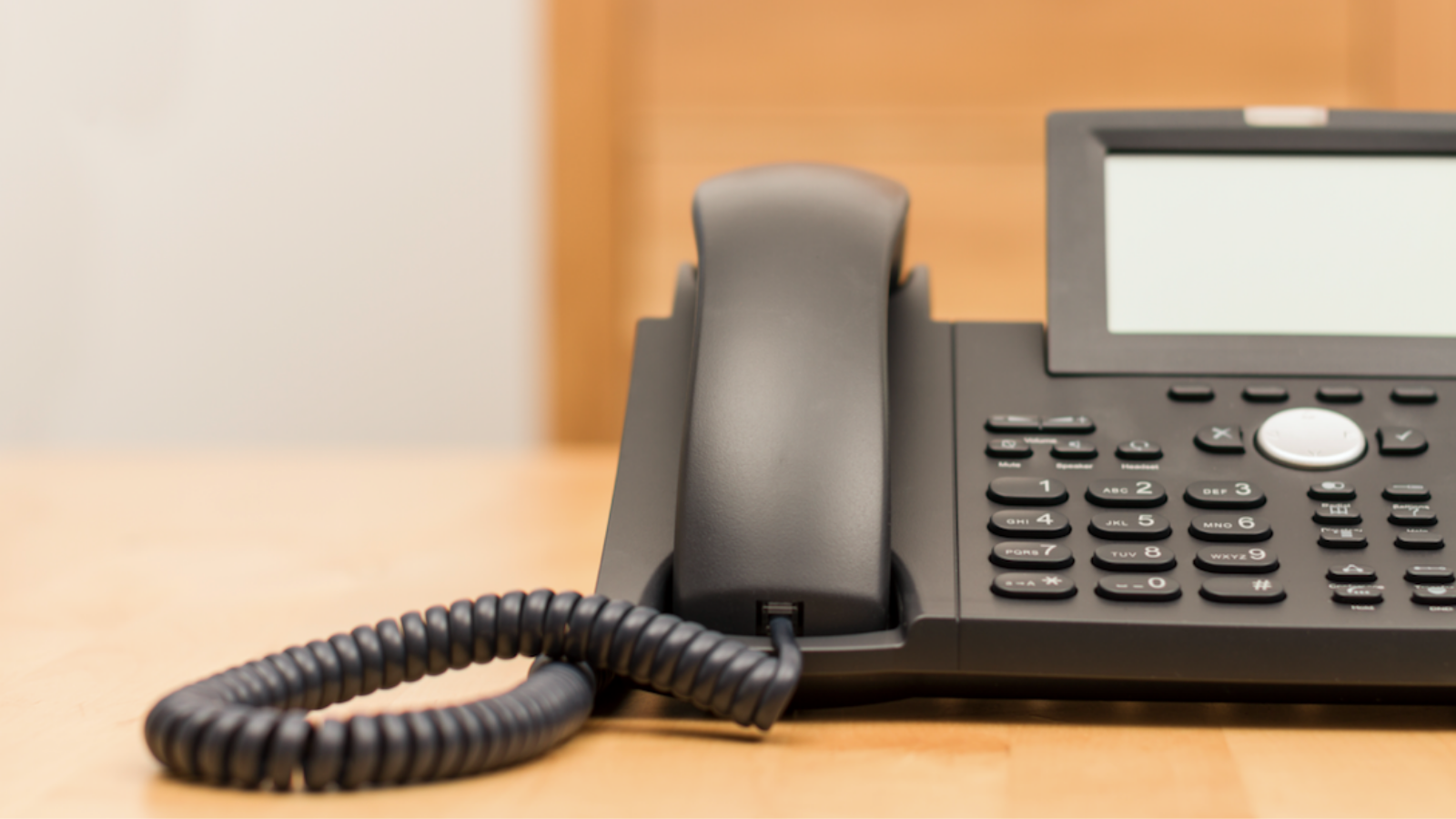
Not only that, but the handset of the desktop phone was also designed to fit in your hand more comfortably. The desk phone's screen faces the user so they can see it while working on their computer. And unless you’re reading this very blog on it, your smartphone is probably just lying there flat on your desk.
It is, isn’t it?
But those aren’t the only ways business communication tools have evolved. In fact, that’s just the beginning.
The Trajectory of Cloud-Based Business Phone Solutions
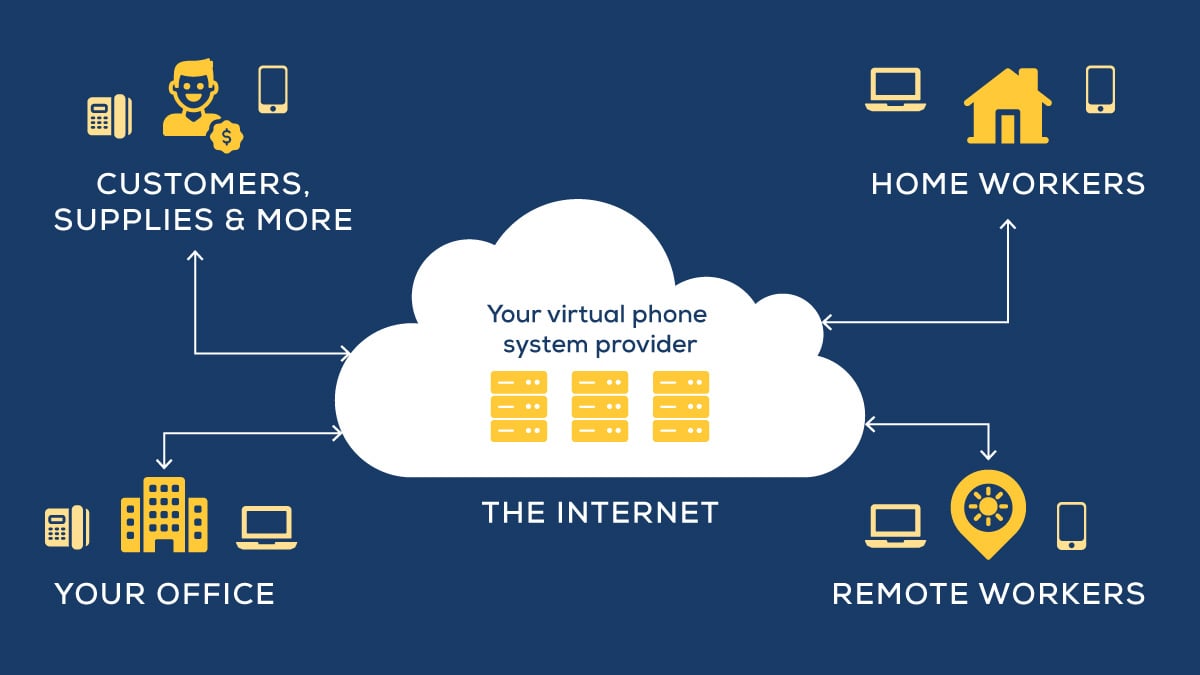
So landlines are out. And cloud communication platforms are in. That single change can save businesses a lot of money on their phone bills. And depending on the solution you choose, cloud voice can free up time for your IT team and empower remote and hybrid work. For example, while you can still have an on-premises system that uses cloud technology, with hosted VoIP, you will have far less infrastructure, and your solution will be managed entirely by your provider. And while you can still use a traditional-looking handset, you can also skip the additional equipment and just place calls through an app.
Introducing Unified Communications as a Service (UCaaS)

Another cloud communication tool — unified communications (UC) — goes far beyond what we think of as a phone system. UC unites email, text, chat, voice calling, file sharing, teleconferencing, and more into one simple app, making it incredibly easy to schedule meetings, see if someone’s available, collaborate on documents, and so much more. That’s nice, but common thinking back in early 2020 was that these tools were probably unnecessary for smaller businesses that didn’t have special collaboration needs.
That turns out to have been wrong.
The pandemic forced a lot of businesses to rethink their phone systems, and those that adopted UC, often in the form of unified communications as a service (UCaaS) started putting up some mind-blowing productivity statistics. How? Well, we found out that all that time people usually spend toggling between different tools and trying to find where a file was sent is….a lot. Sure, it’s only five or ten minutes here or there, but it really adds up. Take that away, and everyone in your organization now has more time in their day.
But What About Security?
One of the best parts about cloud tools of any kind is that they’re accessible from anywhere. But that also means that unless they’re properly secured, a hacker halfway around the world can use that to their advantage.
Fortunately, cloud platform developers understand that security is ultimately tied to whether or not businesses will use their services, so they’ve added end-to-end encryption, MFA, advanced access controls, audit logging and monitoring tools, and the like. So, while no system — cloud or otherwise — is completely immune to security threats, th
Upgrading Outdated Office Phone Systems the Easy Way
Depending on the phone system you choose, getting a new one installed can take 45–90 days, and it’s not uncommon to start planning for an upgrade 6–12 months in advance. But if you choose hosted VoIP or UCaaS, the provider will do the bulk of implementing, securing, and managing your solution, not you.
Also, we should mention that every provider will have slightly different versions of these tools. Our UCaaS solution is built on Cisco’s Webex so we can leverage our strategic partnership to offer our clients a better deal on an industry-leading tool.
Choosing which solution is the best fit is sometimes half the battle. So we’ve designed a tool to help give businesses a sense of where they might want to focus their research.
Click the link below to access it!