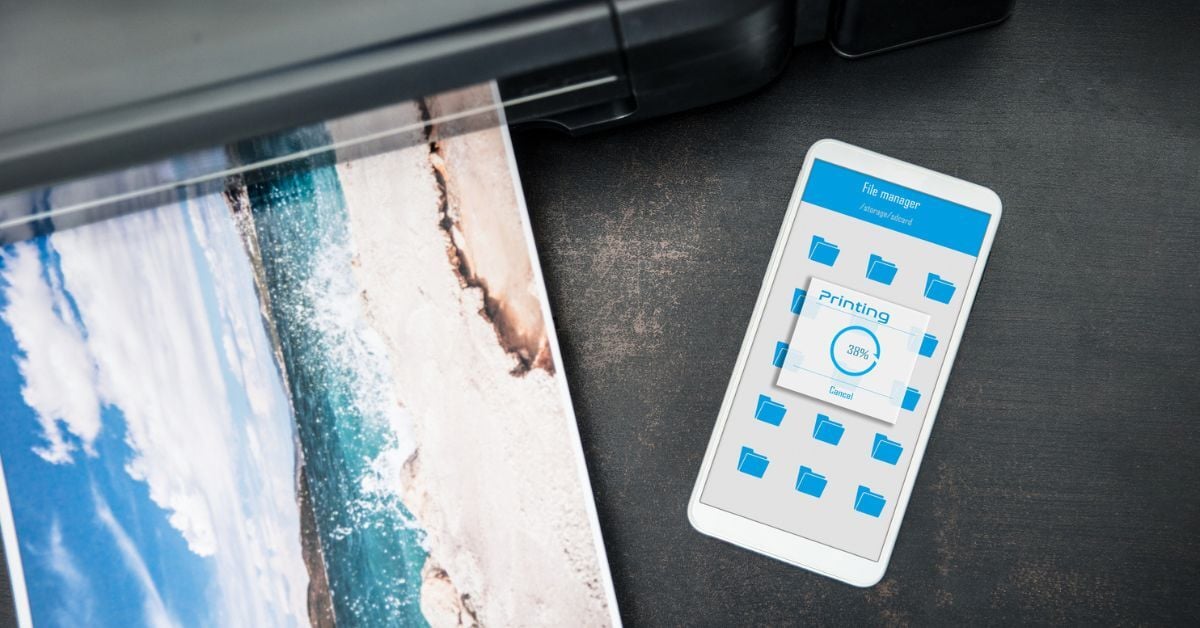
Your printer has one job — to print. It can be frustrating when it won’t do this job, especially when you’re up against the clock. But when your printer doesn’t faithfully produce what you see on your screen, file format issues or applications are often to blame, not the printer itself.
Let’s explore common file types so you can get that thing printed and get on with your life!
Issues With Print Drivers
Are you having any of these problems?
- Poor print quality
- Print jobs getting lost in the queue
- Your printer’s connection to other devices is inconsistent
- Your printer becomes unresponsive
If so, before you try anything else, you may need to install or update your print driver.
How to Update Your Print Driver
Depending on your system, these steps may vary slightly. But you should be able to check that you’re using the most recent driver by going to Printer Properties, clicking on Setup, then About.
You should also be able to find updated printer drivers on your printer manufacturer’s website.
Issues Caused by File Types
Are you trying to produce an image that wasn’t ever intended to be printed out? That may be one reason your printer is failing to reproduce exactly what you see on your screen.
File Formats for Web
These file extensions indicate that an image is intended to be viewed online:
- GIF (Graphic Interchange Format) — This format allows for a smaller file size, but can only accommodate 256 colors
- PNG (Portable Network Graphic) — This format is most commonly known for its ability to maintain a transparent background and a broader color spectrum
- JPEG (Joint Photographic Experts Group) — This format is preferred for photographs and can be saved in a range of sizes
- SVG (Scalable Vector Graphic) — This format is often used for two-dimensional graphics and animation
- ICO — This format is used for icons in Microsoft Windows.
Large file sizes aren’t needed for online viewing, and they take up quite a bit of storage space. So if you’re trying to print an image that uses one of these file formats, you should anticipate getting lower-quality results.
Common File Types for Printing
These formats retain all the original information contained in the document or image, and they tend to produce better results when printed:
- EPS (Encapsulated Post Script) – this file format retains all original data, but can only be accessed by an application such as Photoshop or Illustrator. This file format is ideal for digitally produced graphics (i.e. logos) and cannot be edited.
- TIFF – supported on both MAC and PC, this file format is considered lossless, which means if compressed it will not lose quality. It supports RGB, CMYK, Grayscale, and most commonly used color palettes. This file format is ideal for photographic images. TIFF is generally the preferred print file format because it doesn’t require a specific application to open.
Issues Caused by Applications
The program your file is being printed from also can make a big difference. For example, if you are printing from a Microsoft application such as Word — or an Apple application like Keynote — the results may differ from those produced from a PDF file type.
Generally speaking, standardizing the office applications you use for printing will produce more consistent results.
And here’s a pro tip: if everyone in your office prints the same types of files (like PDFs) you might be able to optimize your printer for their related applications (like Adobe).
Your Ticket to Reliable Printing
Printers are famous for causing frustration, but that’s usually because they aren’t given the same level of maintenance and care as other office equipment. More and more businesses are choosing to outsource the management of their print fleets to a Managed Print Services (MPS) provider to save money and reduce the burden on their IT department.
However, if your business already uses an MPS provider, but print driver issues are still causing disruptions, ask them if they can get you set up with PrinterLogic, a platform that can help you eliminate print servers and drivers altogether.
Finally, one common cause for frequent print disruptions is outdated equipment. If your printer is over seven years old, it doesn’t owe you anything anymore, and it isn’t equipped with the modern cybersecurity features you need to protect your business. If it’s time for an upgrade, check out our Find the Right Printer tool.