Is your small business protected from cyberattacks? If you have to ask, the answer is probably no.
Too many small business owners still assume that their organization won’t be a target of cybercrime. But small businesses actually are highly vulnerable to cybercriminals, and it’s easy to understand why when you think like one. Cyberattacks take very little time to carry out, so if you’re a cybercriminal, there’s no reason to concentrate your efforts on larger prey.
And here’s the real clincher: small businesses are far less likely to have basic cybersecurity hygiene in place, so they’re relatively easy to attack.
6 Ways Cybercriminals Target Small Businesses
Keeping your business safe involves much more than enforcing a company-wide password policy. Small and midsize businesses are vulnerable from many angles, and protection starts with education. Here’s a look at six ways criminals target SMBs.
1. Employees
Many businesses don’t realize how important it is to ensure their employees know the role they play in keeping a company safe. Inattentive, distracted, rushed, or complacent employees make easy targets for cybercriminals hoping to access your network.
If you haven’t already, make sure your employees understand how to recognize a cyberattack and how they can protect themselves and the company. Consistent cybersecurity awareness training has proven itself to be highly effective.
2. Technologies
Cybercriminals love to look for openings in your business technology infrastructure like these:
- Expired antivirus software
- Ineffective or nonexistent firewalls
- A lack of intrusion detection and prevention tools
- Unpatched software
- Outdated systems and software
- Unrestricted internal access to files and systems
While these seem like relatively simple things to update and maintain, many businesses haven’t yet adopted a modern approach to cybersecurity. You may even have these technologies in place, but are they current, effective, and configured correctly? Protecting your business requires all three.
3. Email
.jpg?width=500&height=500&name=Marco-MarchBlog1_v4-(1080x1080).jpg) I bet just about everyone reading this has received phishing emails sent to their work email. From a cybercriminal’s perspective, phishing emails don't require many resources. After all, it only takes one employee clicking on a link to provide network access to someone trying to harm your company.
I bet just about everyone reading this has received phishing emails sent to their work email. From a cybercriminal’s perspective, phishing emails don't require many resources. After all, it only takes one employee clicking on a link to provide network access to someone trying to harm your company.
Cybercriminals also do what’s known as “spear phishing,” which is a more targeted attempt at infiltration via email. Spear phishing emails put more research and effort behind fooling recipients into thinking the email is an internal communication. Because spear phishing attempts are composed in a way that looks familiar, these attempts tend to trick employees.
4. Social Media
The internet has no shortage of malware lurking within websites and advertisements, and social media is no different. Employees may receive friend requests from fake "friends” looking to steal and compromise sensitive data.
Unfortunately, while many people understand that they should regard their email inbox with some suspicion, they tend to let their guard down on social media.
5. Other Specific Attack Vectors
Cybercriminals also focus on particular entry points, looking for common weaknesses among businesses. And if a cybercriminal successfully hacks into a business, they’re likely to use that same approach with their next attempt.
Cybercriminals are also known to target network connections and connected devices (including printers), the cloud, and mobile networks.
6. Criminal Groups
It’s also important to know there are different types of groups looking to access, compromise, and steal internal company data. Cybercriminals aren’t always some anonymous, international hackers. Businesses also need to be aware of malicious insiders who infiltrate a company with the intent of stealing data.
Expert Help Protecting SMBs From Cyber Threats
Just because your business is smaller doesn’t mean you can’t access expert cybersecurity. Organizations like NIST and CIS are on your side and provide free guidance to help keep your business secure. Keep in mind that legitimate businesses — even the really big ones — have an interest in keeping cybercrime at bay because the more profitable it is, the more the problem will keep escalating and become tougher to safeguard against.
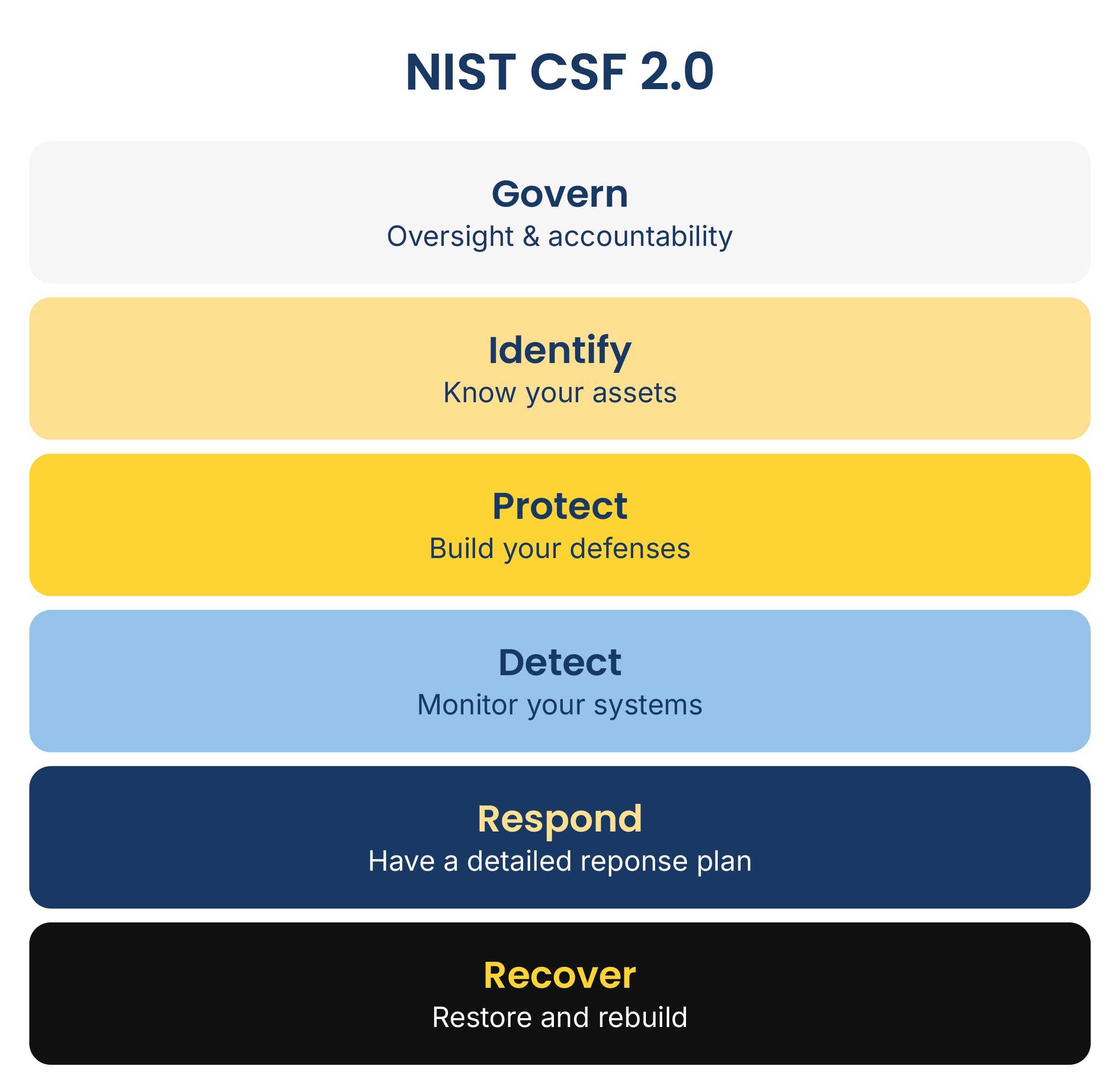
Our cybersecurity experts have designed a cybersecurity checklist that’s specifically designed for small businesses and is based on best practices recommended by the NIST Cybersecurity Framework.
If you’re wondering if your business is following best practices, feel free to download our checklist or complete it online. As you go through it, if you have any questions for a cybersecurity expert, our US-based team is here to help!