Most businesses don't question their managed IT service provider until something goes wrong. By then, the problem has usually been building for months. These criteria will help you evaluate whether yours is genuinely delivering — before you find out the hard way.
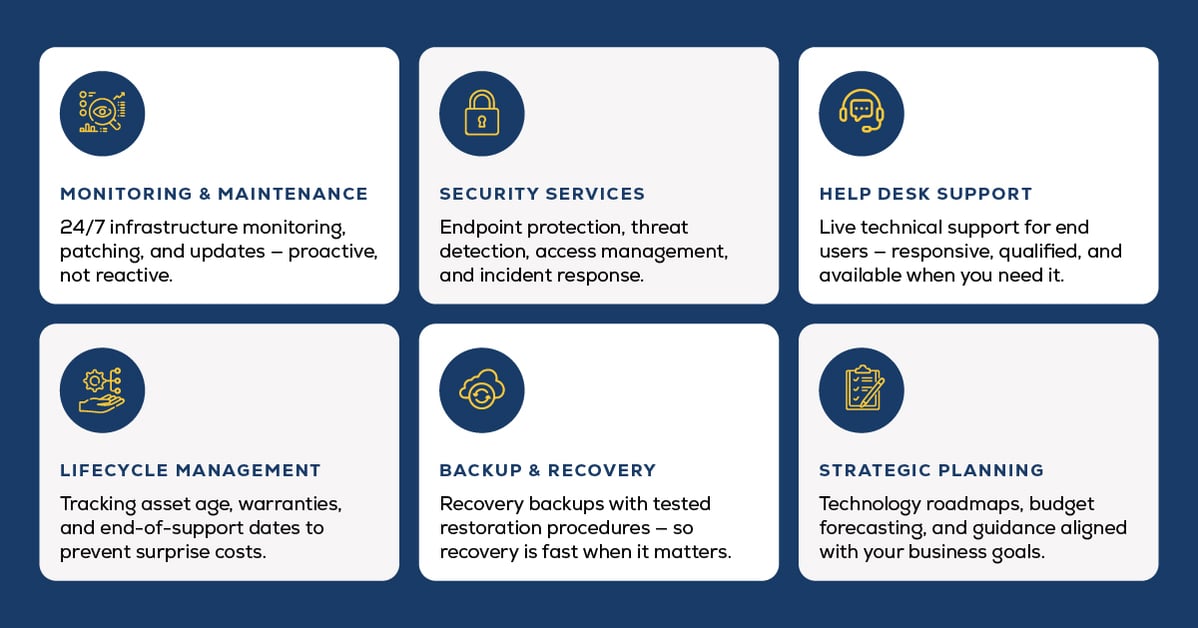
What Managed IT Support Should Include
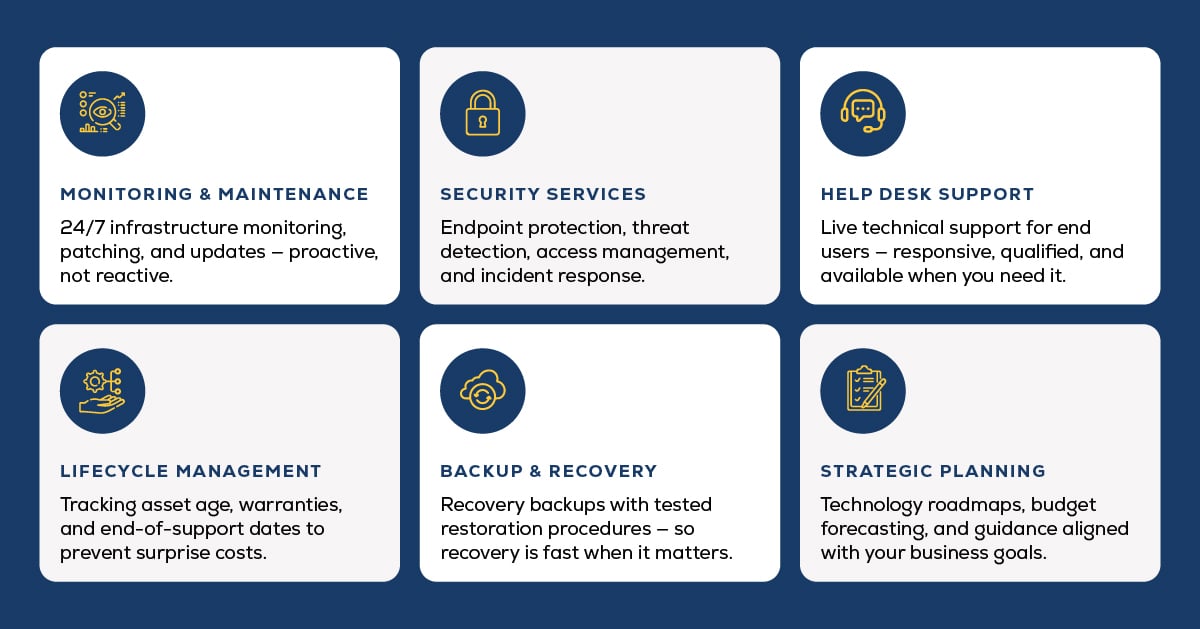
Managed IT support isn't just keeping the lights on. A strong provider actively reduces risk, helps you plan ahead, and makes your team's lives easier over time. If none of that is happening, you're paying for a break-fix service with a monthly invoice attached.
The questions below are organized around what a high-performing managed IT support services relationship actually looks like — so you can identify where yours is delivering and where it isn't.
Are Your Ticket Volumes Going Down Over Time?
What separates top managed service providers from mediocre ones is whether they're finding and fixing issues before those issues affect your team.
Ask your provider: What problems did you prevent last quarter, and how? If they can't answer with specifics — patches completed, threats detected, hardware flagged before failure — they're operating in reactive mode regardless of what the contract says.
A provider genuinely monitoring your environment will have data on this. O
Tracking Their Performance
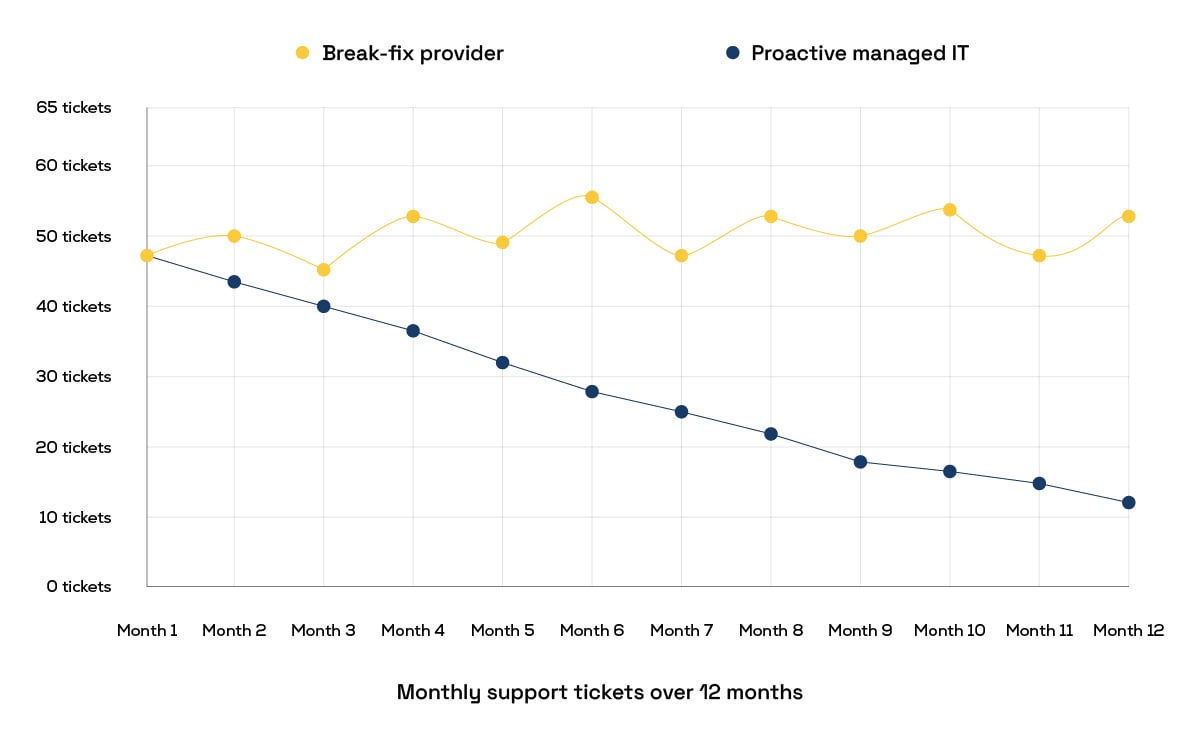
Pull your ticket volume from month one of your engagement and compare it to today. With a proactive managed IT partner, that number should go down. That’s because a good provider identifies the root causes of recurring issues and eliminates them over time.
If the same problems keep generating tickets month after month, your provider is closing requests. They're not reducing them. Those are very different things.
Are They Working From a Recognized Framework?
Lower-quality providers often inherit your existing infrastructure and maintain it indefinitely, without benchmarking it against established standards. That approach leaves gaps neither party can see clearly.
So ask what technical frameworks govern their work. NIST and CIS Critical Security Controls are the benchmarks worth asking about. If they can't explain how your environment measures against those standards, you have no real baseline for knowing how exposed you are.
Then ask for proof.
A SOC 2 Type 2 report is an independent, third-party verification that a provider is actually following the security practices they claim to follow. It covers how they handle security, availability, and confidentiality of client systems. If your provider has completed a SOC 2 Type 2 examination, that's a meaningful signal. If they haven't, that's worth knowing before you trust them with your infrastructure.
Are Your Managed IT Security Services Actually Improving Your Posture?
IT and cybersecurity aren't separate disciplines anymore. Every endpoint, every user account, every network connection is a potential risk — and your provider should be treating your environment accordingly.
Ask about:
Patch and Vulnerability Management
Are patches applied on a documented schedule, or as time allows? Unpatched vulnerabilities are a leading cause of data breaches, so this isn't optional. Once vulnerabilities are identified, is there a systematic remediation process that prioritizes and mitigates based on business risk.
Endpoint Protection
Every device on your network — laptops, desktops, servers, mobile devices — is a potential entry point. Your provider should have endpoint detection and response (EDR) tools deployed across all of them, actively monitored by people who act on what they see. "We have antivirus installed" is not the same thing. If your provider can't tell you what's running on every device and who reviews the alerts, that's a gap.
User Access
Every time someone leaves your organization and their account isn't promptly disabled, you leave an unlocked door. The same is true for accounts that accumulate permissions over time — access that made sense in a previous role and was never cleaned up. Your provider should be conducting regular access reviews and flagging accounts that no longer match current roles or are sitting dormant. If this isn't happening on a documented schedule, it isn't really happening.
Incident Response
Is there a documented plan, and has it been tested? That’s important because no prevention is 100% effective. Effective incident response plans can mean the difference between a bad day and a catastrophe.
If your provider is managing your IT without managing your security posture, you have a significant gap. A cybersecurity assessment can show you exactly where it is.
Do They Help You Plan, or Just React?
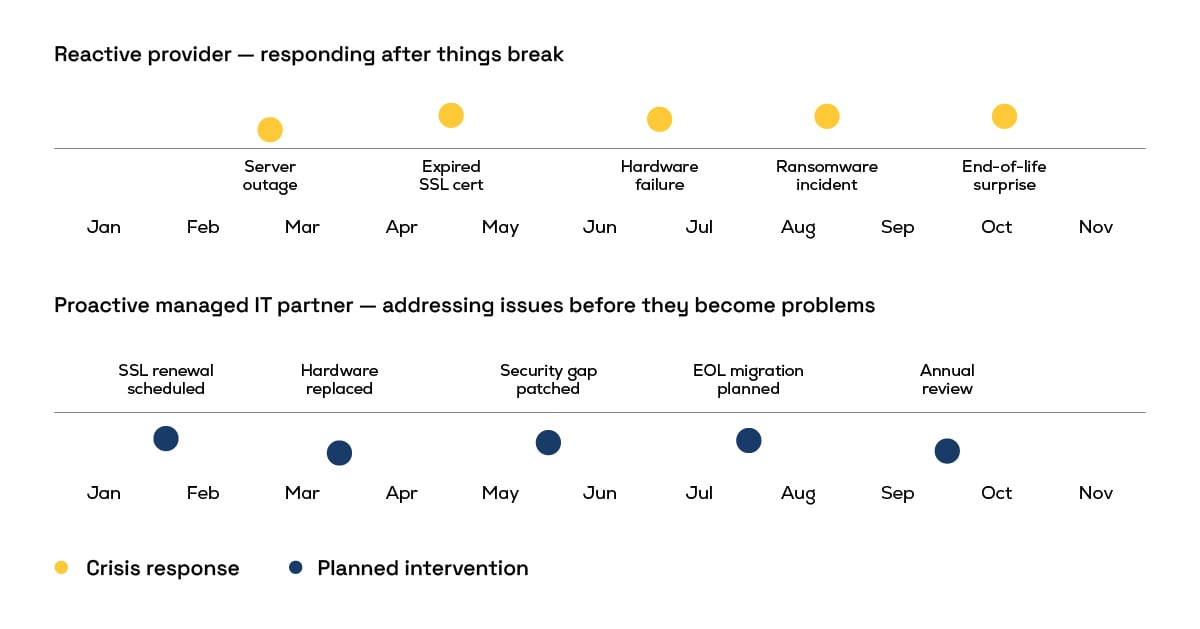
Top managed service providers think ahead. That means understanding the lifecycle of your current equipment, flagging end-of-support dates before they create problems, and building a multi-year technology roadmap with you — not after a crisis, but on a regular cadence.
Ask your provider: When did we last review a technology roadmap together? What equipment is approaching its end of life in the next 12–18 months?
If this conversation has never happened, your provider is managing your present without planning your future. That's how budget surprises happen.
Does Their Managed IT Support Hold Up When It Counts?
Response time metrics can look good on paper and still mask a frustrating day-to-day experience. The real question isn't how fast a ticket gets opened — it's how quickly a qualified person is actually working on your problem.
Pay attention to:
- Who answers when you call — a knowledgeable technician, or a call center routing your request?
- How many transfers does it take to reach someone who can help?
- When a problem gets escalated, how long does that take?
- Are you partnering with an organization that is innovative and
It's also worth pulling out your service level agreement and comparing it against what's actually happened. Your SLA defines what your provider has committed to — response times by priority level, resolution targets, and escalation procedures. If you've never checked actual performance against those commitments, you may be accepting service that falls short of what you're paying for.
Marco's help desk answers 98% of calls live and resolves 97% of issues remotely. Those numbers matter because unplanned downtime carries a real cost — and waiting on a ticket queue isn't an acceptable response when production is affected.
Are They Investing in Tools That Make Your Experience Better?
Response times and SLA metrics tell part of the story. But a truly strong managed IT partner is also asking a harder question: how do we make the experience of getting help faster, smarter, and less disruptive for the people using it?
That requires actual investment — in tools and technology that improve how support gets delivered, not just how it gets tracked.
Ask your provider what they've built or adopted recently to improve your experience. The answer matters. A provider that hasn't changed how they deliver service in the last few years isn't innovating — they're maintaining. And maintaining the status quo means your team is absorbing inefficiencies that a better provider has already solved.
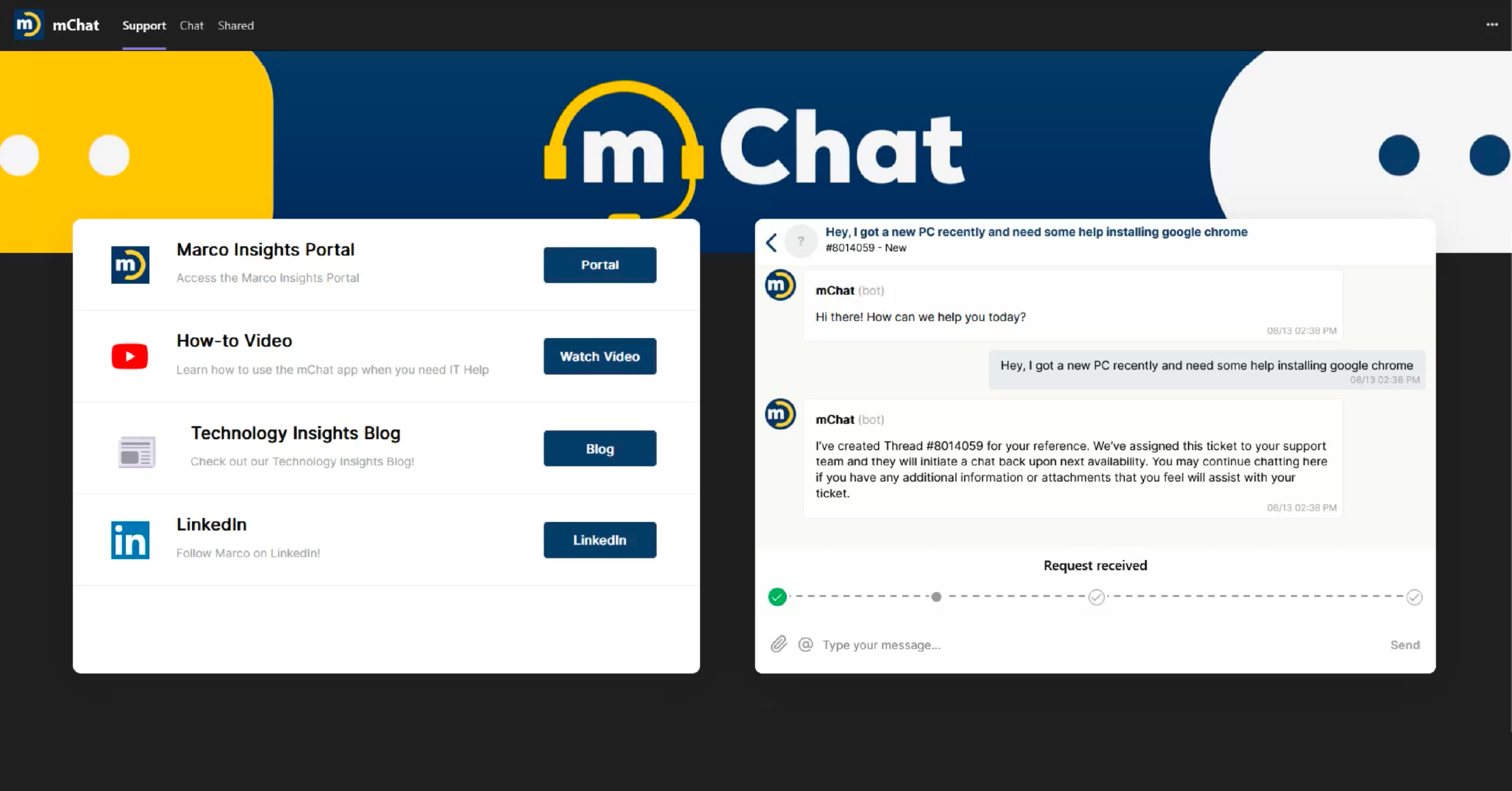
At Marco, that investment looks like purpose-built tools focused on outcomes: m-Chat for real-time, direct support access without the phone queue; self-scheduling that puts your team in control of when help arrives; and an AI-powered automation platform that handles routine requests instantly and frees technicians to focus on the issues that actually require human expertise.
Are They Aligned With Where Your Business Is Going?
This is the question most businesses never ask — and often the most revealing one.
A strong managed IT service provider should understand your business well enough to recommend technology that supports your goals, not just maintains your status quo. If they've never asked about growth plans, new locations, workforce changes, or compliance requirements, they're maintaining your infrastructure without understanding your business.
Ask directly: What are you recommending we do in the next 12 months, and why? The answer will tell you whether they're engaged or just closing tickets.
If you're unsure whether Managed IT is still the right fit, that's worth exploring too.
What a Strong Managed IT Services Relationship Looks Like in Practice
If the questions above surfaced real concerns, the most practical next step is getting an accurate picture of what you'd be paying for with a better provider — before committing to anything.
Marco prices Managed IT per user, which means your costs are predictable, scale with your headcount, and there's no incentive for us to recommend more than you need. You can explore pricing models or get a fast estimate with our budgetary quote tool.