Business technology evolves from year to year. But cybersecurity can change by the month, and sometimes, by the day. The pace of constant change can make it very difficult for organizations without a chief information security officer (CISO) to keep up.
While some organizations may choose to invest in a vCISO to monitor current cybersecurity threats and recommend data protection strategies as needed, others are investing in a cybersecurity assessment — essentially, a cybersecurity health check-up. In this blog, I’ll explore these assessments in more detail.
What Is Cybersecurity Risk Assessment?
A cybersecurity assessment is a one-time service offered by a cybersecurity provider. However, no two providers or assessments will be exactly the same. The level of investigation and the presentation of their findings will depend on the provider, and you tend to get what you pay for. However, generally speaking, these assessments are designed to help organizations find hidden risks in their tools, policies, and practices and make recommendations to mitigate those risks.
Why Are Cyber Risk Assessments Useful?
In 2024, the average cost of a single data breach was $4.88 million. When one incident can be catastrophic, investing every few years in a cybersecurity assessment is a cost-effective way to keep up without hiring more staff or investing in an ongoing partnership with a cybersecurity provider.
Of course, ideally, every organization would have the time and the resources to protect itself from all risks, cyber and otherwise. However, that’s not realistic, nor is it necessary. Not every organization needs to be Fort Knox!
Cybercriminals attack organizations of different sizes and types differently, and a world-class cybersecurity expert can help you make very smart decisions on where your cybersecurity dollars will go the farthest. They can also help you find and fix misconfiguration errors that could be exploited by hackers.
But that all depends on how they present their findings. A world-class cybersecurity investigation that produces a mountain of data — but without clear recommendations — probably isn’t going to be of value.
What Are Good Use-Cases for a Cybersecurity Assessment?

Many of the organizations that ask us for these assessments are small to mid-sized. However, that’s not always the case. Some internal IT teams at larger companies ask for these so they can get an outsider’s perspective — plus alleviate some of the burden of having to keep up with evolving regulations and threats.
Here are some common scenarios:
-
An assessment is required by a cyber insurance provider
-
You’d like a second opinion on your current IT or cybersecurity provider
-
Your team wants some guidance on what upgrades to prioritize
-
Your IT team has requested some updates, but they’ve struggled to get buy-in
-
You haven’t updated your cybersecurity posture in five years
-
You aren’t sure if you’re meeting cybersecurity-related regulatory requirements
What Should an IT Security Assessment Contain?
We’re not box-checkers at Marco. That is to say, our cybersecurity assessments are not a simple scan, performed in a few cursory clicks. More and more cybercriminals can evade common cybersecurity tools, and are hoping to find policies and practices that they can exploit.
So, when we conduct our assessments, here’s what we’re looking for:
-
Any vulnerabilities within your tech stack
-
Your public risk posture
-
Common security misconfigurations
-
Poor security practices
We also ask detailed questions to understand:
-
Your current cybersecurity incident response plan
-
How you currently assess third-party risks
Take this for what it’s worth, but in my mind, a security assessment that doesn’t find out that some staff are exploiting some password policy loopholes — like updating their passwords from Password1 to P@ssword1 — it’s not a worthwhile investment.
What Should Your Cybersecurity Risk Assessment Report Include?

Before you move forward with an assessment, you should have a good idea of what will be included in your findings. When we partner with clients to help them understand their risks, we make sure that our reports aren’t all in IT-speak. Our reports are designed to help IT teams and business leaders get on the same page about what’s needed and why.
Here’s what a thorough assessment report should include.
An Executive Summary That Isn’t Jargon-Heavy
This is your elevator pitch to leadership. Keep it high-level and focus on what matters to the business — the biggest risks, what they could cost, and what needs to happen right away. Think of it as translating technical problems into business language that executives can act on.
A Clear Scope and Methods
What your assessors looked at and how they did their work should be stated somewhere in the report. Did they test your main systems, employee computers, or your entire network? What standards did they follow?
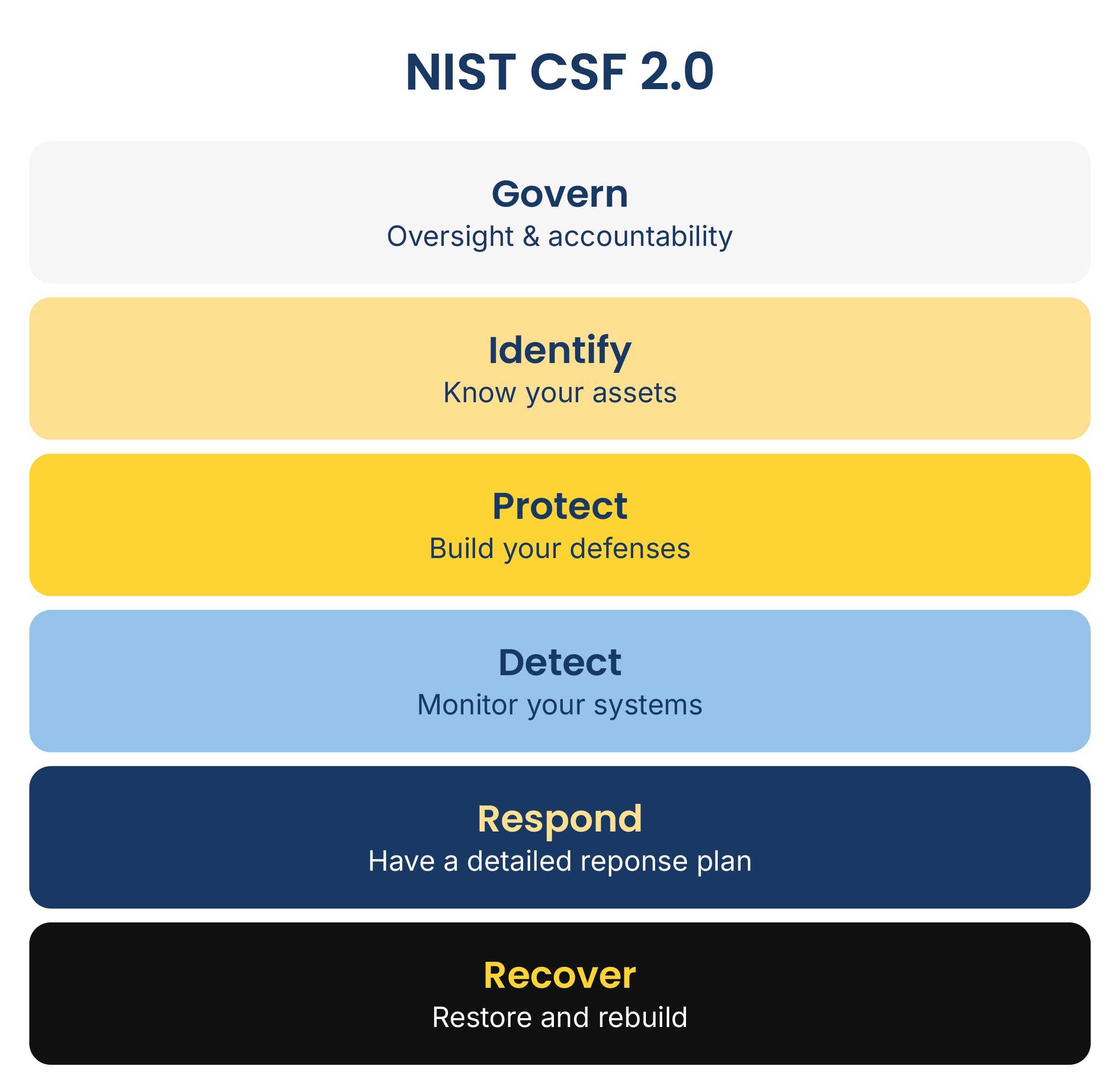
Most cybersecurity professionals will base their guidance on recommendations from a national organization, like the Center for Internet Security (CIS) or the National Institute of Standards and Technology Cybersecurity Framework (NIST CSF).
Pro tip: If there were areas your provider couldn't test due to time or access constraints, those should be clearly noted so you're not left with blind spots.
Findings That Tell the Real Story
Beyond just a list of vulnerabilities, your final report should explain what each one actually means for your business. How could someone exploit it? What would happen if they did?
If you receive a report that doesn’t make these things clear, ask your provider for clarification!
Specific, Prioritized Action Items
Your provider should spell out exactly what’s needed and help you focus on what matters most, not just dump everything on you at once.
When we draw up our recommendations, we create a 5-year technology roadmap for our clients, with each recommendation prioritized according to risk.
Compliance Information When Applicable
If your business is subject to regulations like HIPAA, PCI DSS, or state privacy laws, your report should clearly identify where you're not meeting requirements.
Finding the Right Security Risk Assessment Provider
Not all cybersecurity professionals are good communicators. And not all good communicators are good cybersecurity professionals. In order to get the best results from your assessment, you’ll need both skills.
When we partner with clients, we're not there to play “gotcha” with their security or find fault with an IT team. On the contrary, we believe one very important outcome of our assessments is to give internal IT teams a seat at the table. What we often hear is that our reports finally help everyone speak the same language about cybersecurity needs. The IT team often gets validation for things they’ve already been asking for, and executives finally understand why those requests matter to the business. It's rewarding when we can bridge that communication gap and help great IT ideas finally get the resources they deserve.