 For decades, a telecommunication provider was just a fancy name for the phone company. But today, that term encompasses multiple services, including VoIP, Internet, cloud migrations and ongoing management. In today's business climate, the telecom provider you choose has never been more important.
The Internet connectivity and telecommunication tools available to your business impact everything from your online presence in the industry to all communications. The right telecom carrier isn't the one that promises the most, but rather, is the one that meets the operational requirements of your business and your budget.
So, how can you select the right carrier to support your business?
3 Steps To Select the Right Telecom Carrier
In a lot of ways, selecting the right telecom carrier comes down to your business goals. Internet connectivity, data and voice help power the daily operations and communication of your business, so a telecom carrier should provide quality options for each of these factors.
With many telecom carriers serving a specialty industry or niche market, the right carrier is the one that aligns the services and features of a particular provider with the operational requirements of your business. The wrong telecom carrier can jeopardize the financial goals of your business, while threatening your company's ability to provide reliable customer service.
Step 1: Determine Your Business Telecom Needs
 Knowing the answers to these questions will make it easier for you to connect with a telecom carrier capable of meeting your needs:
- What business objectives are you trying to achieve now and in the future that could impact your carrier selection?
- Do you feel like you’re paying more than necessary for your current service?
- Is your decision-making driven by reliability and support?
- Where do you think your company will be in three years?
Remember, not all telecom carriers offer the same level of technology or services, and there may be carriers with more advanced technology that could better benefit your business.
Step 2: Connect With Telecom Carriers
Depending on your geographic area, there may be multiple carriers available to you. It's a good strategy to invite as many as three or four telecom carriers to come in and review your organization’s needs. Holding individual meetings may take a little extra time and resources upfront, but it also allows each carrier to develop the most accurate proposal possible for the services you require. Plus, working with multiple carriers during the proposal phase will allow you to compare services offered and prices.
As your vetting carriers, one bit of advice is to consider providers with a proven track record in reliability, account management and successful customer support.
Step 3: Engage With a Telecom Carrier Agent
Unlike representatives from individual telecom carriers who only tell you all about the benefits of their solutions, a telecom carrier agent looks out for the best interests of your company. Think of an agent like an advocate. Agents can offer more neutral opinions to help your business select the telecom carrier with the best services, reliability and support for your business.
If you're looking for more details and specific examples of what to look for when selecting a telecom carrier, I've outlined some below. These will help you prepare to engage with various telecom carriers for your business.
Where Does the Cloud Come In?
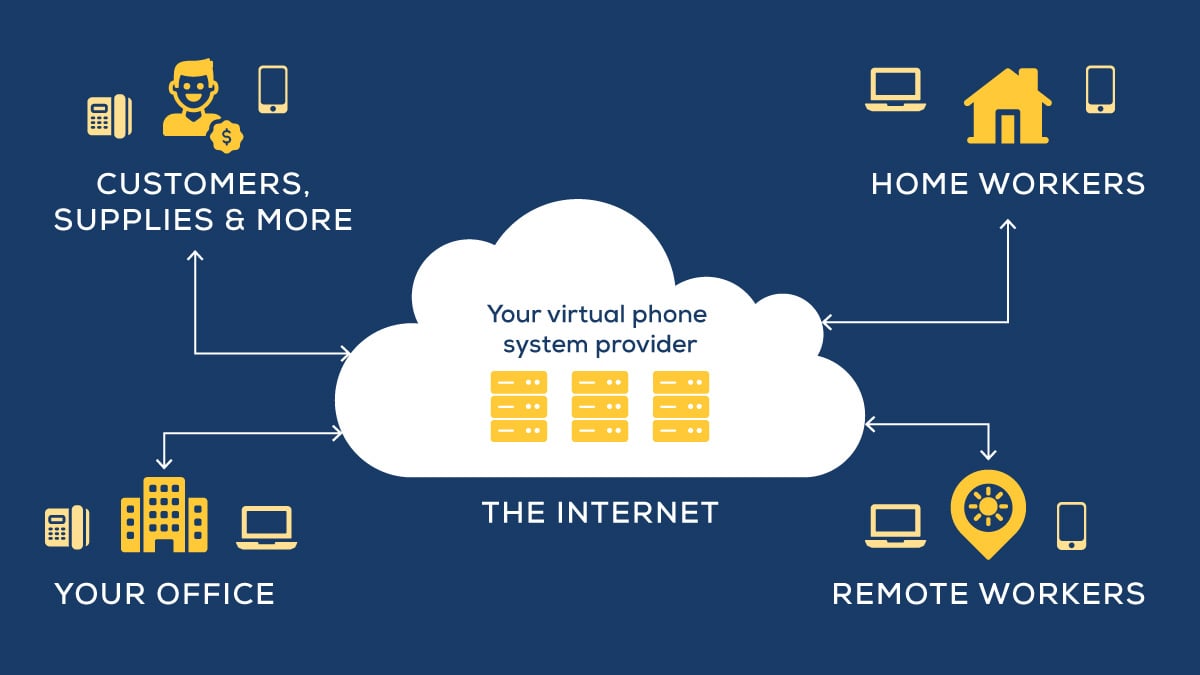
When you use the cloud for your business, your files are stored securely in a remote location, on another company's system. Your access to those remotely stored files depends on your Internet (or dedicated MPLS) connectivity and bandwidth. And, to bring it full circle, your Internet (dedicated MPLS) connectivity and bandwidth are dependent on your telecom provider. Therefore, the success of your cloud relies on the success of your telecom services.
Let's Look at Service Levels
One of the first things to determine as you plan your transition to a cloud environment is the type of telecom provider you’ll need and their availability.
You have three options (listed in order of comprehensiveness and price):
- Tier 1
These providers have the largest owned networks. They commonly operate internationally (Ex: Century Link, AT&T, Verizon and Level 3). - Tier 2
These telecom carriers are regional; they have their own regional networks, but also resell tier 1 networks (Ex: Integra Communications, Enventis Communcations, Zayo Networks). - Tier 3
Finally, your local cable companies make up Tier 3. They generally combine residential and business services on the same network and provide “best effort” services.
Cloud Connectivity Varies Depending on Geography
Your geographical location is one of the biggest variants when it comes to selecting a telecom carrier. AT&T’s network, for example, is stronger through the Midwest and Southeast US than it is through some of the western states, such as Idaho, Nevada, Utah and Wyoming.
Many carriers have complex or piecemealed networks to get to your location. And, the more piecemealed they are, the more your performance can vary. So when choosing a telecom provider, it is essential to verify their network infrastructure can provide the quality and reliability of service you require.
Who You Choose Matters
There are many important details when selecting a cloud provider (more details on that here), but let’s briefly touch on the importance of who you select to partner with for your cloud services.
Essentially the cloud is the software, hardware and storage infrastructure from a remote provider. This remote provider could be Microsoft or Amazon, in which case you will be responsible for all the management and maintenance of the equipment and any issues that could arise. On the other hand, partnering with a local cloud services provider may provide the cloud environment you require, while being able to support your organization as you use these services.
A service provider offers the additional advantage of working with you to determine the level of telecom services you need to enable the successful use of your cloud.
What Factors Within Your Company Should Telecom Support?
The simple answer to this question is everything. After all, employees require connectivity to complete daily tasks. This includes supporting some of the following areas of business within your company:
- Mobile Connectivity
An increasing number of businesses are enabling a mobile workforce to improve the connectivity of remote workers and offer better communication for employees, whether they're at their desk, on the road or out to lunch. Your service coverage as a company expands when you have a reliable service provider. - Migration to the Cloud
The growth of high-speed internet has enabled more companies to migrate services and technology to the cloud. The shift of software and physical infrastructure to the cloud saves the company money by reducing on-site hardware costs and expanding access to software applications for employees in headquarters, branch locations and those who work from home. - Better Management
A good telecom carrier doesn't just provide reliable services and products, but also helps your company keep tabs on its services. With asset controls, audit capabilities and centralized management, the right telecom carrier will help your business monitor costs and control expenses related to telecom services.
An Agent To Help You Choose the Right Telecom Carrier
Managed IT firms, like Marco, exist to help your business partner with the right telecom carrier. Marco represents more than 50 different carriers offering services ranging from localized territory offerings to those covering regions across the United States. To be clear, Marco isn't a direct telecom provider. Instead, Marco helps your business select the telecom carrier that offers the options, features and services that best suits your business. With Marco, you can select the right telecom carrier from an informed position.
Marco continually works to improve its telecom carrier selection process by introducing a grading system. The full list of carriers that Marco works with are graded based upon the same criteria, and each is issued a grade that makes it easier for you to select the right telecom carrier that suits your business and provides a proven product appreciated, evaluated and graded by industry experts.
By working with a variety of telecom carriers, Marco is able to offer multiple options to choose from and a diverse portfolio of carriers that meet the unique needs of each business. Most importantly, you have access to all-in-one services that better align with your operational requirements in an environment that is easier to understand than finding quality services and support on your own.
Telecom Services and the Cloud
The telecom service provider you have can affect your cloud service performance and reliability. As you navigate your journey to the cloud, it is essential to consider the telecom services you currently have and determine if any adjustments that may be needed to support your organization in the cloud.
If you’d like assistance through this assessment and discovery process, request to meet with one of our telecom service specialists.