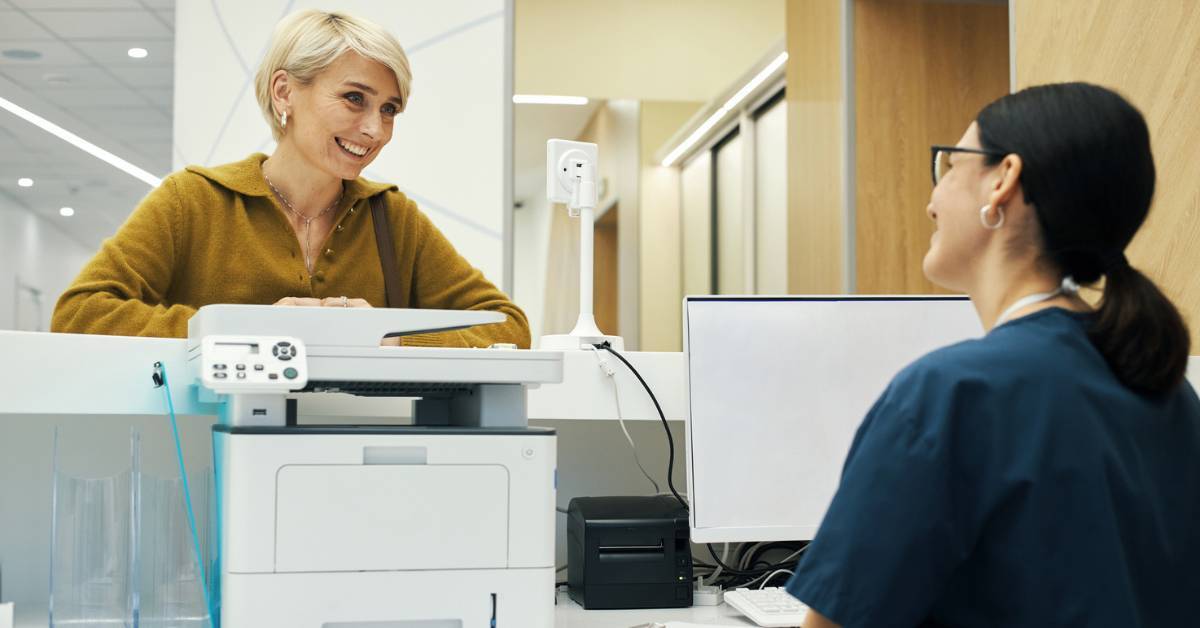
Although we don’t have proper stats on this, it’s safe to assume that printer malfunctions cause more terror among working adults than spiders and clowns put together. That said, you’ve got questions, and we’ve got answers!
Questions:
- How do printers and copiers know when you have a tight deadline and choose that time to fail?
- Why are printers and copiers so unreliable?
Answers:
- Somehow they just know.
- They’re usually not maintained properly.
Just like your car, a printer or copier will perform more reliably if it’s properly maintained. Read on…
7 Common Print Fails You Can Reduce or Eliminate Through Regular Maintenance
- Toner streaks and stains
- Waste
- Malfunctions due to wear and tear…and kicking
- Paper jams
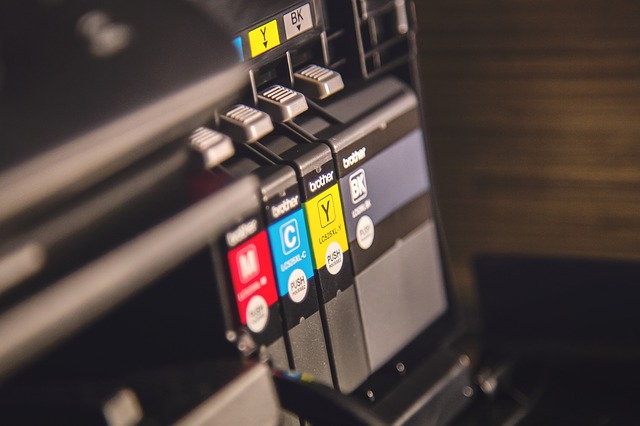
- Blocked or leaking print heads
- Mechanical failure
- Security risks
1. Toner Streaks and Stains
There’s a proper name for those streaks and stains that can appear without warning all over your printed documents. They’re called toner emissions, and to answer your next question, yes, they actually pollute the air in your office. But here’s the good news — regular maintenance can prevent this problem from occurring.
How often you’ll need to get your printing equipment serviced depends on how you use it. Machines used just a few times a week can probably get away with an annual service appointment. And here’s a tip: schedule your maintenance during a slow time so it doesn’t disrupt work.
2. Waste
Ink and toner have always been expensive, and recent “inkflation” is making the problem even worse. If your printers and copiers aren’t regularly cleaned, they will use inks and toners less efficiently. Of course, maintenance is just one way to lower print costs, but it’s nice to know that you’ll get part of your maintenance dollars back in reduced print supply costs.
3. Malfunctions Due to Wear and Tear…and Kicking
While printers and copiers aren’t always given the same white glove treatment as laptops, they have a much harder job. In addition to running software, a printer also has to quickly move single sheets of paper through its inner workings and deposit ink and toner precisely, without any smudging. It’s a tough job, even without getting kicked at by frustrated employees.
About that: Don’t let your employees mistreat your printer, ever. Printer-slapping Steve may be good with the customers, but printers and copiers have delicate electronics inside. And here’s the real kicker: a good multifunction printing device for midsize businesses typically range between $4,500 and $10,000.
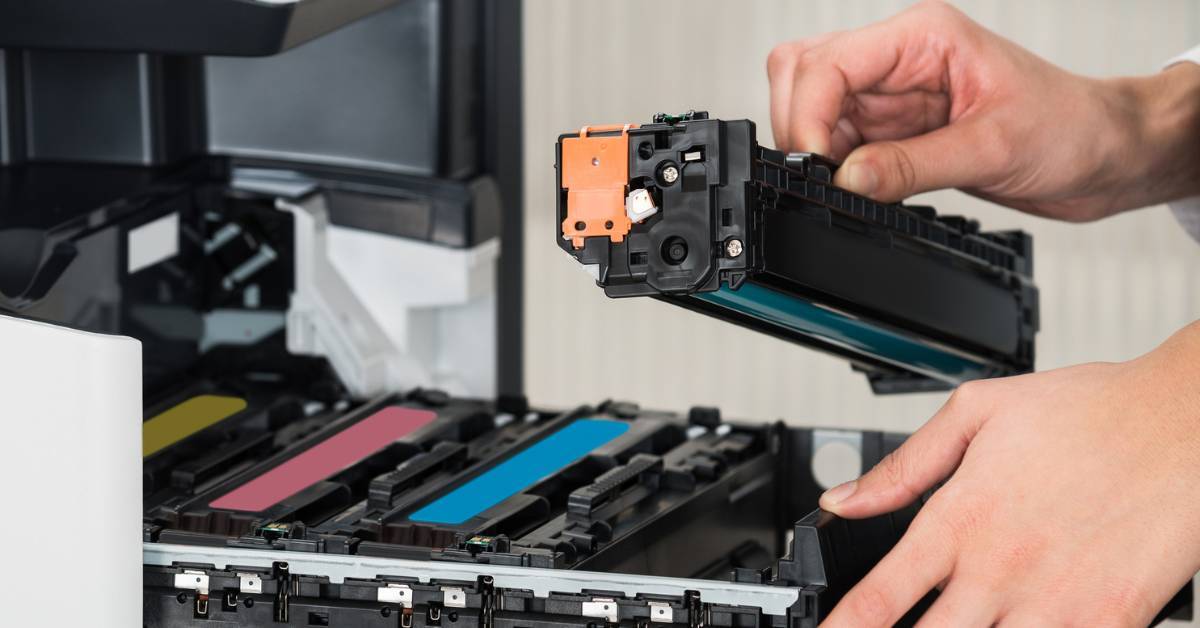
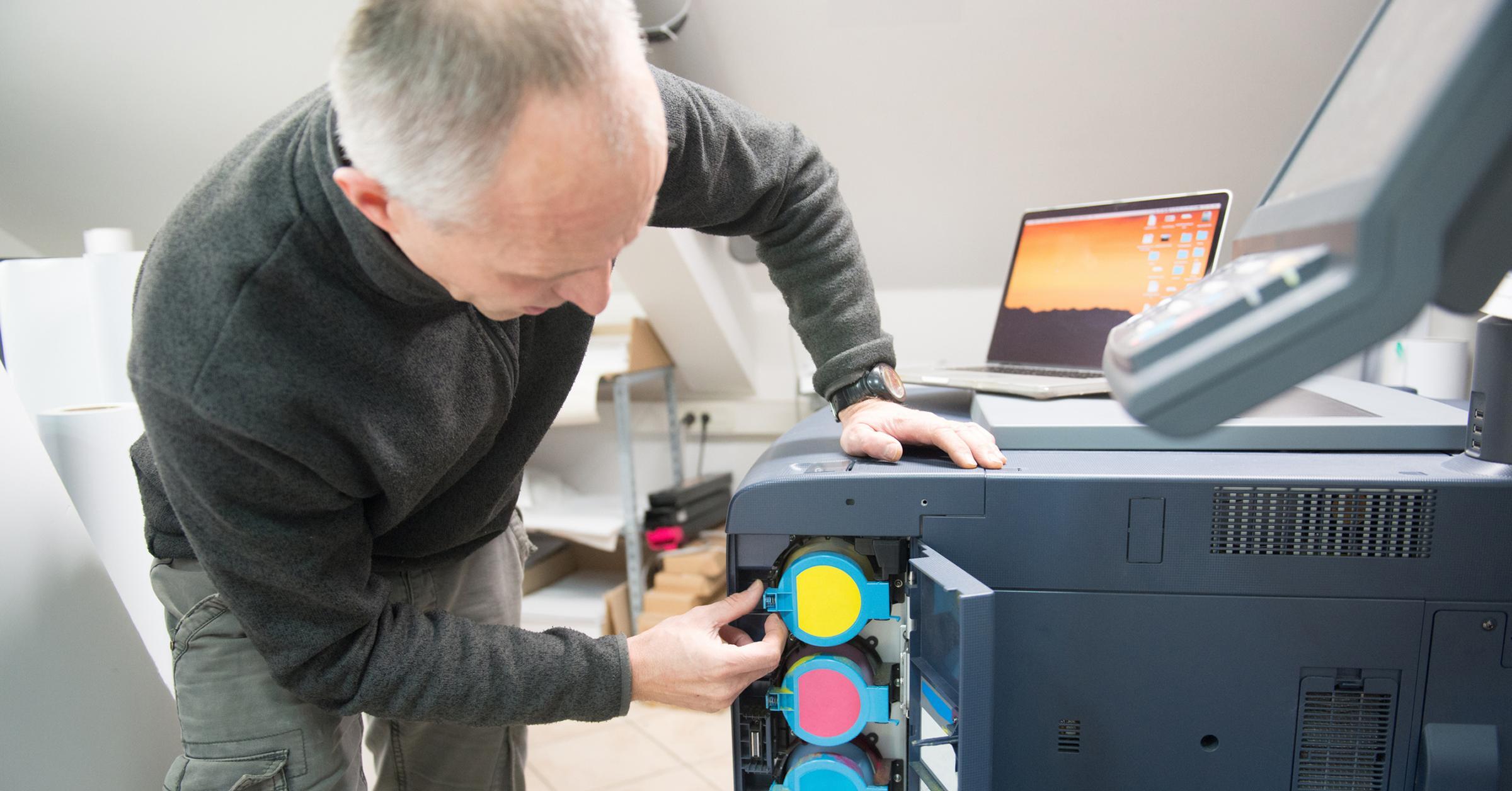
Even if your staff treats your printer well, where you find moving parts, you also find wear and tear. During regular maintenance, your technician will give your printer’s components a good cleaning and note where a replacement is needed to prevent disruptions.
4. Paper Jams
Paper jams can be incredibly frustrating. How’s that for the understatement of the year? Some paper jams are caused by overloading the paper tray (or other misuses) or using poor-quality toner or ink. But another root cause is a change to the alignment or balance of the rollers and grips that feed individual sheets through the machine.
A print technician will make sure your rollers and grips are in good working order as part of its regular maintenance.
5. Blocked or Leaking Print Heads
Ink tends to build up, and that build-up can create streaks or gaps in printing. Regular cleaning can also prevent this common print fail.
6. Mechanical Failure
Mechanical failure is often caused by dust. Dust is a fact of life, but too much dust can cause rollers to be misaligned and short-circuit electronics. A little regular cleaning will go a long way.
And here’s another tip: for the love of all that is good, resist the temptation to cheap out on the paper. Yes, cheap paper looks pretty much the same as high-quality paper. But the difference in price isn’t just about clever marketing — poor-quality paper produces a lot more dust. If you’d like to save money on print costs, there’s a better way (and we’ll get there in about a minute).
7. Security Risks
Networked printers represent a potential entry point for hackers, and their software is vulnerable to malware and other attacks. Make sure your printing equipment’s software is up to date and apply patches promptly. This type of maintenance won’t necessarily happen on a regular schedule — the frequency of security updates depends on the pace of cybercrime and the timely response of equipment manufacturers. But don’t put it off. The longer a known vulnerability remains unpatched, the more time you’re giving hackers to find you.
And if you aren’t 100% certain that all of the default admin passwords on your printing equipment have been changed, put it on your immediate to-do list. Don’t shoot the messenger, but 40% of IT professionals admit they don’t always change them.
Do You Need Regular Copier Services or Managed Print Services?
Regular visits from a professional technician (or regular maintenance provided by someone in-house) will reduce or eliminate most printing or copying disruptions. If this isn’t happening at your workplace, and productivity is suffering, getting your equipment into a healthy maintenance schedule is one way to solve the problem.
But many companies are adopting a different mindset about printing entirely and opting for Managed Print Services (MPS).
Regular maintenance can prevent most problems from happening, but a managed print services provider can prevent a lot more. Using powerful print software, they will be able to gain insights about what’s going on inside your printing equipment, so they can see if a component is about to fail, order the part, and dispatch a technician — all before anyone knows anything is wrong. Now how’s that for service?
And let’s be real — printers and copiers can be terrible money hogs, especially if they’re not managed properly. In fact, unmanaged printing expenses can add up to between 1 – 3% of an organization’s total revenue.
In addition to providing regular maintenance, an MPS provider will identify ways your business can save a great deal of money on print costs, improve print security, and reduce workplace frustration. Of course, not all providers are the same or provide the same services, so it’s worth shopping around.
This blog does a great job of explaining the MPS advantage and what services will typically be included. And if you have any questions, feel free to reach out!