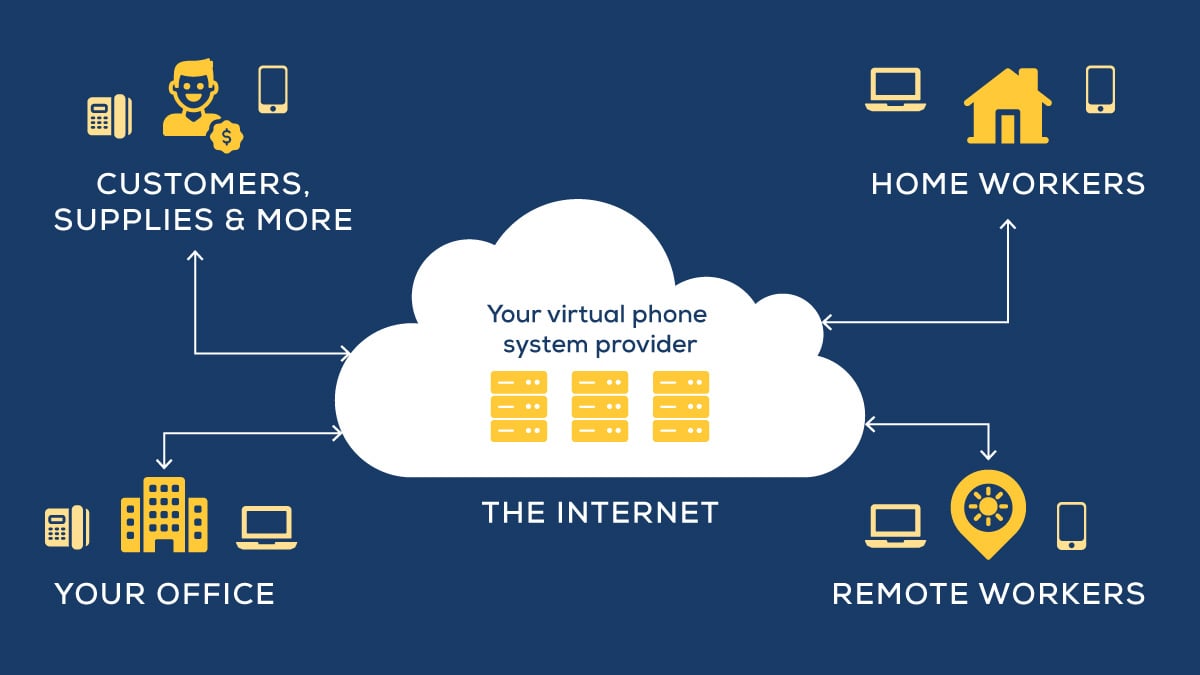
Cooperative purchasing lets government agencies, schools, and nonprofits buy goods and services — even phone systems — through contracts that another public agency already put out to bid.
Instead of running your own request for proposal (RFP), you use a contract that's already been competitively solicited and awarded, so you get the same compliance and pricing benefits without repeating the work.
How does cooperative purchasing work?
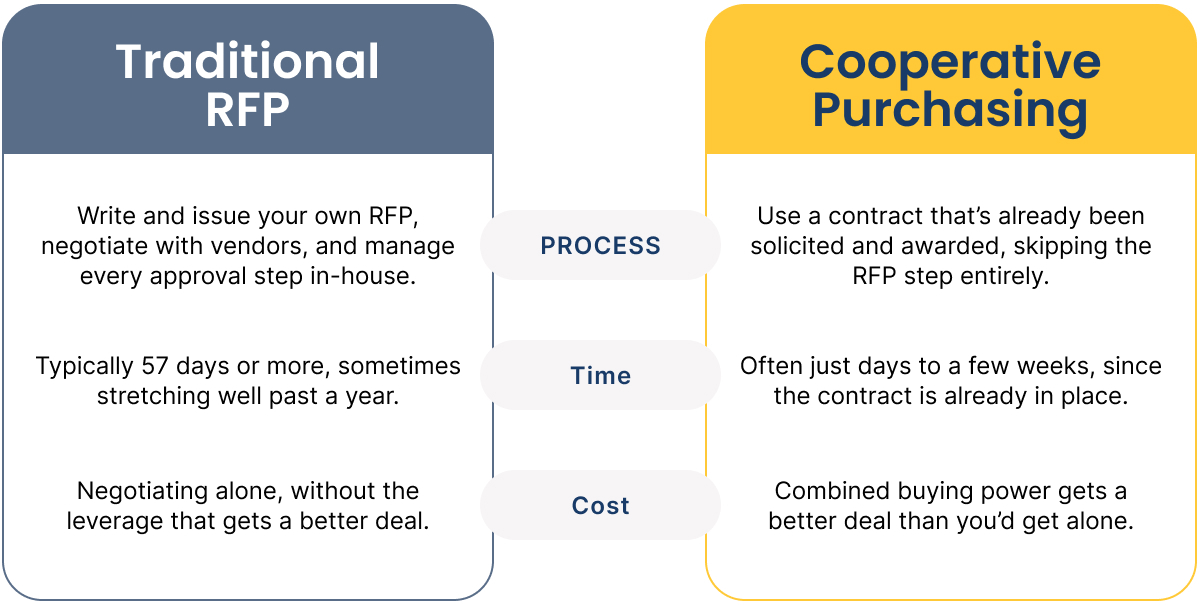
Cooperative purchasing runs through a few defined roles, and understanding them makes the process much easier to follow.
- The lead agency runs the original competitive solicitation, following standard public procurement rules.
- The cooperative (such as Sourcewell) manages that solicitation process and makes the resulting contract available to other public agencies nationwide.
- The supplier is the vendor awarded the contract after the competitive bidding process.
- Members are the agencies, school districts, and nonprofits that join the cooperative and use its contracts to purchase directly, without running their own RFP.
Because the solicitation has already happened, your organization can use the resulting contract to purchase compliantly, without starting the bidding process over.
Why the RFP process falls short for office phone system upgrades
Traditional RFP processes are notoriously time-consuming, and that doesn't include the time spent on pre-planning and requirements-gathering beforehand.
For a phone system upgrade specifically, that timeline alone can create real problems.
Resources get consumed by the process itself
Someone has to write the RFP, read through vendor responses, and get the choice approved. That work takes time away from actually setting up the new system.
Of course, some organizations even pay a consultant to run this process for them, but that costs more.
Vendor responses often don't fit your actual needs
If your request doesn't clearly spell out what you actually need, vendors won't know how to respond to it. You end up with proposals that miss the mark, and then you're stuck starting the evaluation over again.
Staff and customers wait longer than necessary
The longer the process takes, the longer everyone's stuck using an outdated system. Staff feel it every day, and so do the people calling in.
This timeline is also why planning ahead matters so much. Even outside the RFP process, installing a new phone system can take 45 to 90 days once you've selected one, which is why it's common to start planning 6 to 12 months before you actually need the new system in place. Add an RFP process on top of that, and your total timeline gets even longer.
How to evaluate a cooperative purchasing program
Not all cooperatives are structured the same way, so it's worth checking a few things before you join one:
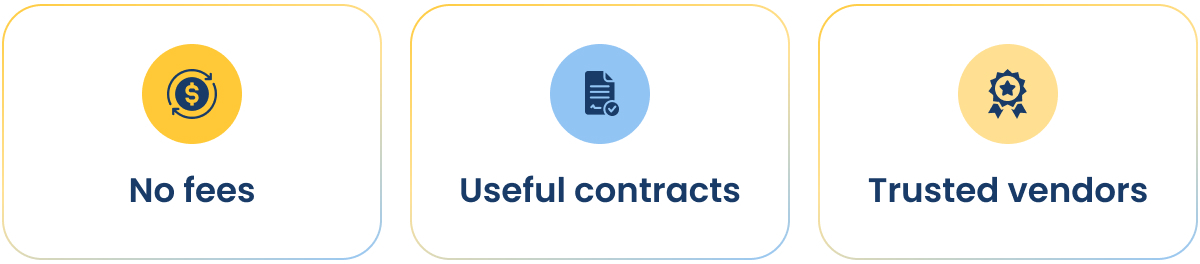
- Confirm there's no cost or minimum purchase commitment to join.
- Look for a cooperative that publishes clear information about how contracts are awarded and managed.
- Confirm the cooperative has an active contract for the specific technology category you need, such as phone systems.
Evaluate potential vendors as well. A contract is only useful if the awarded vendor actually supports your organization well after the purchase.
Frequently asked questions
Here are quick, direct answers to the questions people ask most about cooperative purchasing for phone systems.
What is cooperative purchasing?
Cooperative purchasing lets public agencies, schools, and nonprofits buy goods and services through a contract that another public agency already competitively solicited and awarded, avoiding the need to run a separate RFP.
Is cooperative purchasing the same as an RFP?
No. An RFP is a solicitation your own organization runs. Cooperative purchasing lets you use a contract from an RFP that a different lead agency already completed.
How much does it cost to join a cooperative purchasing program like Sourcewell?
Sourcewell membership has no cost, no obligation, and no minimum purchase requirement.
Who can use cooperative purchasing contracts?
Any unit of government, K–12 or higher education institution, or nonprofit agency can typically join and use these contracts, though eligibility varies organization to organization.
Does cooperative purchasing still satisfy competitive bidding requirements?
Yes. Because the lead agency already ran a competitive solicitation, using the resulting contract satisfies your organization's competitive bidding requirement.
Using Sourcewell cooperative purchasing for office phone systems
We’re actually a vendor partner for Sourcewell, a government agency that provides national contract volume pricing through a single competitively solicited process. If you’re a Sourcewell member, your organization gets access to the Mitel Business Systems contract for business phone systems, with the contract process completed on your behalf.
Sourcewell membership gets you:
- No cost, obligation, or minimum purchase requirement
- A satisfied competitive solicitation requirement
- Nationally competitive pricing from established vendors
- Flexibility to choose your equipment, products, and services
This is available to any unit of government, K–12 or higher education institution, or nonprofit agency nationwide, including schools looking to streamline procurement.
Bottom line — if you're upgrading an office phone system and don't want to spend months on an RFP, our Sourcewell partnership can help you save time and money.