Recent Ransomware Statistics Paint a Grim Picture

Recent Ransomware Statistics Paint a Grim Picture

KnowBe4 has released new ransomware statistics, and unfortunately, it’s not good news. Once ransomware attacks started to escalate after the appearance of cryptocurrency, every year seems to be a vicious cycle. There’s more blood in the water as these attacks continue to work, and the more they continue to work, the more attackers are lured by the promise of quick, easy, and shockingly high profits. 

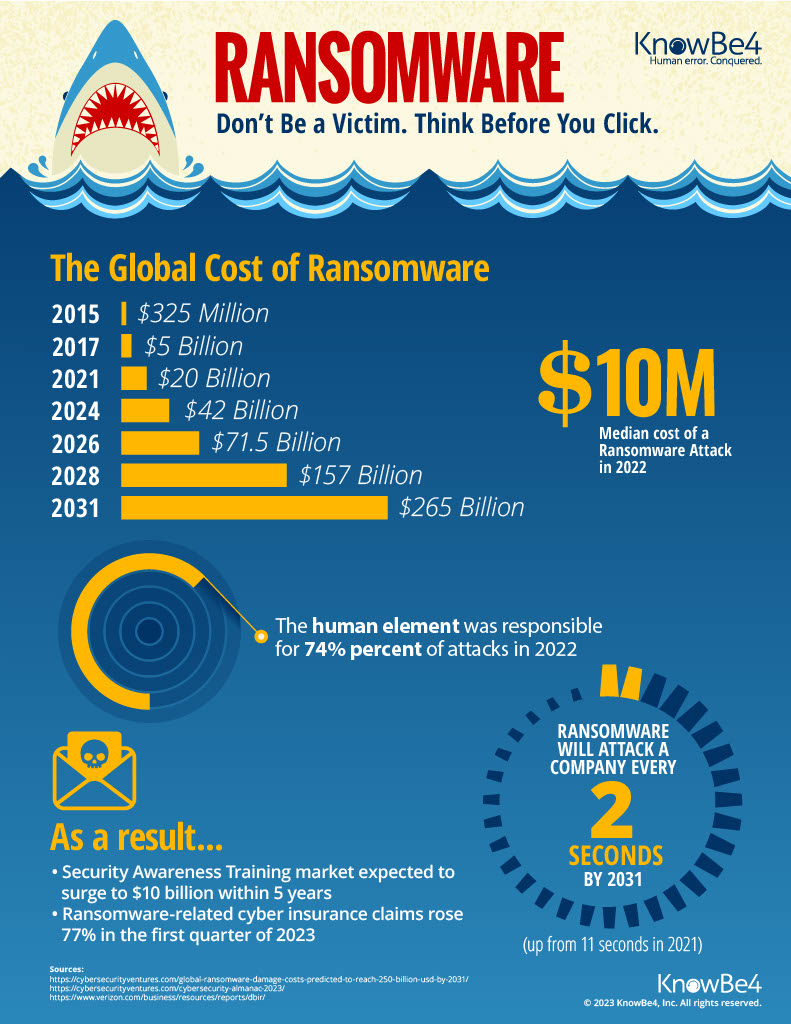
Ransomware is expected to cost the world $42B in 2024, and unless we find a way to turn the tide, 2026 is going to be a real bloodbath. 
Global-Cost-of-Ransomware-Infographic

Ransomware Prevention

Digital cybersecurity tools can do a lot, but they can’t catch everything. And unfortunately, another troubling statistic is that human error and carelessness were responsible for 74% of ransomware attacks last year. Reusing passwords, opening attachments, clicking links, falling for phishing scams, and ignoring important updates can seriously undermine an organization’s cybersecurity posture. 

In fact, typically an organization’s biggest cybersecurity vulnerability is its employees’ lax habits. As frustrating as that is, the good news is that this problem is one that can be fixed, if only more organizations offered effective cybersecurity awareness training. Unfortunately, even for those organizations that do offer ongoing training, that “effective” part is often what’s missing. 

Under 25% of security awareness professionals have the necessary experience in training, communications, or other skills to successfully build a sturdy human firewall. 

What Is a Human Firewall?

A human firewall refers to the people associated with your organization using up-to-date knowledge about cybersecurity best practices to help protect your organization from cyberattacks.

AugustBlogGraphics_Phase1_1080x1080_1Because it only takes one careless click or compromised password to leave an organization vulnerable, a modern human firewall requires that every employee — not just one or two — understands their role in helping to keep an organization secure, and what is expected of them. 

Preventing Ransomware Attacks With Effective Security Awareness Training 

Now for a bit of good news. Security awareness training — when done correctly — is surprisingly effective. Not all programs achieve the same results, and that’s why we are proud of our strategic partnership with KnowBe4, an industry leader in providing robust, effective cybersecurity training. 

If you’d like to implement or upgrade your security awareness training capabilities, our recent blog highlights a bit more about how effective training can minimize risks to businesses. 
Read How Cybersecurity Training Helps Mitigate Risk to Businesses Discover the Benefits

Related Posts

Urgent PaperCut NG/MF Vulnerability: What You Need to Know

If you run PaperCut NG or PaperCut MF, this is the one advisory to stop and read today. In short: PaperCut has confirmed active, real-world exploitation of a vulnerability affectin...

How To Measure Your Cybersecurity Posture Against the NIST Framework

A lot of businesses aren’t sure whether they actually have cybersecurity best practices in place. To be fair, cybersecurity is a moving target, and what was considered sufficient p...

What Is Vishing?
What Is Vishing?

Vishing is short for “voice phishing.” Like other forms of phishing attacks — including email and text-based scams — the goal is to trick someone into handing over credentials, fin...

Cybersecurity Tips for Small Business Owners

Too many small business owners still think they’re “too small” to be targeted by a cybercriminal. Unfortunately, 43% of cyberattacks each year are aimed at small businesses.

5 Common Healthcare Cybersecurity Challenges (and How MDR/SOC Can Help)

In our conversations with healthcare clients, we hear the same five security challenges come up again and again. If you're reading this, you're probably dealing with some version o...

Why Is MFA Important — and Is Your Business Using It Correctly?

Passwords alone haven't been enough to protect business accounts for years. Most IT professionals know this. Most business owners have heard it. And yet credential theft remains on...

What Is Cloud-Native Security?

Most businesses didn't set out to build a cloud-native environment. They started using Microsoft 365, added a cloud-based phone system, migrated a few workloads to Azure or AWS, an...

The Security Strategy AI-Powered Attacks Demand

The threat environment changed. Not gradually. Abruptly. Tools like Anthropic’s Claude Mythos and the latest generation of AI-assisted exploitation capabilities have fundamentally ...

Data Security Governance Best Practices for 2026

Data security has reached a breaking point. Sensitive information now lives in more places than ever, sprawled across SaaS applications, cloud drives, on-premises servers, and incr...

Top Cybersecurity Laws and Regulations To Know About in 2026

Many companies are now facing the challenges posed by malicious hackers attacking their IT environment. Unfortunately, the fallout continues even after the attack is contained, inc...