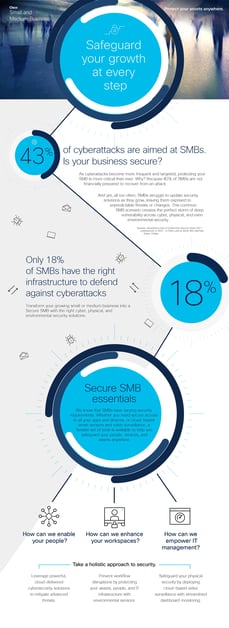
One of our favorite parts about modern business technology is its power to level the playing field. For the first time in a long time, small to midsize businesses (SMBs) can access many of the same world-class tools and systems that big business has been using for years. That’s especially helpful when it comes to network security, as SMBs have borne the brunt of cybersecurity attacks for years.
Many companies have stepped up to provide tools with smaller organizations in mind. But if you ask us, Cisco has taken this natural evolution a big step further with IT and networking solutions specifically designed for SMBs, with the reliability, speed, security, and flexibility they need, all at an affordable price point.
Cisco’s 4 Cloud-Managed Solutions for SMBs
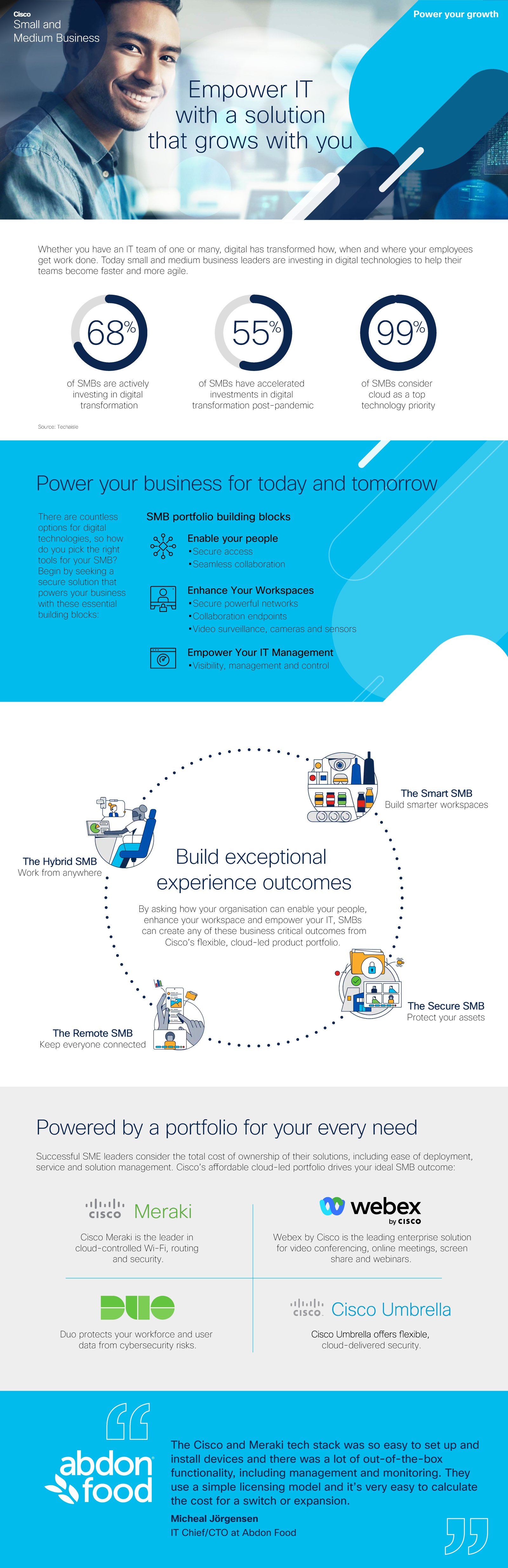
While Cisco is a prolific technology company and software developer, in this blog, we’d like to focus on solutions that each solve common problems SMBs frequently face around their network: Keeping everyone connected from anywhere, empowering remote work, protecting data, and building smarter workplaces.
1. The Smart SMB
With Cisco’s Smart SMB, your company can take advantage of AI and various smart devices to improve security and identify energy-saving opportunities throughout your workspace. Firewall protection, VPN, content filtering, threat defense, and more are also included, and wireless technology is also built-in.
Best use case: Smart SMB is a great fit for a growing SMB that would benefit from advanced security solutions without significant on-premises infrastructure.
2. The Hybrid SMB
Cisco’s Hybrid SMB solution offers an integrated platform that makes it easier for small IT teams to manage both on-premises and cloud environments through a simple cloud-based dashboard. It’s also better optimized for the cloud, with Cisco SD-WAN and dual internet connections to minimize downtime.
Best use case: Hybrid SMB is a lightweight, cloud-first option best suited for small businesses.
3. The Secure SMB
Does your SMB handle sensitive data? If you want a one-and-done network security upgrade, Cisco Secure SMB integrates enterprise-grade security like firewalls, intrusion prevention, malware protection, URL filtering, and more to protect against growing cyber threats. This solution also offers advanced threat intelligence from Talos, while SecureX detects and contains vulnerabilities and malicious activity across endpoints and the network.
Best use case: Cisco Secure SMB is ideal for SMBs that need to quickly up their game in data protection.
4. The Remote SMB
If your workplace has remained largely remote, the Remote SMB is focused on helping employees securely access business apps, data, phones, and other resources from anywhere. As a plus, Webex Teams, Webex Calling, and other collaboration tools are built-in!
Best use case: Cisco Remote SMB is a one-and-done for companies that want to remain remote, all while providing a more immersive collaboration experience.
Yes, there’s some overlap here, as there should be. For example, a network solution that has a special focus on collaboration also needs cutting-edge cybersecurity, and many businesses that have largely returned to in-person work enjoy collaboration tools like Webex. Even when it’s not built-in, it integrates with these solutions seamlessly.
But the nice thing about having four options is that small businesses can beef up additional capabilities that just haven’t been high enough on the priority list in the past few years to get the attention they deserve, all while upgrading their connectivity.
Flexible Cloud Solutions for SMBs With Cisco
If you’re wondering if Marco has a strategic partnership with Cisco, the answer is yes! They’ve put together this infographic to lay out these four and how other Cisco technologies work together to combine security with simplicity.
Getting an Even Better Deal on Digital Technology for SMBs
We mentioned before that Marco had a strategic partnership with Cisco. We are also a Cisco Preferred Partner, which means that our team has demonstrated to Cisco that when it comes to their products, we can provide as good or better end-user support. Our clients also benefit in other ways from our close relationship with Cisco — because we are a large national provider, we have access to insider pricing.
If any of Cisco’s four options seem like they might be a good fit for your organization, you can always talk to a Marco specialist to skip over the next part of your research phase. We’ve also prepared a more comprehensive guide about Cisco’s SMB solutions. Click the link below to access it!






.jpg)