In 2020, many of us redefined our definition of work. We realized that work is less about the actual office space and more about the people who collectively come together—either remotely or in person—to innovate solutions, solve problems and move an organization forward.
Business Resiliency In A New Normal: Collaboration Gamechangers
While some businesses have been hiring remote workers for years, for many of us, it was an entirely new way of working. To adapt and succeed long-term, many organizations realized they will need to implement a business resiliency strategy around engaging a remote workforce—who work in much different ways—into a more the integrated workflow.
In the previous two blogs, I discussed Redefining Business Resiliency in a New Normal and Business Resiliency in a New Normal: Security Must Haves. In this blog, which is the last of a three-part series, I’ll discuss how improved collaboration across a remote workforce can impact an organization’s resiliency.
User Experience
When we think about collaboration, the first thing we usually think about is productivity. But there’s a more subtle consequence to disruptions in collaboration—the impact it has on the user experience for employees, customers and partners. When a remote workforce is unable to perform its job in the same way that it did onsite, it can lead to a host of new challenges. Employees may feel more stressed, less effective and less valued. Over time, this can cause a significant shift in company culture, employee retention rates and, ultimately, the reputation of the brand.
Integrated Collaboration
When clients ask me to point them toward the best collaboration tools, one of the things I ask them to consider is how integrated they want their platform to be. While several applications offer ways to hold virtual meetings, few allow you to integrate calling, messaging and meetings into one single and secure platform. Combining these tools into one easy-to-use collaboration suite can go a long way in improving employee and customer experiences.
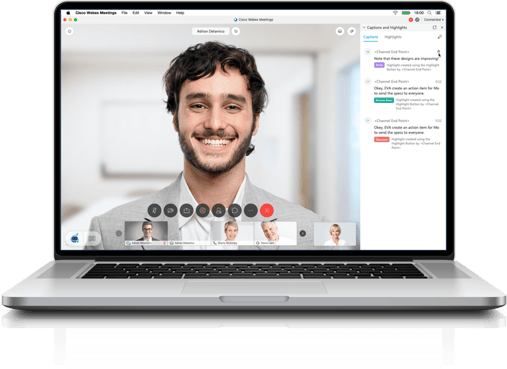
Cisco’s Webex solution offers all of these features. Here’s how they can be game changers.
Collaboration Tools/Software
- Users can start a voice or video call with just one click.
- Business calls can be made or received wherever users are, on any device.
- Those working remotely can get enterprise-grade calling features such as hold/resume, call waiting/call transfer, call recording and business voicemail—just like they were in the office.
- Users can enjoy one seamless experience with virtual backgrounds, background noise removal, device integration and more.
Messaging
- Webex messaging connects the team before, during and after a meeting to create an immersive, real-time collaboration experience anytime, anywhere and on any device.
- Users can chat one-on-one or in groups with rich messaging, gifs, emojis and animated reactions.
- Users can easily delete or edit messages, start a conversation thread, add people to conversations, see read receipts and more.
- Project files and content are stored in a secure space that’s organized, searchable and saved right alongside all the chats, so things are easy to find. Documents within SharePoint and OneDrive can also be shared, opened and simultaneously edited directly from a Webex 1:1 or team space.
- Users can whiteboard or draw with their team and share the interactive drawing in chat—and keep iterating, whether or not they’re in a live meeting.
Meetings
- Webex meetings include multi-stream, high-definition audio and video.
- Users can be anywhere and reach anyone on any device—desktop, mobile, web, video devices—with easy, consistent experiences.
- Meeting participants can share their screen, co-create on a whiteboard, separate into break out rooms and receive instant nonverbal feedback with reactions and gestures.
- Meetings can include a few people or thousands in large virtual events. Regardless of the user’s needs, meetings in Webex can scale to their audience.
- Webex integrates with Microsoft Teams, Slack, Google, ServiceNow, Salesforce and many others.
Security. Security. Security.
Even when we talk about collaboration, we have to talk about security. Webex was built from the ground up with security at its core. It provides users with strong encryption, compliance visibility and control. Using Zero-Trust best practices, Webex sets the bar higher for confidential meetings than other solutions. That’s why 95 percent of Fortune 500 companies use Cisco.
Cost-Savings Bundles Available
If you’re thinking that feature-rich solutions like Webex are just Fortune 500 companies, that’s not the case. In fact, through our partnership with Cisco, we’re able to offer small to mid-sized organizations (with up to 250 users) a special business resiliency bundle that includes Webex and the company’s highly popular security solutions Duo MFA and/or Umbrella.

It’s the perfect way to set yourself up for success in the new normal. To learn more or get started, contact a business resiliency expert.