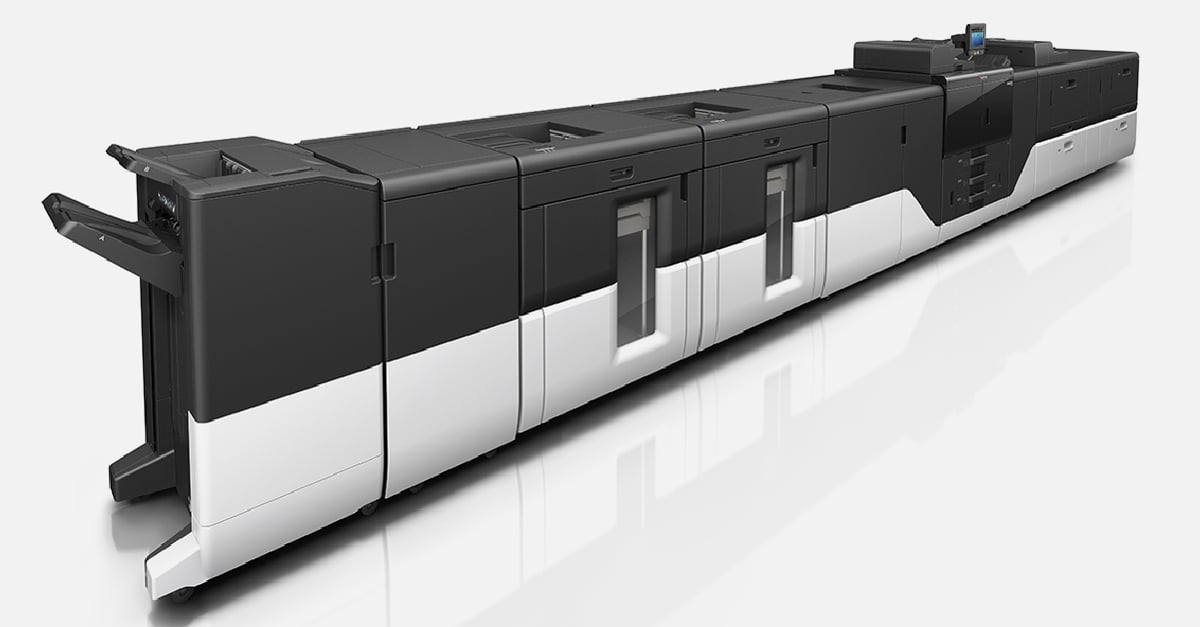
Stop the presses! Okay — with that deadline, you probably shouldn’t. Kyocera officially entered the production print space in May 2020, right when most businesses were still scrambling to adjust to remote work. So, if you missed the launch of their TASKalfa Pro 15000c, you weren’t alone.
Now that we’re almost in 2024, it’s been out in the field for a few years and has proven itself to be ideal for shorter-run, highly variable jobs, fast, reliable, and cost-efficient. But would it be a wise investment for your organization? Let’s do a deep dive to find out, starting with a few basics.
What Is Production Inkjet Printing?
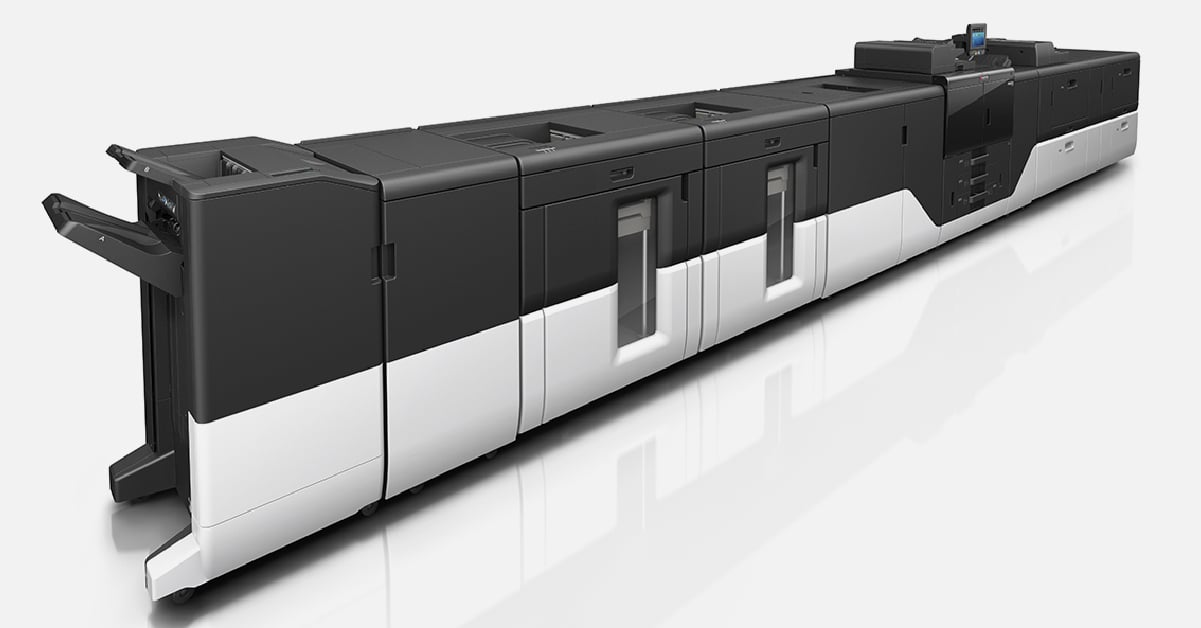
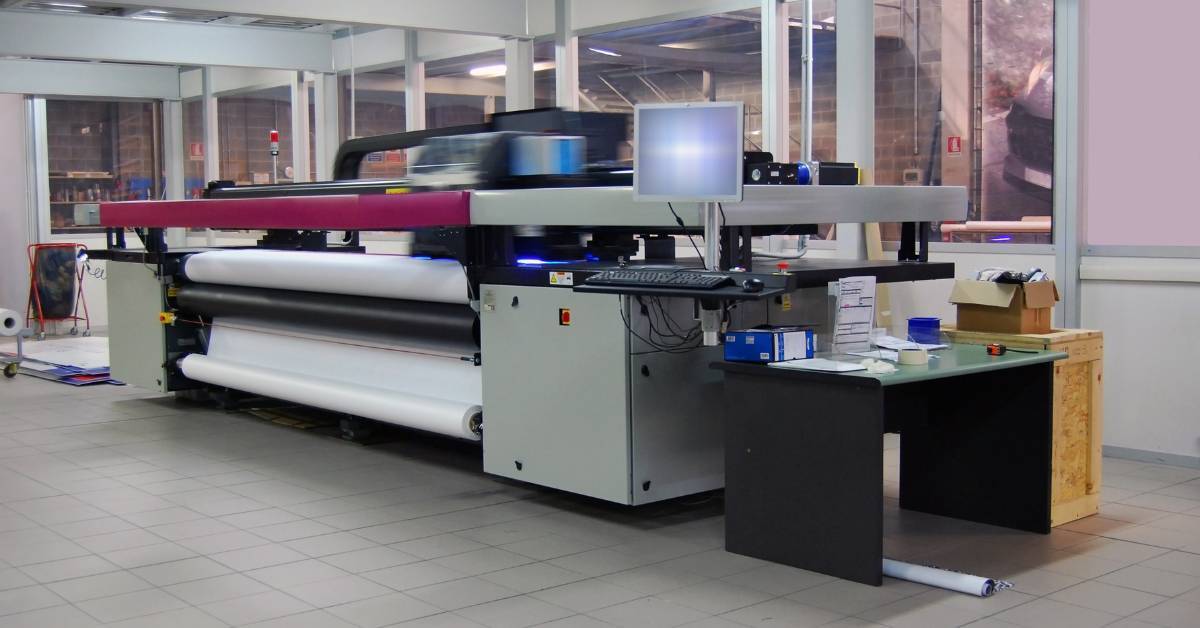
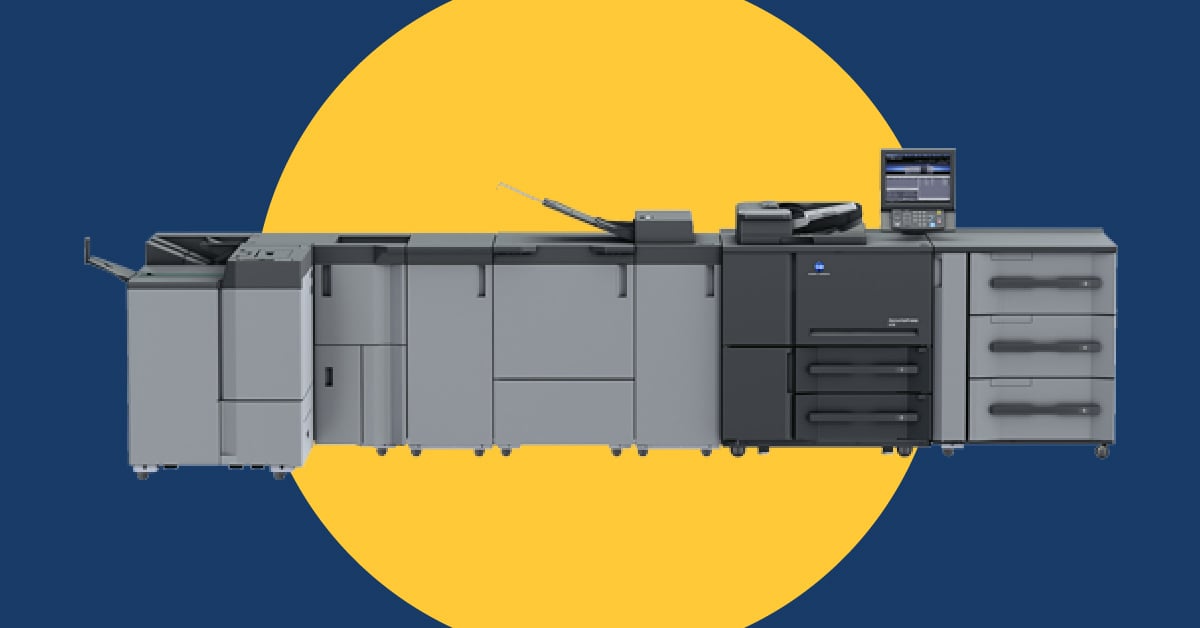
Production inkjet presses are high-speed, industrial-strength printers that can churn out tons of full-color prints quickly. They use fixed printhead arrays that span the width of the material being printed on, so the ink gets laid down in a single pass. This type of equipment was first introduced in 2008, but since then, dramatic improvements have been made to increase quality while maintaining speed.
Today, these presses can handle rolls of material for big banners and signs or sheets of paper for books, magazines, mailers — you name it. The inkjets can print on a huge range of materials too, from plain paper to plastics and fabrics. However, one of the coolest things is that production inkjet presses make it really easy to do variable data printing. This means you can easily customize and personalize every single print.
Why Consider Production Inkjet?
There are a few key reasons a business might consider an inkjet production printer over a toner or offset press:
Lower Cost
Inkjet production printers tend to have lower upfront costs compared to more traditional production printers and offset presses. The ink is also less expensive per page than toner. All told, these newer machines make production printing more affordable for small to midsize businesses.
Increased Speed
Outside of the production print space, you typically have to choose between high-quality color images and speed. However, modern high-speed inkjet presses can now print at speeds up to 1000 feet per minute, making them competitive with digital toner presses.
Not only that but offset devices have so many moving parts that setup is a challenge. An inkjet, on the other hand, is ready to go almost instantly.
More Flexibility
Because inkjet printers can print on a wide variety of substrates, you can produce a range of print products without changing equipment.
Improved Quality
Recent advances in inkjet technology have narrowed the print quality gap with toner and offset. Inkjet printers like the TASKalfa Pro 15000c can produce the sharp text and vibrant color you need to create eye-catching promotional materials.
Lower Maintenance
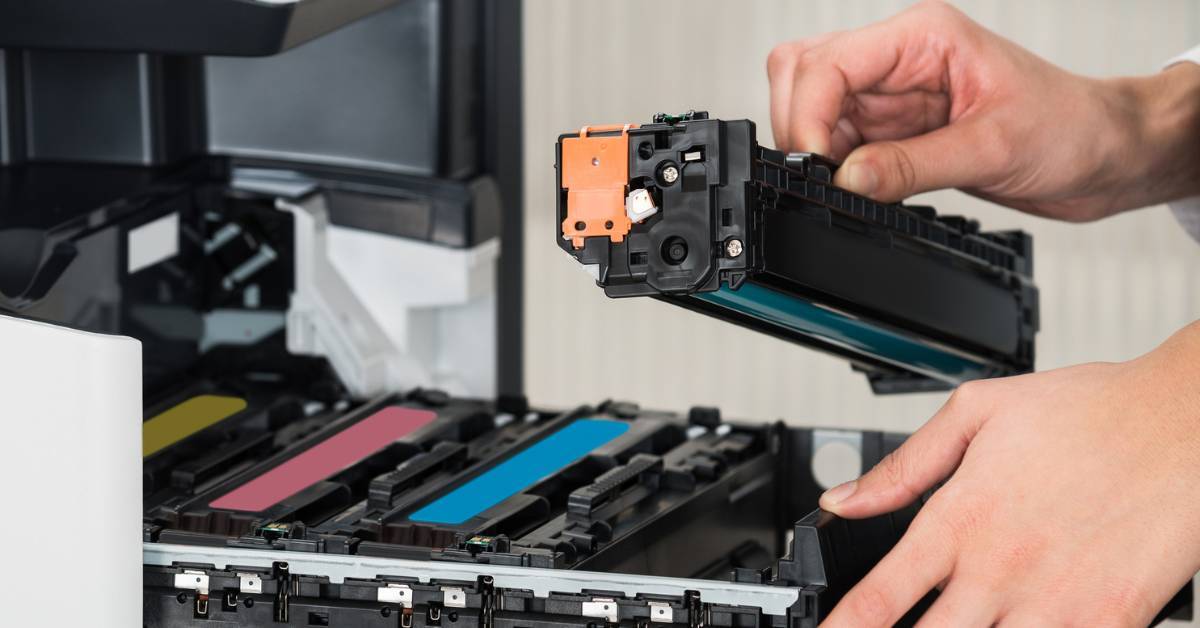
Inkjet production printers have fewer moving parts, which tends to equate to fewer malfunctions and paper jams, less wear and tear, and less frequent maintenance needs. And on the rare occasion that the device does require maintenance, it tends to be quick and easy. Plus, you won’t need to replace an entire block of the machine just because one little component isn’t working.
Greater Profitability
Offset presses take time to calibrate color and registration before sellable prints are produced, resulting in wasted paper and time for short runs. Offset presses generally are only profitable when it’s creating thousands of copies. However, jobs from 1-500 copies can still be profitable and efficient on an inkjet production printer.
Some brands will have additional advantages. For example, the TASKalfa Pro 15000c was designed to consume less electricity than its competitors, achieving an impressively low TEC score of just 4.3 kWh.
What Industries Should Take Another Look at Production Printing?

Inkjet production printers are still an investment, but one that might really pay off for some organizations.
Education
Schools and colleges aren’t going paperless any time soon. Between worksheets, quizzes, event programs, and certificates, speed and reliability are kind of a big deal.
But when it comes to exams, inkjet production printers — and their variable data capabilities — can really shine. For example, you can ask your equipment to automatically scramble the exam questions to prevent students from copying each other’s work.
Healthcare
Every vendor you do business with can potentially introduce an element of risk, and that includes vendors who provide mailing and printing services. Outsourcing these print jobs can result in a HIPAA nightmare, as was the case with two New Jersey printing companies that mistakenly printed the back of one member’s statement on the front of another’s and didn’t catch the error before mailing them out.
If more health centers had the ability to print their own bills, appointment reminders, and the like in-house, less patient information would have to change hands. An inkjet production printer can reduce risk and save money at the same time.
Finance
While financial institutions have been trying to cut down on mailing out paper statements for years now, most customers prefer paper statements. Printing out personal statements quickly, and preferably in-house, is the perfect use case for an inkjet production printer.
Utilities
Just like with financial institutions, printed bills are more convenient for customers. Not only can utility companies use inkjet production printers to reflect each customer’s usage and include detailed charts and graphs, but they can also use them to customize other content, like personalized postcards that offer customers special discounts for reducing their consumption.
How To Get a High-Speed Inkjet Production Printer for Less
You might have guessed from reading this blog that Marco has a strategic partnership with Kyocera! That’s certainly nothing we shy away from. On the contrary, forming close relationships with top manufacturers and software developers allows us to provide better support and lower prices to our customers.
Forming closer vendor relationships also helps solve one big production printing challenge: Many manufacturers employ few, if any, qualified production print technicians in-house, and while we only recommend reliable equipment to our customers, even production printers have needs! When you do need an experienced production print technician, it’s not a great time to realize that your equipment manufacturer can’t provide one for days on end, and maybe weeks.
We have a dedicated print production team with backgrounds in the professional printing industry. They know workarounds and tricks of the trade that most equipment manufacturers don’t, and that means when our clients need expert help, it’s always there. We’re also brand agnostic, so while we love that Kyocera has gotten into the production print space, we’re free to recommend the right equipment for you, regardless of who makes it.
Click the link below to learn more about how we can boost your production printing capabilities!