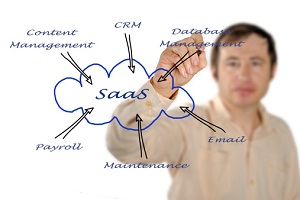
 You've likely heard of cloud computing. However, do you really know what it means, how it works and how it can benefit your company? New cloud computing products and platforms are being created all of the time. If you haven't embraced the cloud, you could be missing out on some great ways to improve your flexibility while saving your company money.
What Is Cloud Computing?
Cloud computing refers to using a third party for computer functions that were traditionally handled in-house, such as data and document storage, email hosting and even customer interface applications. You don't have to be a large company or firm to take advantage of cloud computing. Cloud computing can be beneficial to virtually any size company, from a two-person law firm to a multi-national corporation.
There are three basic types of cloud infrastructure options--SaaS (Software as a Service), PaaS (Platform as a Service) and IaaS (Infrastructure as a Service.) Today, we'll focus on the SaaS structure. Be sure to read parts two and three in this series, which we'll be posting in the next couple of days, to learn more about the PaaS and IaaS cloud computing offerings.
About Software as a Service
Software as a Service (SaaS) could also be called "on-demand" application services. Such a service involves letting a third-party store, manage and encrypt your company data. There are many benefits to making such a move, chief among these is better data security and the ability to "pay as you go."
Examples of SaaS
Do you have a Google email account or use Google docs to share information with customers and colleagues? You may not be aware of it, but you are already using SaaS applications.
If you use a collaboration service, such as GoToMeeting, to host your sales meetings or educational webinars, you are using a cloud-based application.
Or, perhaps, you've heard of--or used--a customer relationship management (CRM) service, such as SalesForce.com, which helps to streamline and automate some of the routine functions associated with building new client accounts? That, too, is an example of SaaS.
Benefits of Using a Managed Cloud Service Provider
SaaS through a managed cloud service provider allows you to spend money on only the services and storage space you need. For example, if your company has an e-commerce presence, you know that some periods of the year (such as holiday seasons) are much busier than others. Traditionally, you would have to purchase (plus house and maintain) enough server space to handle the web traffic during those peak periods, even though that space won’t be used during the slower parts of the year, which is typically the majority. Through SaaS you only have to pay for the storage space you use, which likely would consist of more space in December and less in January. In addition, cloud computing enables you to save on the cost of the servers, the electricity necessary to cool your server room, the office space to house the servers, and the personnel to maintain them.
Another advantage to using SaaS, and cloud computing in general, through a managed cloud service provider includes better data security. Managed service providers are generally able to afford and provide better security features than most small or medium-sized companies because they are able to share resources.
We hope you were able to learn more about SaaS (Software as a Service) and cloud computing from this post. If you have any specific questions about SaaS or managed cloud services, please post them in the comment section below. Subscribe to our blog in the right hand column, to learn about PaaS (Platform as a Service) and IaaS (Infrastructure as a Service) in the next two blogs in this series.
Talk to a Cloud Service specialist today to learn about specific cloud computing options for your business.










![Cloud vs. On-Premises Communications [Infographic]](https://www.marconet.com/hubfs/UCaaS-infographic.jpg)