For years, wide-format printing has forced print service providers (PSPs) to choose between trade-offs that never felt quite right. Want to expand into rigid applications? Be prepared to give up space, simplify your offerings, or accept added workflow complexity. Want more flexibility across rigid and roll media? That often means juggling multiple systems or relying on print-and-mount processes that quietly erode margin.
These compromises didn’t exist because the demand wasn’t there. They existed because the tools available made them feel unavoidable. And that’s exactly the gap HP set out to address with the Latex R530.
The Trade-Offs PSPs Have Been Working Around for Years
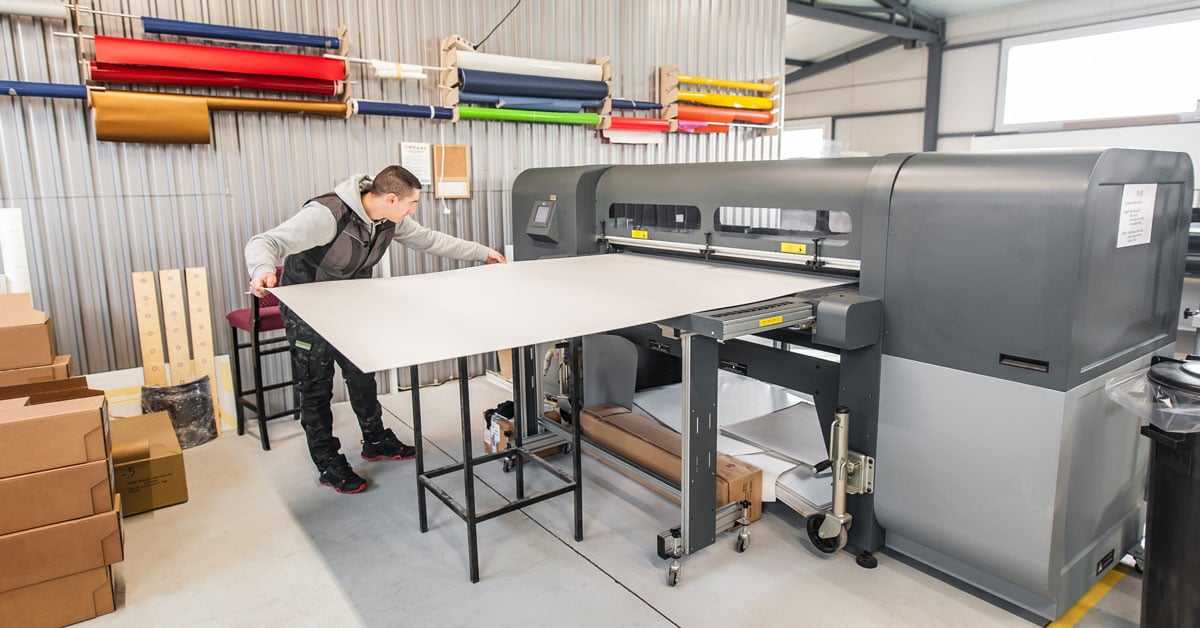
Rigid printing has always been attractive — and challenging.
On paper, rigid applications open the door to higher-margin work like retail displays, signage, décor, and point-of-purchase materials.
In practice, though, traditional rigid printing often forces PSPs into difficult situations:
- Having to commit significant floor space to large flatbed systems
- Maintaining separate workflows for rigid and flexible jobs
- Adding labor and time through print-and-mount processes
- Outsourcing rigid work and giving up margin and control
Most shops that avoid rigid printing don’t do it because they don’t want the work. They avoid it because the compromises didn’t align with how their operation actually runs. And to be honest, I believe they’ve been making the right call until now.
Rigid Printing FAQs
Curious about rigid printing but aren’t that familiar with it yet? Here’s a quick FAQ section. Feel free to skip over it if you’re already up to speed.
What Is Rigid Printing?
Rigid printing means you’re printing directly on solid, rigid materials, like foam board, corrugated plastic, acrylic, aluminum composite panels, wood, and more.
What Are the Biggest Challenges With Traditional Rigid Printing?
Historically, rigid printing has required large, flatbed printers that take up a lot of space. Rigid printing also requires higher skills and setup time, and the equipment is more expensive.
Is Rigid Printing Only for Large Print Shops?
No. While large PSPs often use rigid printing at scale, smaller and mid-sized shops increasingly adopt rigid printing to expand services, improve efficiency, and reduce outsourcing. The key is finding a solution that fits the shop’s size and workflow, not overbuilding for capacity you don’t need.
What’s Different About the HP Latex R530?
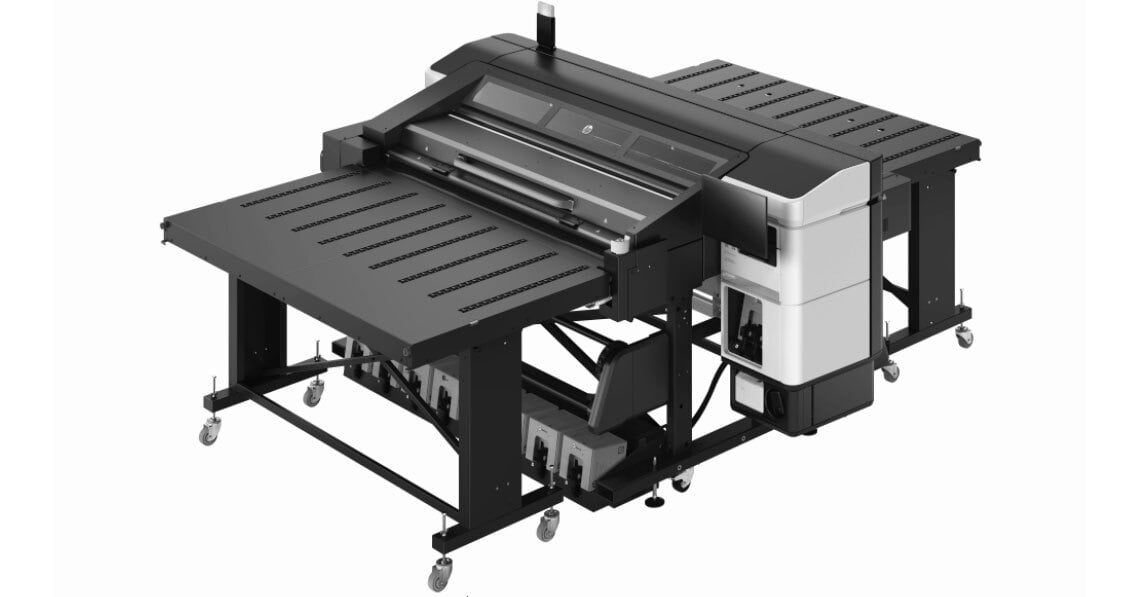
HP didn’t approach the R530 as “another rigid printer.” They designed it to eliminate the trade-offs most printers have to make.
Let’s get more specific.
Instead of asking PSPs to restructure their shop around rigid printing, the R530 is designed to fit into existing environments — handling both rigid and flexible applications on a single, compact platform. That shift matters because it removes the all-or-nothing decision rigid printing has historically required.
For PSPs, this means:
- Bringing rigid work in-house without expanding their footprint
- Reducing reliance on print-and-mount for short-run applications
- Moving between rigid and flexible jobs with less disruption
- Maintaining consistent output across materials
In other words, it reduces the compromises that have kept rigid printing just out of reach for many shops.
The Operational Win Commercial Printers Will Notice First
The biggest impact of the HP Latex R530 isn’t found on its spec sheet. It shows up in day-to-day production.
For many PSPs, the immediate benefits are operational:
- Simpler production planning with fewer disconnected workflows
- Faster turnaround on rigid jobs by eliminating extra steps
- Better use of limited space and power, especially in smaller shops
- Lower day-to-day friction, with automated processes that help protect uptime
These improvements don’t just make production faster. They make it more predictable. And predictability is what allows PSPs to scale without adding unnecessary stress to their operation.
Consistency Across Media — A Quiet but Important Advantage
One of the most overlooked challenges in wide-format environments is consistency. When rigid and flexible jobs are produced on different systems, even small variations in color, finish, or curing behavior can create issues — especially for multi-material campaigns.
Because the R530 is built on HP Latex technology, PSPs can maintain more consistent output across substrates.
Combined with the benefits of water-based HP Latex inks, this supports:
- Cleaner brand consistency across campaigns
- Easier mixing of rigid and flexible elements
- Broader use in indoor and customer-facing environments
It’s not the most obvious advantage, but it’s one clients notice quickly.
Sustainability That Removes Friction Instead of Adding It
Sustainability is a big component in more of the discussions I’m having lately, and that’s great. But most PSPs I talk to are understandably cautious about changes that add cost or complexity.
When it comes to the R530, though, sustainability improvements align with efficiency.
Here’s how:
- Direct-to-rigid printing can reduce material waste
- Water-based inks support safer indoor use
- Circular design choices support long-term equipment value
Who Should Consider the HP Latex R530?
The HP Latex R530 won’t be the right fit for every print shop — and that’s exactly the point.
The platform isn’t designed to replace high-volume flatbed environments or force rigid printing into shops where it doesn’t belong. It’s designed for PSPs who have felt stuck between wanting to do more and not wanting to overcommit.
The R530 is a strong fit for PSPs who:
- Want to bring more rigid work in-house
- Don’t want to dedicate the space, power, or budget required by traditional flatbeds
- Rely heavily on print-and-mount today and are feeling the hidden costs in labor, waste, and turnaround time
- Run a mix of rigid and flexible jobs and want a more unified, predictable workflow
- Value consistency across materials for retail campaigns, signage, or multi-piece projects
- Need flexibility without added operational complexity
When I Wouldn’t Recommend the R530
The R530 is a huge opportunity for the right shop, which is why I wanted to take the rare step of devoting an entire blog to a single piece of equipment.
That said, it may not be the right fit for PSPs who:
- Run continuous, high-volume rigid production where a dedicated flatbed already makes sense
- Have no plans to expand beyond roll-based applications
- Are comfortable with rigid work being outsourced for the foreseeable future
A Smarter Way to Decide If the R530 Fits Your Operation
The HP Latex R530 represents a meaningful step forward. But like any production investment, the real question isn’t “Is it impressive?” It’s “Does it make sense for the way we actually run our shop?”
We can help with that.
At Marco, our role isn’t to push a specific model. It’s to help print service providers evaluate whether a platform like the R530 would genuinely reduce compromises in their environment — or whether a different approach would deliver better results.
Book a Free Consultation
Our production print team is staffed by people who’ve spent years in commercial printing themselves. They understand the realities behind throughput targets, floor space constraints, labor challenges, and margin pressure — because they’ve lived them. That allows us to have practical conversations about things like:
- Which jobs make sense to bring in-house
- How print-and-mount costs add up over time
- Where rigid printing actually improves efficiency — and where it doesn’t
- How different models compare based on real production scenarios
We can also help run the numbers, weigh the pros and cons of different configurations, and make the decision clearer — whether that leads to the R530 or another solution entirely.
And, by the way, because Marco is a strategic partner with HP, we’re able to provide access to best-in-class pricing, support, and long-term service — all backed by a team that understands both the technology and the business of print.
Click the link below to connect with a wide-format specialist!

