 Cloud computing is definitely the future for many business uses. Once the decision has been made to shift some or all of your business networks to the cloud, the next decision you’ll need to consider is: public cloud vs. private cloud.
What is a Private Cloud?
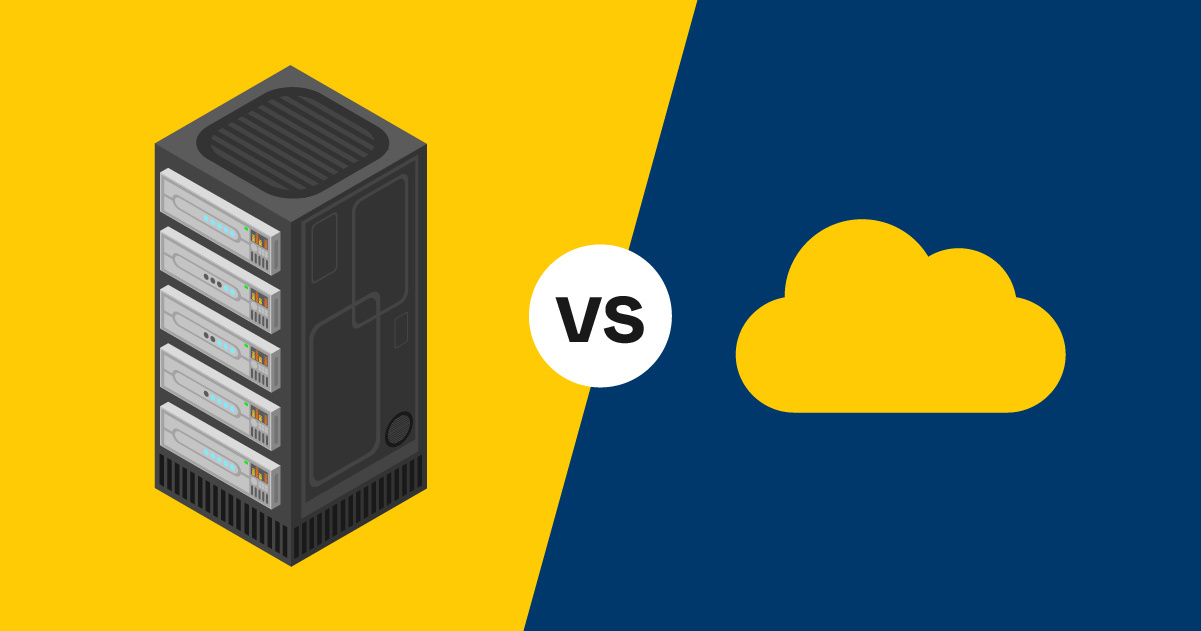
A private cloud is an in-house IT infrastructure that serves as an extension of your company’s current data center and network. It offers optimal processing power and storage capacity that is flexible enough to meet the needs of a variety of business functions. The resources available to your company on a private cloud are not shared with any other users, and since it is hosted on-site, you have greater control over the infrastructure.
What is a Public Cloud?
A public cloud exists off-site and is contained within an IT infrastructure that is hosted by a third-party service provider. A public cloud allows your business to use a single service, or a set of services, via the internet. Rather than dealing with the maintenance and operation of IT infrastructure internally, your third party provider handles all of these responsibilities and tasks.
Public Cloud vs Private Cloud
The discussion regarding public and private clouds should center on the pros and cons of each option. There are advantages and disadvantages to each cloud type, which will differ based on your business and its needs. Deciding which route is best for your company comes down to weighing the benefits and drawbacks.
Private Cloud – Pros and Cons
First and foremost, enhanced security is a primary advantage of a private cloud. Your company can physically ensure the security of sensitive information because the IT infrastructure is located on-site.
A private cloud also allows for greater control over resources and performance levels. With the infrastructure on-site, it is easy for your business to tailor a private cloud to meet changing needs without relying upon a third party to complete the work.
And now, the drawbacks of a private cloud; first, you should be aware of high maintenance and support costs. Rather than sharing upgrade costs with all those using your public cloud, new servers, wiring, data center updates and more are the sole responsibility of your business and its IT staff.
Along these same lines, scalability is difficult with a private cloud. Adjusting the capabilities of the network to business demands and changes is not as fluid as it is on a public cloud. That doesn’t mean it is impossible, but it is difficult to create an infrastructure that is flexible enough to accommodate your future needs.
Public Cloud – Pros and Cons
The greatest benefits of a public cloud are scalability, maintenance and cost. A public cloud offers scalability that a private cloud simply cannot match. Services and resources offered through a public cloud are allocated based upon need. When your demand for resources is high, the change in activity level can easily be accommodated.
Maintenance and cost factors are also huge benefits to a public cloud. Configuring a public cloud account takes a matter of minutes. The servers and data centers are already established off-site; you simply need to establish access for your business. Since the IT infrastructure involved isn’t your responsibility, maintenance is taken care of by the service provider.
Costs are controlled in the process because numerous clients use the same resources. Sharing this infrastructure divides the large investment costs among multiple users.
One drawback to a public cloud is less personal control over security, compared to that of a private cloud. Although public clouds are very secure, you have less control in the decisions regarding security technology, policies or procedures. If your business handles extremely sensitive information on a regular basis, the lack of control and regulation over security measures in a public cloud should be of concern, and your options should be carefully considered.
Public Cloud vs. Private Cloud: Hybrid Option
There is always the possibility of employing a hybrid option when choosing public cloud vs. private cloud. A hybrid option, as its name implies, uses a combination of a public cloud structure and a private cloud structure.
The best option is going to be the one that best fits your business. Be careful to accurately analyze your required service levels, usage patterns and security needs before making a decision on your cloud infrastructure. When you are ready to discuss your options with an experienced specialist, request a free consultation with one of ours:










![Cloud vs. On-Premises Communications [Infographic]](https://www.marconet.com/hubfs/UCaaS-infographic.jpg)