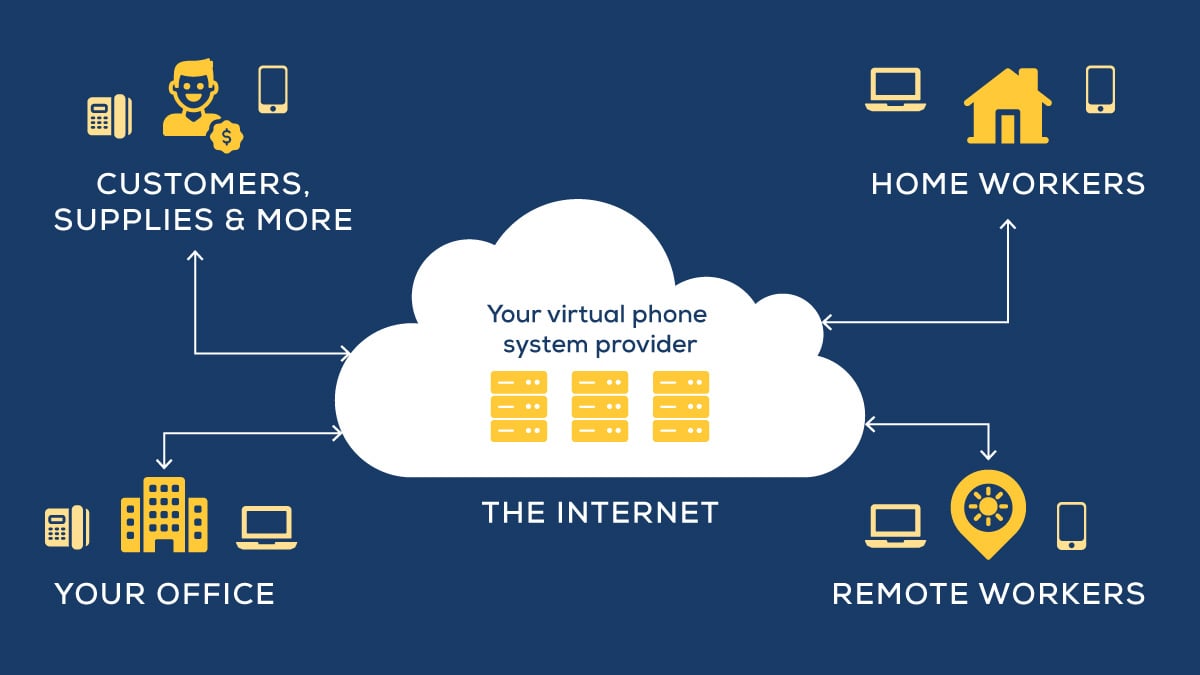
I’ve run into more than a few business owners who believe a hi-tech communication system is automatically out of their budget. Even if they have read about the benefits and heard a few great reviews, they assume it’s unaffordable. But I’m here to tell you that a modern, business class communications system can be a smart and affordable business decision.
Budgeting for Hi-Tech Communications
 Here’s my take on the affordability of hi-tech communications for businesses: it depends on how you’re paying for it. If you’re following the traditional model – one where you make a capital purchase of all the devices you need, the software to support them and all of the ongoing vendor and service support required to keep things up and running – it’s going to be expensive, difficult to maintain and unrealistic to manage. Luckily, that traditional way of purchasing business communications isn’t your only option.
Enter, Unified Communications
Unified communications is a modern, feature-rich communication system that gives end-users an efficient, streamlined, intuitive user experience. In fact, you may have seen some of my other blogs where I cover the many benefits of unified communications. And it’s true, our unified communications offering (UCaaS) has an ever-growing suite of complex features. But even though UCaaS is complex, it’s not complicated.
The way we’ve structured our unified communications offering makes it easy to use and simple to budget for. Unlike the traditional method of purchasing business communications I referenced above, UCaaS isn’t a capital expenditure. It’s an operational expense.
Business Communications as an Operational Expense
If you look outside of the business world and think about personal communications, most people aren’t purchasing cell phones anymore. Instead, they’re paying a monthly amount for them until they upgrade to newer, better technologies. The cost of using your cell phone gets rolled into the monthly bill for the service. And after a year or two, you upgrade to a new cell phone and continue on with the service. UCaaS follows a similar structure.
When it comes to UCaaS, you’re combining all the hardware, software, service, maintenance and end-user support into a single monthly investment. And the investment is priced per user. This way, you know when the investment in your service will change. If you add some new employees, the amount will go up based on that number. If you reduce your number of employees, the amount will go down. If your number of employees stays the same, so does your investment in the service.