Implementing Your Unified Communications Solution [Video]

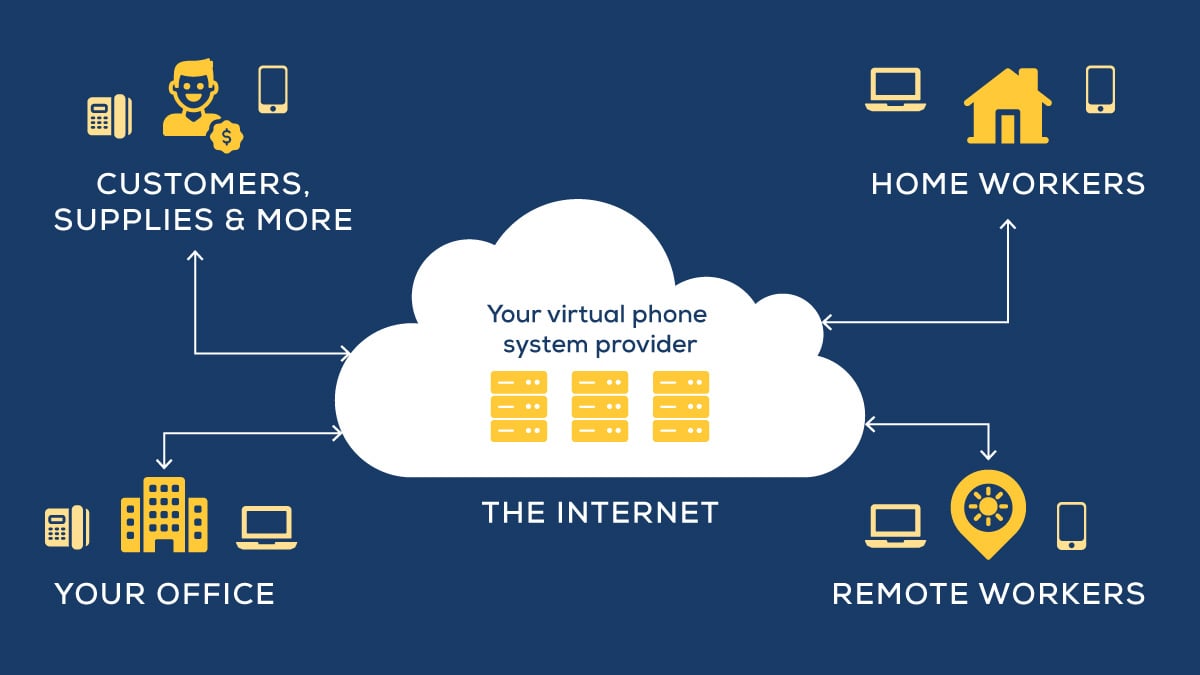
UCaaS combines telephony functions like voice, video, chat and collaboration into one, seamless stream of communication. Further, it functions regardless of device or location, meaning these features are available on your mobile, computer, desktop and on the web. It's the solution that's revolutionizing workplace communication, and Marco's UCaaS, powered by Mitel, is second-to-none in the marketplace. 

One area where I receive the most questions from potential customers is implementation. Here's what implementing UCaaS looks like...

Implementing UCaaS with Marco

DEMONSTRATING

One unique thing about Marco's UCaaS is our ability to provide demonstrations, proof of concept and handsets out to a customer location to help them get a feel for the product before deployment. This way, you can prove the technology and prove the functionality of the solution. I've found that providing a demonstration is one of the most effective ways to increase adoption and get customers to buy into the solution. 

Onboarding

The average onboarding process is between 60-90 days. And it typically takes another 90 days for customers to fully adopt the technology and become very comfortable using the tools on a daily basis. So, you're looking at about six months from the onset of the solution to full, functional user engagement. 

Adopting

And it's at that six-month mark where users start gaining efficiency and begin believing in the solution. It's also at that point when users start to tell others about the solution and list the ways in which it has helped them. Like many new technologies, UCaaS is something that customers tend to push back on initially. But once we show them how easy it is to use and how everything is integrated, their perspectives change pretty quickly.

When they begin to use the solution, it's amazing how those hesitations change to them recommending others to use it as well. That way they can seamlessly communicate with them too.  

UCaaS Implementation Plan

When a customer commits to implementing Marco's UCaaS, they're assigned a project manager who works through an implementation plan for how to deploy the new solution. This includes a thorough analysis of every user, every extension and every phone number as well as assimilates the features that were requested in the order with the end user.

We provide end-user training, feature guides, webinars and leave-behind documentation to ensure your company gets up-to-speed on the solution and utilizes all of the new features to maximize your return on investment. Want to learn more about Marco's UCaaS? Connect with a Communication Technology Specialist.

Connect with a Communication Technology Specialist Contact Us Now

Related Posts

Why Rural Healthcare Can't Afford To Wait on POTS Line Replacement

Rural healthcare organizations — clinics, long-term care facilities, critical access hospitals — are disproportionately exposed to what's happening with POTS (Plain Old Telephone S...

Phone Systems for Small Business: Must-Have Features

A small business phone system is how your customers reach you. It's also how your team stays connected when people work from different locations. Yet many small businesses still re...

Unified Communications: How It Improves Productivity — And What It's Worth

Most businesses didn't choose their current communication setup. They inherited it — a phone system from one era, a video conferencing tool from the pandemic, a chat platform someo...

Why Unified Communications Is So Important in 2026

If your team is juggling meetings in one app, chat in another, and calling in a third, you’re not alone. The problem isn’t that people don’t communicate — it’s that communication g...

What’s Hosted Voice, and Why Should Your Business Use It?

If you’ve been researching ways to upgrade your business phone system and potentially save money, you probably have come across the terms Hosted Voice or Hosted VoIP. Both of these...

What Mitel’s MiVoice Business 10.5 “Final Release” Means for Businesses

If you’re running Mitel MiVoice Business on an AX, CX II/CXi II, or MXe III/MXe III-L controller, you may have heard that 10.5 is the last MiVB version those platforms will support...

Business Phone Systems for Manufacturing: What Actually Works

Traditional phone systems weren’t built for the way manufacturing actually works. They were designed for people sitting at desks in offices. But manufacturing happens everywhere: o...

How To Upgrade Your School Phone System for Less

Government, education, and nonprofit organizations have two main options for purchasing phone systems while meeting competitive solicitation requirements: traditional RFPs or coope...

How Cloud Phone Systems for Healthcare Can Improve Patient Care

If you've ever tried calling your doctor's office only to sit on hold for 20 minutes, get transferred three times, and then have to call back because the line dropped, you know exa...

Everything You Need To Know About Cloud-Based Business Phones

It would be difficult to find an office where employees were still working on computers that couldn't connect to the Internet. Can you imagine trying to collaborate on documents wi...