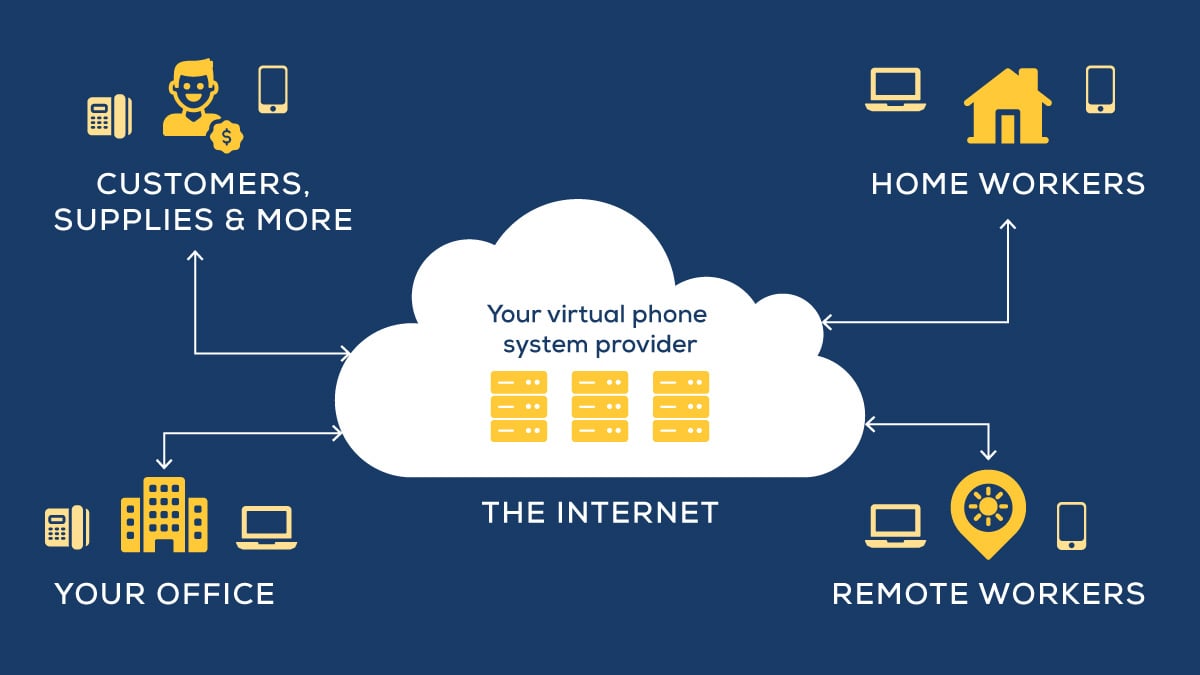
There are probably only a couple of reasons to ask yourself about the quality of your organization’s telecom. The first reason might be when you are reaching the end of a contract with your current carrier and you, or someone on your team, begins to wonder if you could get better connectivity with a new carrier. The second reason might come when someone in another department, or someone higher up on the org chart, has trouble with the speed and quality of the existing network connections.
Either way, once you start questioning the quality of your connections and the service you get from your carrier, the questions sort of snowball. Here are eight questions to ask yourself...
1. How available and reliable is my carrier?
That’s a very clear question and your carrier should have metrics (numbers, reports and charts) to demonstrate both availability and reliability. With many telecom carriers serving a specialty niche or within a specific geography, the right carrier is the one that can align the services and features with the operational requirements of your business.
2. How low is the latency on my network (and what is latency again)?
A solid connection with a good carrier is going to have very low latency. That means the network transmits data quickly without losing line quality. That’s not terribly important if you are transferring a document or a spreadsheet, but if your latency is high, any video running on the network will suffer degradation. Likewise, because you phone system is now probably Voice Over IP - essentially running on the same network - the audio could be spotty unless you have low latency.
3. How secure is my telecom connection?
 If you are running on a shared connection or one that is less-than-private, your organization could be vulnerable to denial of service attacks and other malware. This is a vital question to ask when analyzing the performance of your current telecom, and when looking at your options which may include a dedicated line.
4. How clear is the reporting from my web portal?
Your telecom carrier provider's web portal should be able to show bandwidth performance, latency, circuit utilization, and trouble ticket status.
5. Am I getting the connection speed I'm paying for?
The best connections are going to be dedicated connections. That means you aren’t sharing the bandwidth with any other organization. If you are paying for a certain speed, say 10 megabytes per second, you are going to get that speed no matter what the traffic is like out on the rest of a Carrier's network.
6. Is my carrier big enough to offer network flexibility?
For example, are the carriers you are considering big enough to offer you separate connections, one for the Internet and one for your private network? Your private backbone most often will be an MPLS (Multiprotocol Label Switching) network. Larger Carriers run separate networks and will separate traffic - public and private. This is critical for latency sensitive traffic such as video and voice.
7. What should I look for in a carrier?
What you really need when looking for a new carrier is a partner, a guide through the wealth of information. Marco Carrier Services is here to help and will consult with you to find the right carrier. We work with 50 different carriers, so finding the right one for your organization is our strength. We have very seasoned project managers, many of whom have more than 10 years of experience working with carriers and clients.
8. How good is the carrier’s support and service?
Again, this is where Marco can help. As your consultative partner, we help you escalate trouble tickets with the carrier so you can quickly determine resolution. We provide support for your telecom needs and we also give you NOC (Network Operations Center coverage). We understand the nuances of working with carriers and our project managers speak their language.