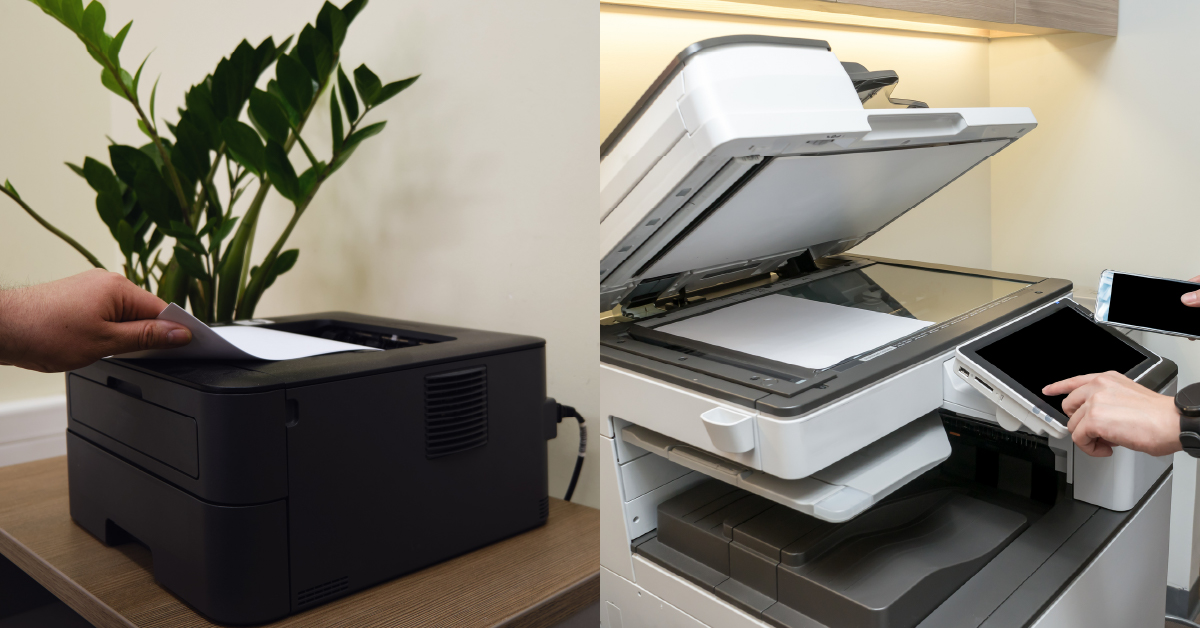
The biggest difference between the two is an A3 copier is capable of printing on bigger paper. That sounds a little counterintuitive, but here’s how it got that way: A3 and A4 refer to paper sizes, and A4 paper is smaller than A3!
Standard paper sizes are different throughout the world, but A4 is basically the European equivalent of our 8.5X11” that we know and love. A3 paper, on the other hand, matches up pretty closely with our 11X17”, which — funny story — was largely determined by the length of a Dutchman’s arms in the mid-1600s.
Besides paper sizes, A3 and A4 copiers have additional differences you should consider before making a purchase. In this blog, we’ll explore those in more detail to simplify your next purchase!
A3 vs. A4 Copiers
A4 Copiers
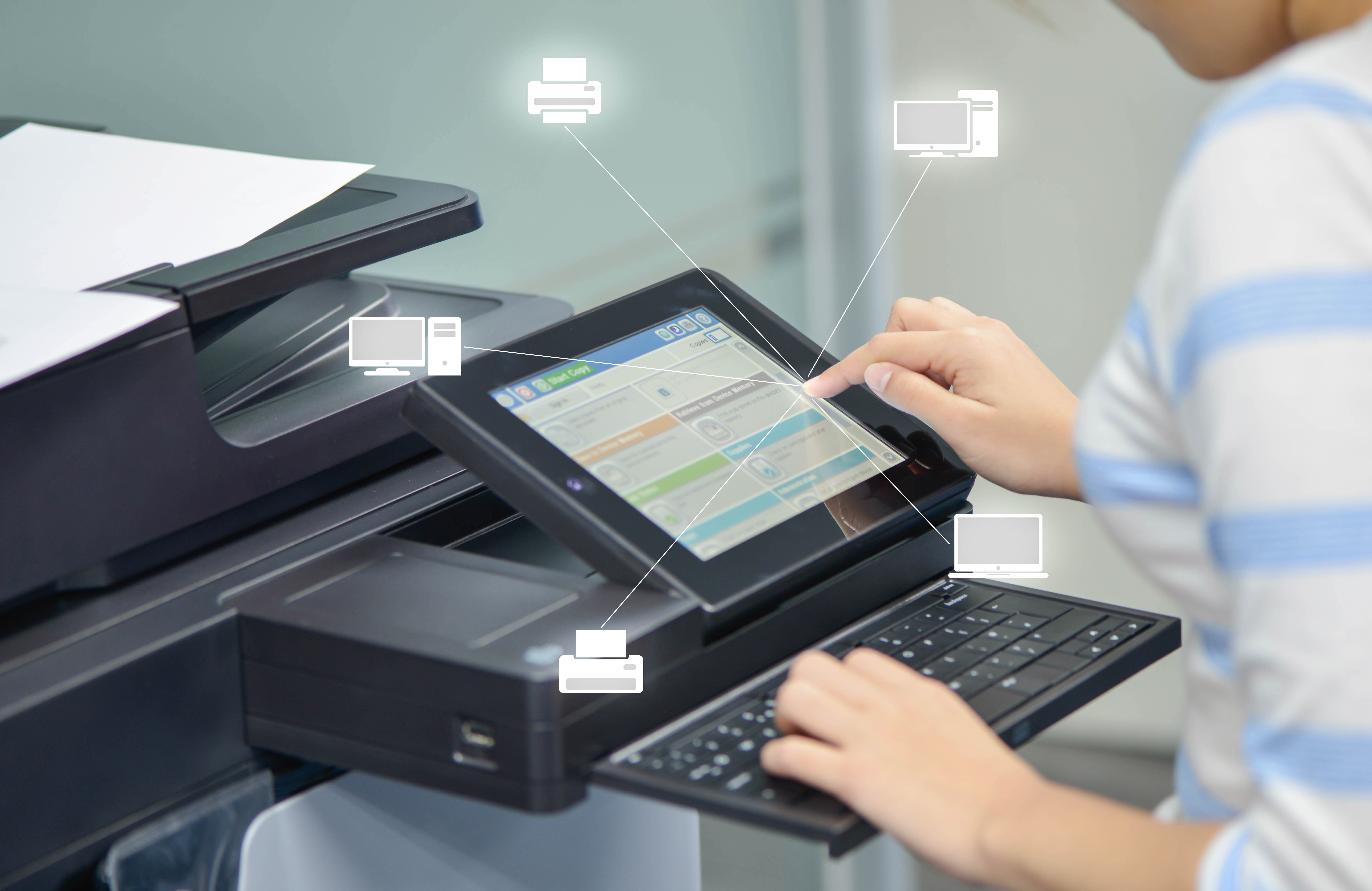
An A4 copier is designed to produce standard 8.5x11” documents or longer legal documents (8.5x14”). These multifunction devices — which are typically found in small businesses or home offices — can also typically print, copy, fax, and scan.
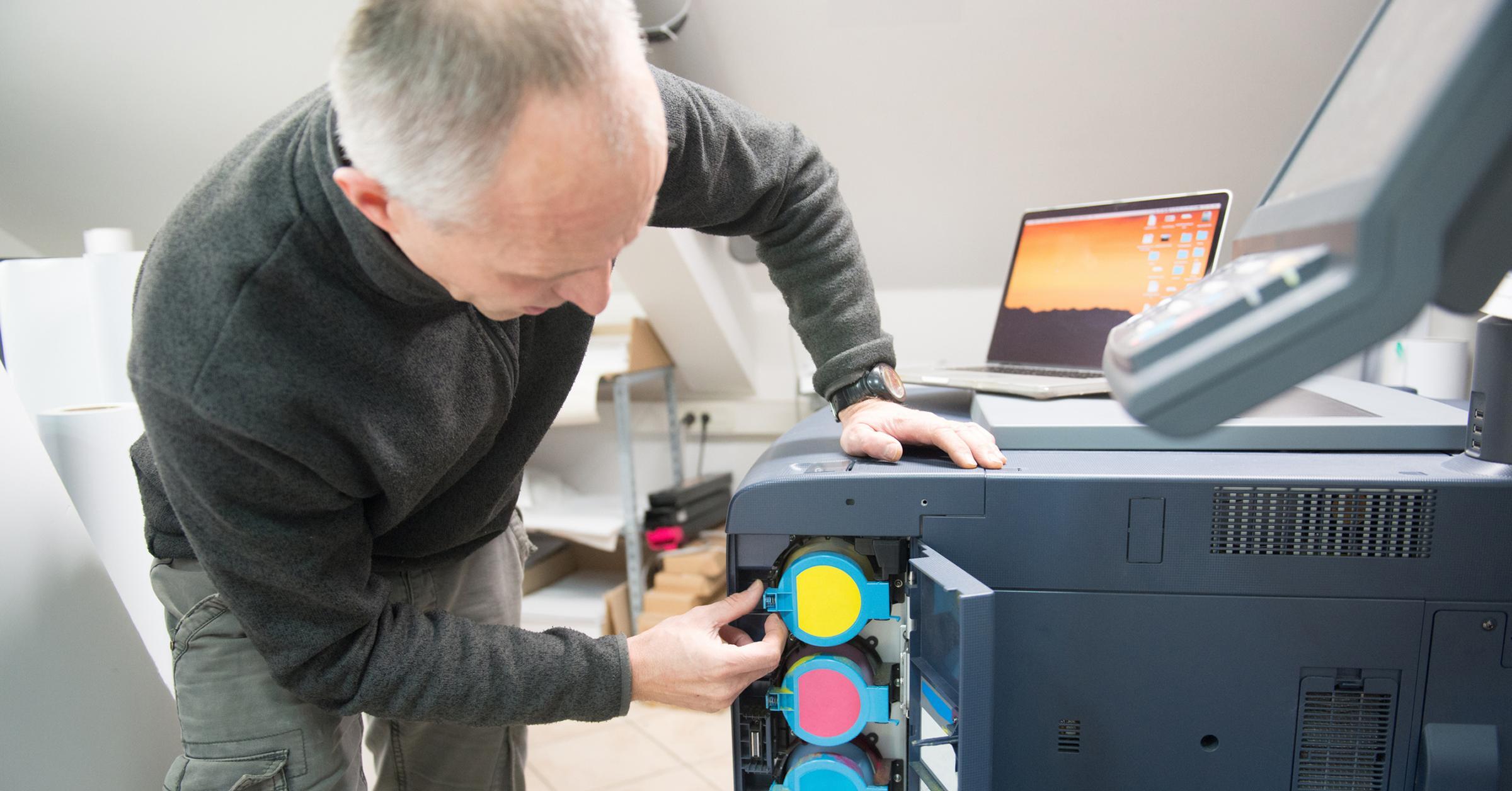
You won’t be able to create larger documents on them, but besides that, here’s what you should know about their pros and cons. Keep in mind that not all A4s are the same!
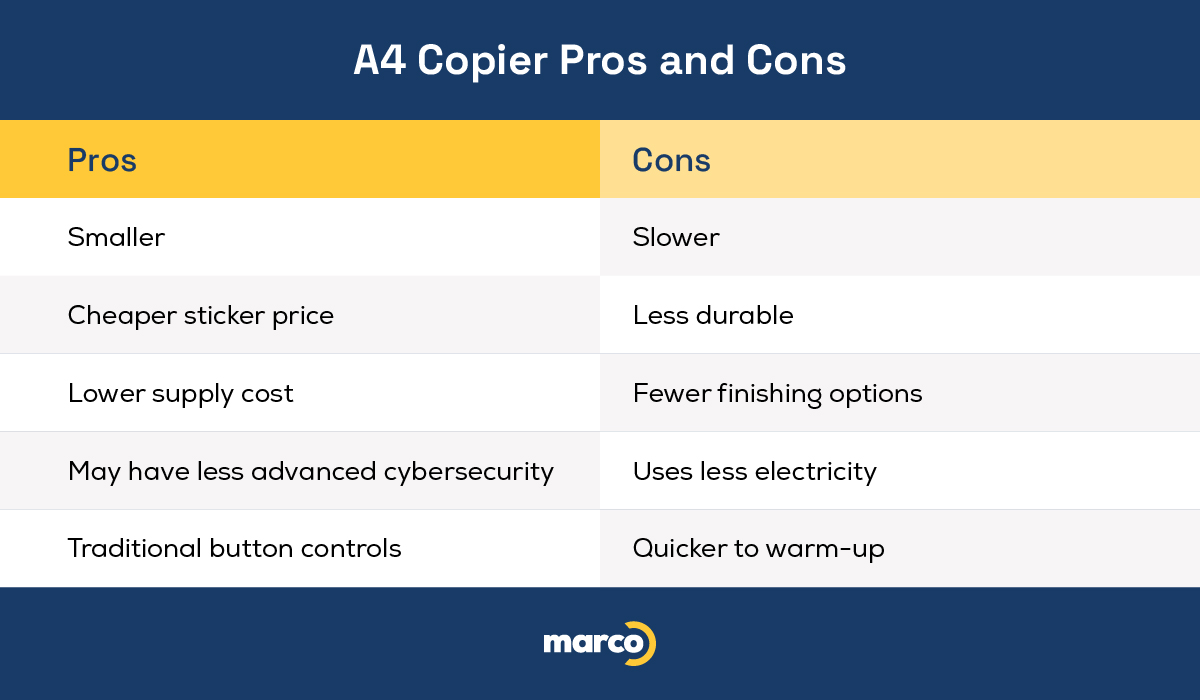
To be fair, some A4 printing equipment will be equipped with the security features that businesses should look for. That’s helpful because print security lapses can allow hackers to access your systems and data.
A3 Copiers
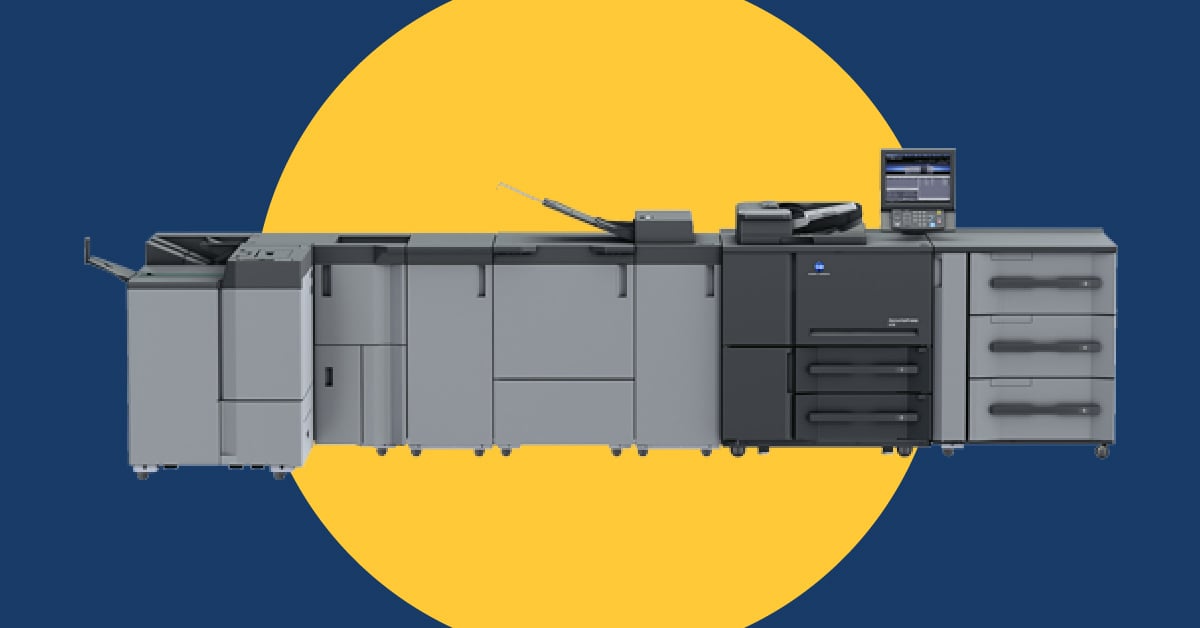
A3 copiers tend to be more specialized and can accommodate documents up to 11x17”. Some multifunction A3 devices can print, scan, copy, and fax, but these machines may be overkill for most small businesses.
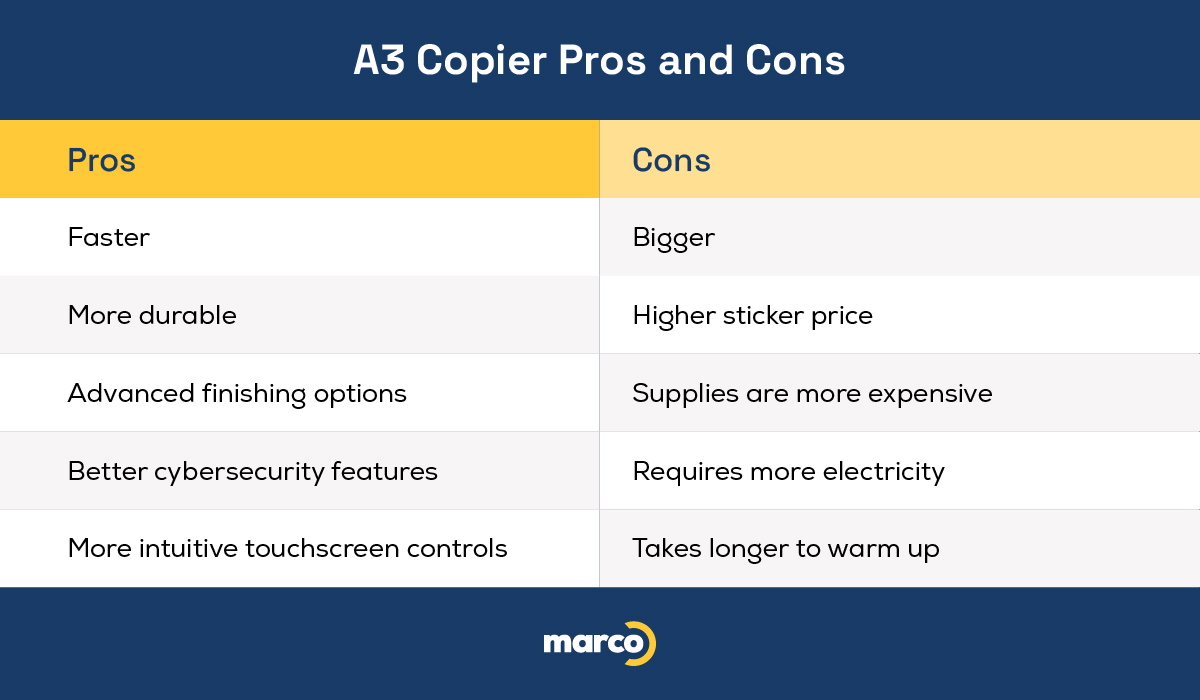
Choosing Between A3 and A4 copiers — Which Is Better?
“Better” is a difficult word when it comes to office technology, especially when it comes to printing equipment. The better device is the one that best suits your needs.
Printers can be a significant investment, so before you make a purchase, it's always helpful to think carefully about your printing needs, now and in the future. This might sound overly basic, but you’d be surprised at how many organizations want to buy the “best printer or copier” without thinking in terms of ROI.
Five Questions You Should Ask Before Buying an A4 or A3 Copier

1. What Do You Typically Print?
If you need to print marketing or presentation materials often, I’ll make this easy for you: you’ll need an A3 device. But if you only need to print large documents occasionally, it might save you quite a bit of money (and office space) to outsource those print jobs to a professional and use a smaller device in-house.
2. Do You Need Advanced Finishing?
A3 copiers are more likely to offer stapling, folding, and hole-punching features, but it’s not unheard of to find those same options on an A4 these days. Your choices may be more limited, but it’s worth at least taking a look if you don’t need to produce large documents often.
3. How Much Do You Print?
A3s are typically faster, but some A4s will give them a run for their money. However, if you print a high volume of documents, an A3 is better able to keep up the pace for a prolonged period of time.
To be more specific, if you print less than 3,000 pages a month, an A4 is probably best. Over 5,000, and an A3 is the better choice. If your print volume falls somewhere in between, you might have to look at other factors to make the best decision.
4. How Much Space Do You Have?
A3s will need more space than an A4. The smallest A3s are usually around 3’x3’. A4s usually run around 2’x2’, but you may need to allow additional space for paper trays.
5. What's Your Budget?
A4s are going to be less expensive, but if you’re printing at a high volume, an A3 might save you some money in the long run on supplies and maintenance. However, if you’ve ever shopped for a printer before, you know that trying to figure out what a machine will really cost you can be an ordeal.
To determine your total print cost each month, you’ll need to first determine your cost per page and multiply that number by the number of pages you print each month. The math is time-consuming but worth it.
Still Unsure Which Office Printer or Copier Would Be Best?
A new copier or multifunction device is an investment, and it’s not always clear which kind of copier, which manufacturer, and which model will be your best bet in the long run. Our 2-minute online questionnaire can help streamline your search.
And when it comes time to purchase, here’s some information to keep in your back pocket: our strategic partnerships with top manufacturers make it possible for us to give clients competitive prices and unrivaled support.