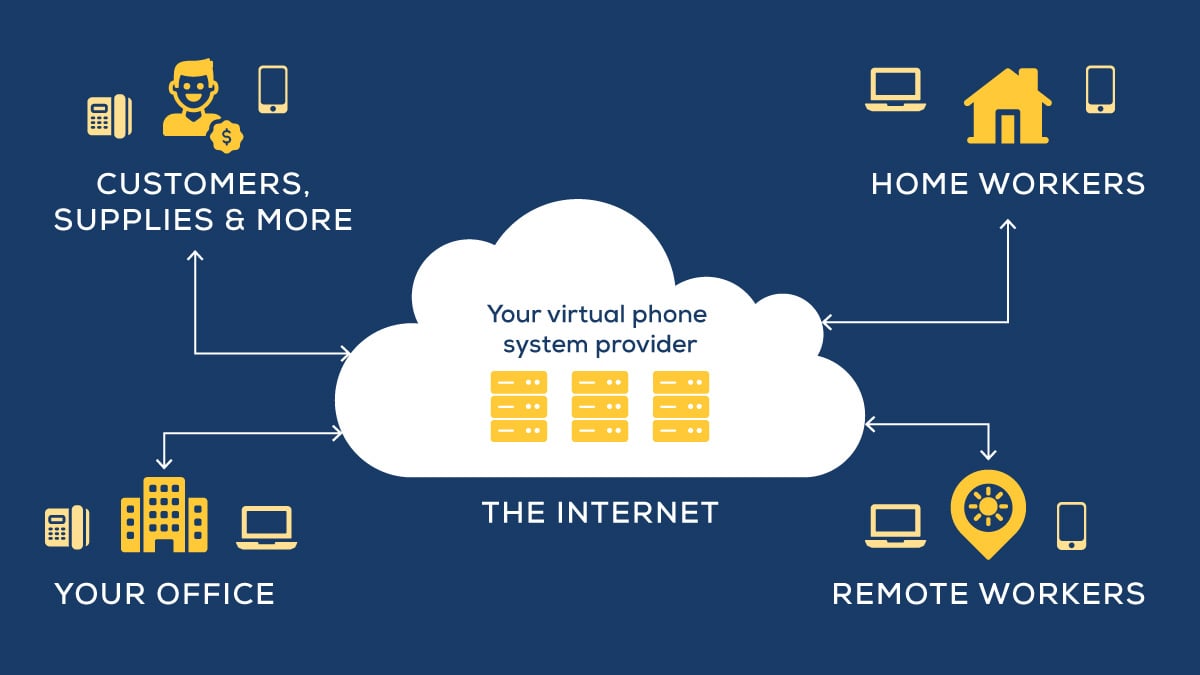
There are two things that are obvious about the cloud-based VOIP (Voice Over Internet Protocol) market.
- It’s growing fast. VOIP will grow to $82 billion by 2019.
- There are a lot of vendors out there. One directory lists 9,500 VOIP registered service providers.
We thought it would be useful to help you sort through the many options. If you don’t fully understand the services you're selecting, you could be stuck with a solution that really isn’t right for you.
The market became very crowded very quickly because the market entry was easy. Getting VOIP right is another thing altogether, but it is very simple for almost any technology company to say they could help you with a VOIP solution - even if they don't have much experience.
4 market segments offering VOIP:
 1. Managed IT Companies
Organizations, such as Marco, can provide a whole array of IT services and products. Their solutions are typically tailored and customized to each individual client. Ongoing support and service are key to their customer satisfaction.
2. Carriers
These are the AT&Ts of the world. They are big, they are powerful and they have been working in telecommunications for a number of years. Adding VOIP to their offering was an easy decision, but don’t expect much customization from these large corporations.
3. Distributors
The newcomers to the field of VOIP/cloud are distributors. They are regional or national providers of multi-vendor hardware and software solutions. As the market shifts from purchasing hardware equipment the distributors are modifying their product portfolio to accommodate the change. With a large, embedded reseller base, these companies have a large distribution network but are challenged with the fundamental shift in the way they do business transactions.
4. Software Vendor
Many VOIP systems can be primarily software based, so the Microsofts of the world have jumped into the market with their own products. Again, these are huge companies, so be prepared to make due with the offering as is; customization options are very minimal. Also, it may be challenging to talk to anyone if help is needed.
3 VOIP User Segments:
1. Enterprise
Large and technologically advanced companies are already used to doing things on a larger scale and have experienced staff to assess the options.
2. Mid-sized business
Business people in this market know they have to use technology to innovate their way into the future, but aren’t necessarily ready with the staff or budget for implementation.
3. Small business
Often they only need the basics and they can be price sensitive. They tend to do more with less.
There are also, increasingly, a lot of niche players. They build VOIP solutions with proprietary software that is specific to market segments like hospitality, healthcare and education.
What to Look For
Finally there are some red flags that should go up when you are talking to a company about cloud-based VOIP. Here are three of them:
Did you get a fast quote?
If you went into your conversation with a vendor asking for a simple, fast quote for X number of phones, you might get one. If they didn’t ask a bunch of questions about your needs, your current connectivity, your plans for growth, etc., you could get stuck with a VOIP system that will in no way meet your needs in six weeks or six months.
Did you receive complete contract documentation?
Any agreements you make need to be documented and built into the contract. That can be tedious, but we guarantee it’s time worth spending. You don’t want to find out a year later that your service agreement or extended warranty only lasted six months.
Did they promise a plug-and-play solution?
While we are getting closer to that reality, we aren’t there yet. If the providor says their system will work right out of the box, your warning light should go on.
Nobody wants to see your organization stuck with a VOIP system that doesn’t work or limits your growth. That’s why it’s important to find a partner that will be there before, during and after the installation of your VOIP system.