 Today we are finding many companies moving away from traditional telephone services in favor of Voice over Internet Protocol (VoIP) phone services. The VoIP phone service offers many companies the flexibility and feature-rich systems they are looking for in their business environment.
As your business looks to either improve its current VoIP system, or migrate to VoIP for the first time, there are some key pieces of information you’ll need to know. A phone system assessment is a great way to discuss these options with an expert and determine the phone system requirements of your business. There are three primary VoIP options you should consider:
- Premise Based VoIP/UC Solutions
- Premise Based Managed VoIP/UC Solutions
- Cloud Based VoIP/UC Solutions Systems
The primary differences between each VoIP phone option are where the equipment and infrastructure sits and who manages it post-installation. Below we will clarify who does what, where, in each of these options.
#1: Premise Based VoIP/UC Solutions
This phone system is located within your organization’s physical office space – everything from end points (individual handsets) to phone infrastructure, routers, servers and a Private Branch Exchange (PBX). And, with premise-based systems, your internal staff must be equipped to support this non-hosted environment. The technology provider’s only role in this type of VoIP phone solution is selling and installing it; once installed your staff is responsible for maintenance, management and support.
With premise based VoIP solutions, your organization oversees the phones and the service needed to make them operational.
#2: Premise Based Managed VoIP/UC Solutions
Premise based managed VoIP solutions are for businesses that want a minimal (to nonexistent) role in providing their telecommunication/UC services. In this configuration, your business invests in and hosts all of the equipment and infrastructure required for the VoIP system. Where it differs is in the role of the technology services provider; in a managed environment, your provider remains a resource for you and your users to rely on for support. The provider is also responsible for the ongoing management and maintenance of your system.
#3: Cloud Based VoIP/UC Solutions
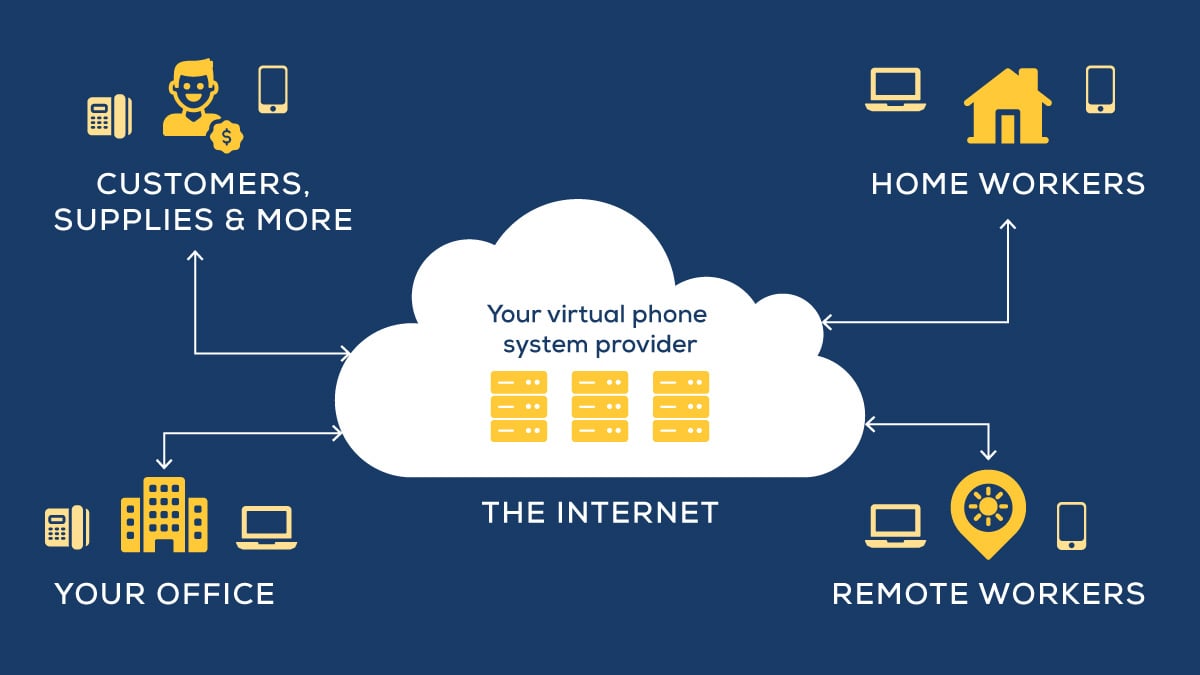
This cloud-based system is very similar to a managed environment, except it eliminates the investment, installation and storage of the phone systems’ infrastructure. The only equipment left on site are the handsets used by your employees. Your service provider takes complete responsibility of providing service to your phone system. Organizations with remote locations or employees experience a significant advantage with this type of system because the infrastructure isn’t tied to one physical location; instead, handsets at any of your locations can be serviced through the cloud.
Making a Selection
When selecting among the three VoIP solutions above, you should ask yourself these questions:
- What role do you want to play?
- What are your growth plans?
- What type of infrastructure do you already have in place?
When working with a technology services provider, specialists will help you answer these questions, by assessing your existing phone system and infrastructure, as well as your current and future telecommunication and UC needs. They can also explain cost differences, pricing structures and the pros and cons of each configuration. So if you’d like to know more, take the first step and request a phone system assessment to determine which VoIP phone options could suit your business environment.