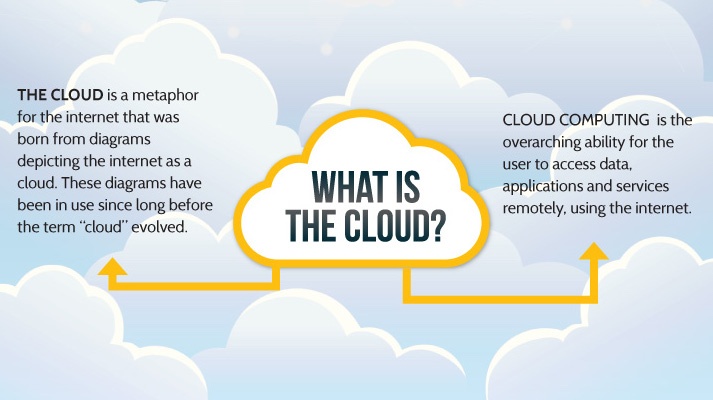
As cloud computing becomes more prominent in the IT industry, the concept is becoming more confusing, rather than clearer for many businesses. Here's a basic explanation:
Cloud computing offers benefits for any business, but in order to realize those benefits it’s important to understand how it works, problems it solves, what it costs, etc. In this article we address the top three misunderstood cloud computing basics.
#1: Semantics
The language used in relation to the cloud is confusing. The source of confusion can be attributed to the combination of “old” technology solution terms merging with new industry jargon. By “old” I mean prior to cloud computing becoming the industry’s latest buzzword; some of the past terminology you may use and recognize are “hosted” and “co-lo” (or colocation). The new term, cloud, is now being used for the exact same solutions, or similar at the very least, that have been available for quite some time.
The easiest way to clarify what each means today, without diving into the specifics of each, is to say that “cloud” is the noun, and “hosting” is the verb. Hosting is the act of providing cloud services to an organization.
What have historically been called “hosted” solutions are now commonly being called “cloud” solutions; the two are not distinctly different. The difference is in how the solution is implemented. An organization could have applications hosted on shared infrastructure (public cloud) or on dedicated infrastructure that is hosted in a data center or on-site (private cloud), or some combination of the two (hybrid cloud).
#2: Ownership & Location of Infrastructure
Historically, hosted services allowed an organization to use someone else’s infrastructure, providing the obvious benefit of cost-savings. This remains true in all public cloud computing environments.
A business with a private cloud, on the other hand, may use someone else’s infrastructure (like in a public cloud) – but this doesn’t have to be the case. These are the potential ownership and location configurations that are available in a private cloud environment:
- You Own Hardware, Located in a Data Center (previously called “co-lo”)
- Provider Owns Hardware, Located in a Data Center (also known as “dedicated" infrastructure because it isn’t shared with any other businesses)
A public cloud also follows this configuration, but the difference is that the hardware is shared (space and cost-to-use) among many organizations. Hardware in a private cloud is only used and accessible by one organization. - You Own Hardware, Located On-Site (at your office)
#3: Payment Structures
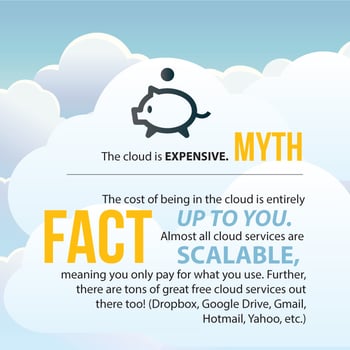 In a cloud environment, one of the primary advantages is the consistent monthly fee funded by your operating budget. Regardless of your organization’s cloud environment (public, private, hybrid), you will have one recurring payment, which is the same every month. These stable and predictable costs allow for better technology planning and budgeting.
Prior to cloud computing, hosted services were also paid monthly. However, organizations also generally had some capital expense in infrastructure that accompanied these services. Today, cloud environments – services and infrastructure – can be entirely paid through monthly fees (no capital investment required).
The confusion around these cloud computing basics results from industry jargon and inconsistent information available. For this reason we engage in an in-depth discovery discussion with our customers, where we look closely at organizational needs and goals. Rather than just selling off-the-shelf products or services, we work with you to uncover your needs so we can recommend a solution that addresses those needs and pain points, and positions your organization for the future.




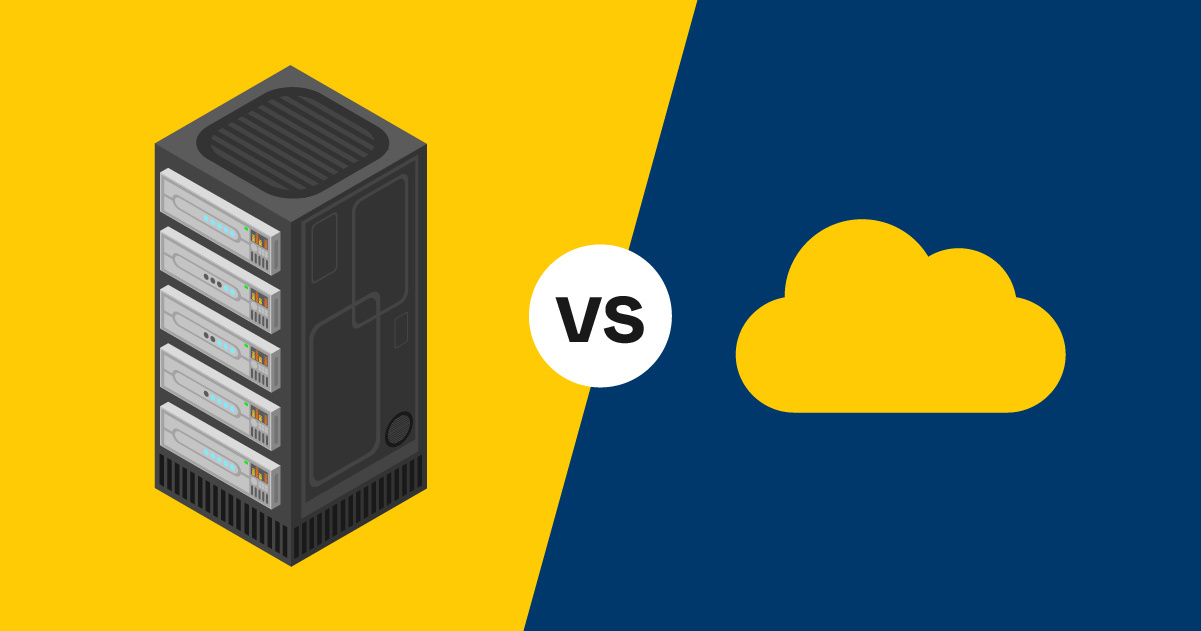






![Cloud vs. On-Premises Communications [Infographic]](https://www.marconet.com/hubfs/UCaaS-infographic.jpg)