 As we reflected, we realized that it’s our high client satisfaction. And really our metrics and processes that validate it again and again. At Marco, we developed an extensive process to formally measure and take action to ensure we achieve high client satisfaction. We seek a variety of input, but the ultimate question is: “Would you recommend Marco?”
Over the 20 years, Marco has achieved a high recommend rate. That’s intentional. We set an expectation that we will achieve at least a 90 percent recommend and if it falls below, we initiate a systematic process to recover – quickly. It’s that important.
We’re collecting client satisfaction data and using it to drive our decision-making and overall performance. Here’s a look at how we do it:
- Know what you really want to measure.
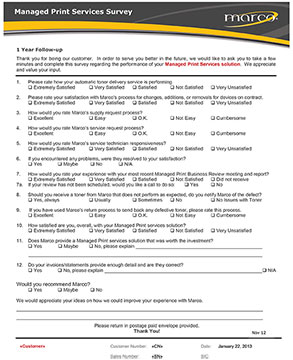
We keep the survey short and focused on the questions that matter to us. We have identified the recommend rate as the single most important data point we get from these surveys. When evaluating the questions you will ask, first consider “How would we take action on the answer?”
- Thin slice your data.
We certainly want to know our client satisfaction rate across the company and that’s the figure that often is widely communicated. But some of the most valuable data that we get from these surveys comes because we thin slice the data internally by solution group and even sales representative. Our copier division, for example, currently has an 83 percent response rate and 94 percent recommend rate. Our less mature cloud division, on the other hand, started with a lower recommend rate and has steadily increased year over year. Without this, a recurring issue with a specific department could be masked and go unnoticed. By thin slicing the data, we get a better barometer on how we’re doing and each solution leader is held accountable to achieving high client satisfaction. - Work to get a response.
We do not send our surveys electronically. We’ve found that by mailing surveys with a self-addressed envelope each month to new project clients, we get a high return. Those that do not reply, we follow up with a phone call and get their feedback over the phone. It’s that important to us that we hear from everyone. So far this year, we have a response rate of 78 percent overall, with about 3,000 total surveys returned. - Seek input on your performance in the longer term, too.
We don’t just ask clients how we did when the project got implemented – when they likely are really excited about the new piece of technology. We also survey them a year later to make sure we are continuing to deliver what we said we would, and to make sure they are satisfied clients. Since 2004, we’ve averaged a 90 percent recommend rate a year after a contract was in place. - Set benchmarks that trigger action.
This is the most important step in the process. What we’ve learned is that you can’t just measure customer satisfaction, you need to act on that data. Any time someone responds by saying that they will not recommend Marco or they maybe will, a new Correction Action Request gets initiated. We call it CAR for short. This is our system to take a deep dive into the situation, and understand what happened and what we can do to improve satisfaction. - Build in accountability from leadership.
We have a continuous improvement team that meets every other month to review every CAR generated and their detailed resolutions. Following through on the data we receive – and showing our clients that we really are listening and responding – is important. How important is it to your organization?
With today’s technology, you have the ability to collect meaningful data for your organization – and create a formalized system to act on it. If there’s one thing all organizations have in common, it’s the desire to have satisfied clients.
We often hear organizations claim high satisfaction. But how do you know for sure? You don’t need to wonder how you’re doing. You can know. Then, take action to ensure you achieve a high level of client satisfaction.






.jpg)