Remember when phishing emails were easy to spot? Those poorly written messages with obvious spelling mistakes and suspicious links? Those days are quickly disappearing, thanks to artificial intelligence.
Today's cybercriminals aren't just getting smarter — they're getting automated. And that's changing the cybersecurity game in ways that every business needs to understand.
The New Reality: AI-Powered Cyber Attacks
Here's what's happening: the same AI technology that helps us write better emails and create stunning presentations is now being weaponized by hackers. They're using AI to automate attacks, create more convincing scams, and scale their operations like never before.
The numbers tell the story.
The global market for AI-based cybersecurity products was about $15 billion in 2021 and is expected to surge to roughly $135 billion by 2030. But here's the catch — while cybersecurity teams are adopting AI for defense, cybercriminals are adopting it for offense too.
5 Emerging AI Cybersecurity Threats
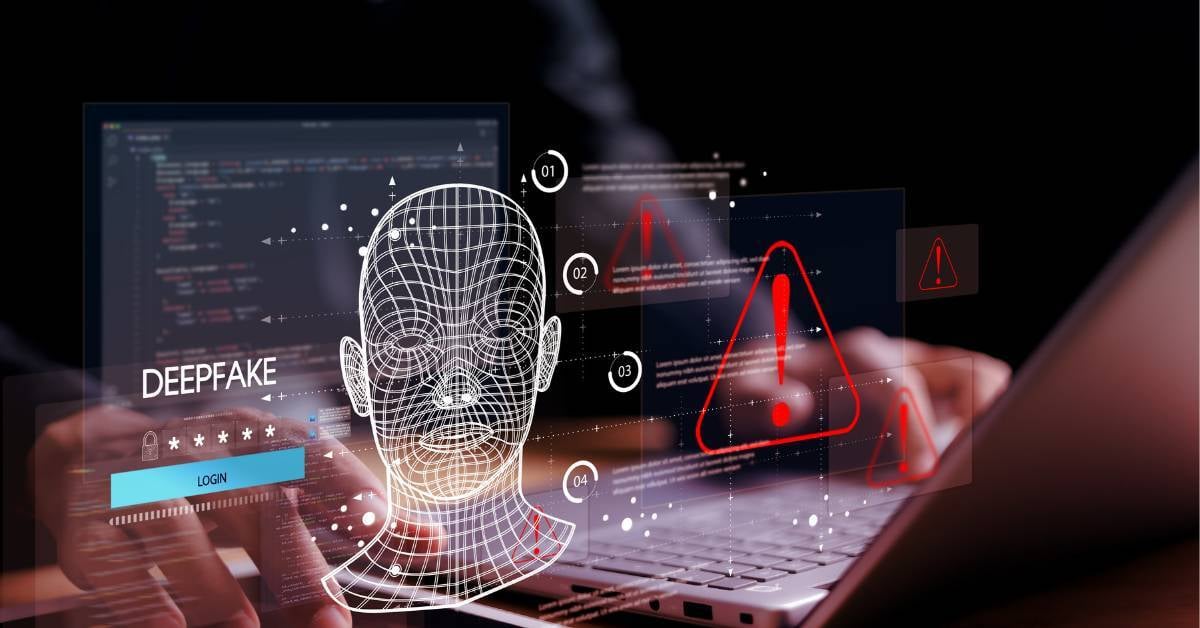
Here are a few areas where hackers are using AI to do some real damage.
1. Sophisticated Social Engineering
Gone are the days of generic phishing emails. AI allows cybercriminals to create highly personalized messages that are incredibly difficult to distinguish from legitimate communications. They can analyze your company's communication style, research your employees on social media, and craft targeted attacks that feel authentic.
2. Automated Password Cracking
AI has turbocharged password hacking algorithms, making them faster and more accurate than ever before. What used to take weeks can now happen in hours or even minutes, putting weak passwords at serious risk.
3. Deepfakes and Voice Cloning
This one's particularly scary. With just a few seconds of audio, AI can now create convincing fake voices. We're already seeing virtual kidnapping scams where criminals use AI to clone a family member's voice and demand ransom. In the business world, this could mean fake calls from executives requesting wire transfers or sensitive information.
4. AI-Generated Malware
Perhaps most concerning is that AI can now write malicious code. Researchers have already demonstrated how to trick AI tools like ChatGPT into creating sophisticated malware that's nearly undetectable by traditional security measures.
5. Data Poisoning
AI is only as good as what it learns from. And if someone teaches the wrong information, it's going to lead to the wrong decisions.
Hackers can potentially sneak bad information into the data that trains an AI system, and be fairly subtle about it. Instead of breaking something, they can introduce small biases that slowly steer the AI toward making harmful decisions. In industries like healthcare or transportation, where AI helps make life-or-death decisions, this kind of attack could have serious consequences.
The worst part is that data poisoning can be incredibly hard to detect until it's too late. By the time you realize your AI system has been compromised, the damage might already be done.
AI Cybersecurity Solutions
It's not all doom and gloom. The same AI technology that's empowering cybercriminals is also revolutionizing cybersecurity defense.
Here are a few reasons that, overall, AI is still a force for good:
- AI can analyze enormous amounts of data to spot patterns and anomalies that humans might miss
- AI systems can respond to threats 24/7, even when your IT team is offline
- Advanced AI can better distinguish between real threats and false alarms
- AI can help predict and prevent attacks before they happen
Protecting Your Business in the AI Era

You don't need to learn an entirely new set of cybersecurity rules. The fundamentals still apply, but they're more critical than ever:
1. Strengthen Your Passwords
With AI-powered password cracking on the rise, strong, unique passwords are no longer optional — they're essential. Consider implementing password managers across your organization.
2. Train Your Team
Your employees need to know about these new AI-powered threats and how many cybersecurity solutions are having difficulty detecting them.
Regular training on identifying sophisticated phishing attempts and social engineering tactics is crucial.
3. Invest in AI-Powered Security
Fight fire with fire. Modern cybersecurity solutions that use AI can help level the playing field by detecting AI-generated threats.
4. Keep Everything Updated
AI-generated malware can exploit vulnerabilities faster than ever. Regular software updates and patch management are critical.
5. Implement Multi-Factor Authentication
Even if passwords are compromised, multi-factor authentication provides an additional layer of protection.
The Bottom Line — Cybersecurity Best Practices Still Work
Since cybercrime has skyrocketed, many organizations still believe one of two things — either cybercriminals are so sophisticated there’s no use investing in defense, or cybercriminals are only after large organizations, so there’s no real danger for smaller organizations. Both are simply not true. Small organizations are actually popular targets for cybercriminals, as they are more likely to have lax cybersecurity. Most organizations don’t have to be Fort Knox; having the basics in place is enough to prevent the vast majority of attacks.
That said, what was considered sufficient protection four or five years ago is no longer enough. If you’d like a quick gut-check about your cybersecurity posture, my colleagues and I have created a short quiz. Click the link below to see if an upgrade is needed.