
Managed Print Services for Manufacturers: The Complete Guide
The Real Cost of Unmanaged Print in Manufacturing
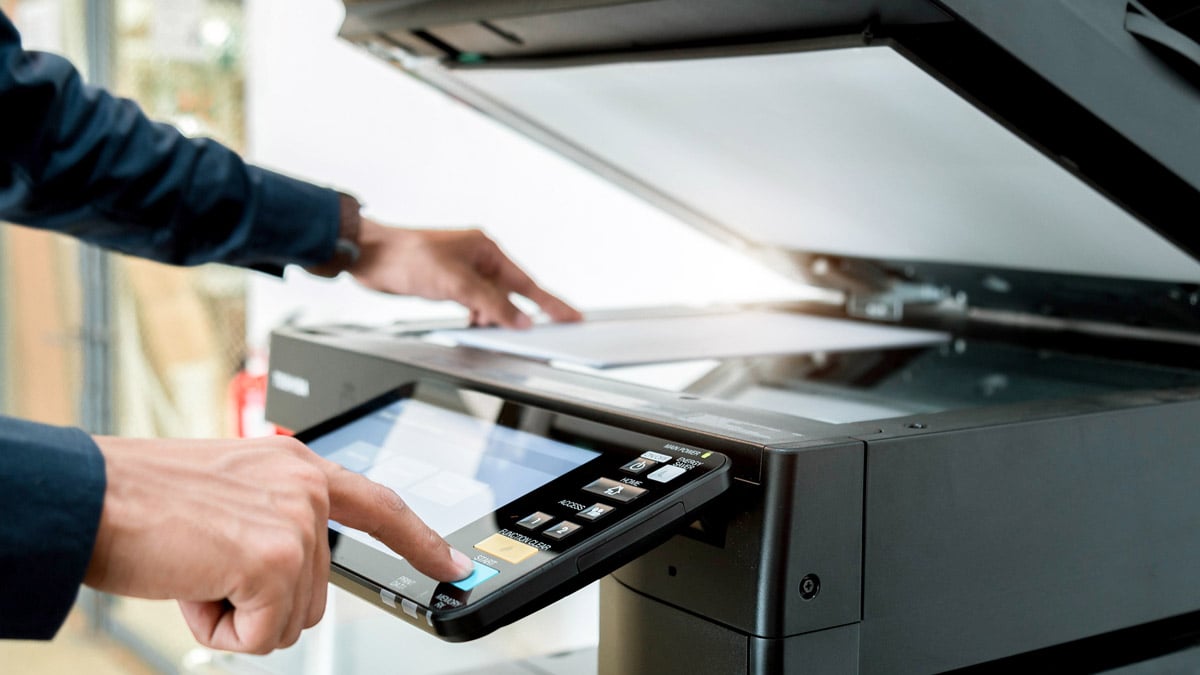
Print environments in manufacturing don't get designed. They grow. A copier in the front office, label printers on the floor, a wide-format device in engineering, personal printers that IT hasn't looked at in years.
By the time someone looks closely, there are devices across multiple facilities with no standardization, no visibility into cost, and no single person accountable when something breaks.
That fragmentation has a direct operational cost. Here's where it shows.
You Probably Don't Know Your Total Spend
Many manufacturers piece together print costs from multiple vendor invoices, supply orders, and service contracts — none of which talk to each other. The result is a cost center nobody owns and nobody can accurately report on.
Supplies and Maintenance Are Reactive
When a printer runs out of toner mid-shift or a copier goes down during a production run, the disruption isn't just an inconvenience. It's a bottleneck with a cost per hour. Reactive management means you're always responding, never preventing.
Multiple Vendors, no Accountability
Three device brands, two service contracts, a print provider that will get there when they get there. When something goes wrong, everyone points at someone else.
That's not how manufacturers can afford to operate in any other area. But it's a common problem in manufacturing print environments.
Your Fleet Hasn't Been Assessed in Years
Devices past their useful life, underutilized copiers, printers positioned wrong for actual workflow — most manufacturing print environments are carrying more cost and more risk than they need to.
Sometimes adding a service feels like adding costs, but at Marco, we find that we're typically able to save clients between 15%–20%, so adding print services can pay for itself. More importantly, manufacturers stop absorbing surprise expenses and can start budgeting predictably.
Why Cybersecurity in Manufacturing Has a Print Problem
Manufacturers recently experienced a 56% increase in ransomware attacks involving extortion and a 266% rise in information-stealing malware being injected into their systems.
Most of the conversation focuses on IT infrastructure and OT/IT convergence. Almost none of it focuses on printers — which is exactly why printers are a problem.
Networked printers are often unprotected endpoints.
They sit on the same network as your servers and workstations. They have IP addresses, hard drives, and firmware. They can be exploited as entry points into your broader environment, and they store data that walks out the door when a device is decommissioned without being properly wiped.
For manufacturers in defense supply chains, medical devices, or pharma, this has direct compliance implications. CMMC and NIST SP 800-171 both require controls around Controlled Unclassified Information (CUI) — which moves through print infrastructure. An unmanaged print fleet isn't just a cost problem. In a compliance audit, it's a gap you'll have to explain.
Adding to the problem, it's very difficult for manufacturers to get print security, even if they work with a print provider.
For those who offer those kinds of services, most will treat it as an add-on with an upcharge. We don't think that's right, which is why print security is included in every Managed Print engagement at no additional charge.

What Your Zebra Printers Have To Do With Downtime

Here's something that shows up in a lot of plants we walk into: a shelf with two or three spare Zebra printers on it.
That's not a supply strategy. That's a workaround.
When label printers, barcode scanners, and thermal devices aren't being maintained or monitored, stocking extras is the only protection against a line stoppage. It ties up capital, takes up space, and doesn't actually solve the problem — it just defers it.
The issue is that most MPS providers don't cover industrial printers. Their contracts apply to office equipment. Your Zebras, your thermal printers, your floor-level devices are out of scope, which means they're also outside any maintenance or monitoring program.
Unfortunately, the cost of ignoring them is widespread.
That's why we also made the decision to include Zebras in our managed print services. Our software can detect signs of wear before a device fails, so we can get ahead of disruptions instead of reacting to them. If your Zebras are currently on a shelf instead of in a service contract, that's cost and vulnerability you don't need to carry.
How Managed Print Services for Manufacturing Addresses These Challenges
Every problem covered above — unpredictable spend, reactive maintenance, security gaps, unmanaged industrial devices — can be addressed by a managed print services provider that understands manufacturing.
Here's what that service looks like:
A Print Assessment Before Anything Else
A legitimate partner starts by mapping your environment — every device, every location, every cost. You should come away knowing your total cost of ownership, which devices should be replaced or repositioned, and where your security gaps are.
It shouldn't feel like a sales pitch. It's about gathering the data that determines what you actually need, what you don't, and what a provider can actually do for you.
Coverage for Your Full Fleet
That means office equipment and industrial devices — label printers, barcode scanners, wide-format devices, thermal printers. If a provider's contract stops at the front office, your biggest operational risk is still unmanaged.
Automatic Supply Management
Toner and supplies are ordered and delivered based on actual usage data before you run out. Your team stops managing supplies.
Proactive Maintenance and Fast Response
When a device needs service, you know before it fails. When something does go down, response is measured in hours, not days. For multi-site manufacturers, that means a technician dispatched to the right location with the right parts. Marco's logistics center in Des Moines provides 2-day parts and supply delivery nationwide, backed by 650+ certified field technicians.
Print Security Built in
Device hardening, firmware management, secure decommissioning, and ongoing print security assessments — included, not add-on.
Centralized Visibility Across All Sites
One view of every device across every facility — usage, cost, status, and alerts. That's what managing a print fleet actually looks like.
Predictable, Consolidated Billing
One monthly cost covering all devices across all locations. No surprise invoices. No scrambling to figure out which vendor to call.
What To Look for in a Print Services Provider for Manufacturing
Most MPS providers can handle an office. Fewer can handle a manufacturing environment.
Here are some insider tips of what we recommend looking for:
Print Security Is Included, Not Extra
We mentioned this earlier — most providers treat print security as an add-on. That's fine, as long as you're okay with paying the upcharge.
Here's what your print security should include:
- Device hardening
- Firmware updates
- Secure decommissioning
- Ongoing assessments backed by a dedicated print security team
Manufacturer-Agnostic Coverage
Ideally, your MPS contract should cover every printer in your environment — not just office equipment. That includes Zebra and other industrial thermal printers on the floor.
If a provider's scope stops at the front office, your biggest operational risk is still unmanaged.
Multi-Site, Multi-State Service Capability
For manufacturers running operations across more than one facility, consistency matters. Look for a provider with a national footprint, fast parts delivery, and certified field technicians who can reach every location — not just the one closest to their office.
The Ability to Look Beyond the Printer
Print issues aren't always print issues. Network failures, connectivity problems, and infrastructure gaps can all surface as printer problems. A provider with managed IT and networking expertise can identify and address the root cause — not just the symptom.
Technicians Incentivized Around Uptime, Not Visits
In a traditional break-fix model, a technician has no reason to prevent a problem. More visits mean more revenue. Look for a provider whose technicians are motivated to catch issues before they cause downtime — not after.
Predictive Monitoring, Not Reactive Response
The right provider monitors devices for early signs of wear and flags issues before they cause a disruption. For manufacturers where a line stoppage has a real cost per hour, that capability is the difference between a maintenance call and a production delay.
Direct Accountability for Who Does the Work
Some providers fill service gaps with third-party technicians from other companies. Ask who will actually be showing up — and whether they're held to consistent standards across every location.
Questions To Ask a Managed Print Provider Before You Sign

If a provider gives you satisfactory answers to these, they'll be able to provide long-term value for you.
If you don't like some of their answers, ask them a follow-up question. Sometimes SLAs can be adjusted to accommodate a specific need.
Fleet Coverage
- Can you support every device in our environment, including industrial and thermal printers like Zebra?
- What does your assessment process include?
- What is your implementation timeline, and how do you make the transition easy?
Service and Response
- What's your average response time for a service call?
- Do you have field technicians in our geographic area?
- What's your parts availability and delivery speed?
- Are you able to anticipate print problems, or just respond to them?
- How are your print techs incentivized?
- If a print issue is caused by something else, like a network issue, can you still fix it?
- Can you automate supply ordering for all devices?
Print Security
- Is print security included in your base offering, or is it an add-on?
- Do you have a dedicated print security team?
- How do you handle device decommissioning?
- Can you provide compliance documentation if we need it?
Visibility and Reporting
- Can we see usage and cost data by device, by location, or by department?
- How often do we receive a business review with actual recommendations?
Contract Terms
- What's included in the base cost versus billed separately?
- How does pricing adjust if our fleet size changes significantly?
- Who is actually doing the service work — your technicians or third-party contractors?
- Will we ever get an unpleasant surprise on our bill?
The First Step Toward a Smarter Print Environment
You can't manage what you can't see. Most manufacturers are surprised by what a print assessment turns up — devices nobody knew were still active, cost-per-page rates that have never been reviewed, security configurations set up years ago and never revisited.
That initial assessment is where clarity starts.
It gives you a complete picture of your current environment before any recommendations are made — so decisions are based on data, not assumptions. And with Marco, that clarity doesn't stop once the assessment is done.
We've designed a proprietary technology intelligence platform called the Insights Cloud Portal, so you keep that visibility running continuously — tracking performance, flagging issues, and giving you real-time data across every device at every location. It's not a one-time snapshot. It's ongoing insights that compound over time.
For manufacturers operating across multiple facilities or states, Marco's national footprint means consistent service wherever you are. Our new Logistics Center in Des Moines provides 2-day parts and supply delivery nationwide, so a device going down in one state doesn't mean waiting a week for a technician or a part.
And because Marco's expertise extends well beyond print — with a dedicated manufacturing IT team and in-house cybersecurity professionals — you have access to those resources when you need them. Print issues that trace back to network or infrastructure problems don't fall through the cracks. The right people are already in the room.
Managed print for manufacturing isn't just about printers.
It's about bringing the same operational discipline to your print infrastructure that you apply to everything else on the floor — and having a partner with the depth to back it up.
